To sell second-hand shoes in Slovakia, photograph the pair in daylight, price it against three similar listings in your city, and publish on a classifieds site with moderation and verified phone numbers. You keep the shoes until you hand them over in person, and money changes hands face to face, so nothing is shipped before you are paid.
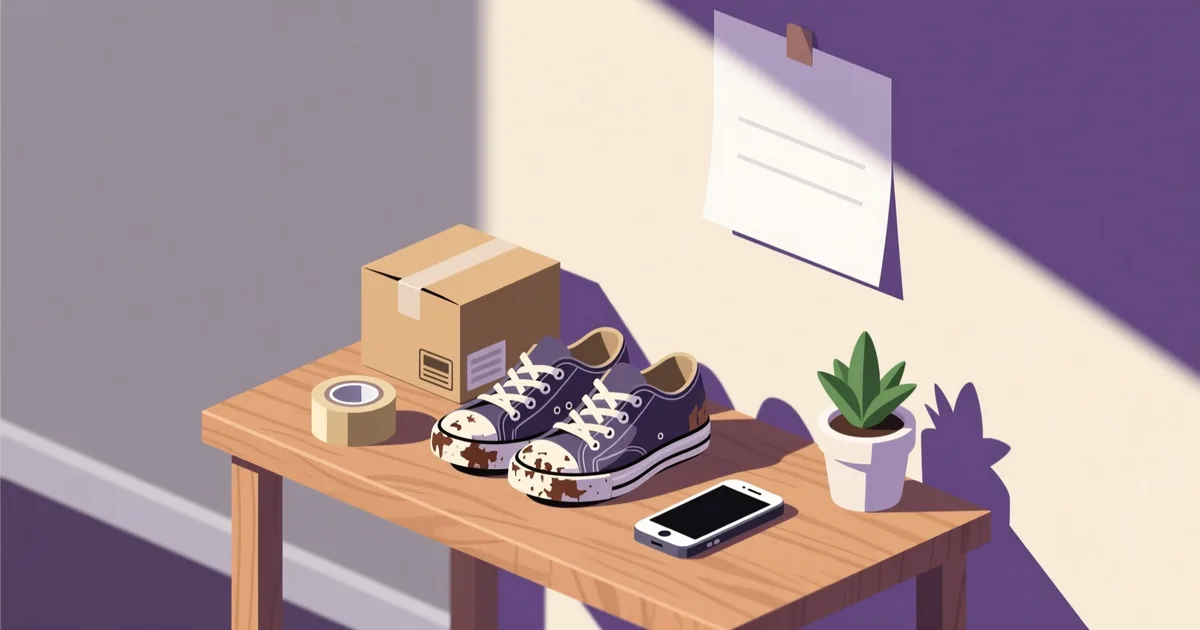
That is the whole method in one paragraph, but the details decide whether you get ten messages or none. Shoes are harder to sell online than phones. Size matters, condition matters, and a buyer standing in a Bratislava panelak hallway wants to try them on before paying. Most private sellers in Slovakia use classifieds rather than auction sites for exactly this reason: the deal stays local, the buyer sees the goods, and the seller sees the cash. This guide walks through pricing, photos, wording, buyer messages, the scams that show up most often, safe meeting places in Slovak cities, and what the law says about a private sale.
How to price second-hand shoes in Slovakia
Start with three comparable listings, not with what you paid. Open a marketplace, search the brand and model, filter by your region, and write down what three sellers are asking. Asking prices are not sale prices, so treat the lowest realistic one as your ceiling.
Depreciation on footwear is steep. A pair worn twice loses roughly half its retail value the moment it leaves the shop, and a pair with visible creasing loses more. Condition, size and brand rarity move the number more than age does. A size 42 sells faster than a size 47 because more people fit it. Limited colourways of running shoes hold value better than a plain black leather pair of the same age.
What buyers in Slovakia pay
Prices cluster by category. Everyday sneakers in good condition usually land between 15 and 40 euros. Winter boots with intact soles and no cracks in the upper go for 20 to 60 euros depending on brand. Formal shoes move slowly unless they are a recognised maker and barely worn. Children's shoes sell quickly and cheaply, often under 15 euros, because parents buy ahead of a growth spurt and do not want to spend much.
Set your price 10 to 15 percent above the figure you would accept, and say in the listing that the price is negotiable. That gives a buyer room to feel they won something without you dropping below your floor. Do not write "price firm" unless you genuinely mean it, because it cuts your message volume sharply.
When to drop the price
If a listing gets views but no messages in the first week, the price is the problem. If it gets messages but no meeting, the photos or the location are the problem. Drop by 10 percent every seven to ten days and update the listing text so it does not look stale. A pair sitting unsold for two months is worth less than the space it takes up.
How do you photograph and describe shoes so the listing gets messages?
Shoot in daylight near a window, on a plain floor or a white sheet. Six photos cover it: both shoes from the side, the outer side of each shoe, the soles, the inside, and any flaw up close. Phone cameras are fine. What kills a listing is a dark photo taken on a carpet at night.
Wipe the shoes first. Laces out, insoles checked, dirt off the midsole. Buyers read cleanliness as a signal about how the rest of the deal will go. Put a coin or a hand next to the shoe in one photo so scale is obvious without reading the text.
The description that works
Lead with brand, model, size in EU and UK, and colour. Then condition in plain words: worn how many seasons, any scuffs, whether the sole is original, whether the box and spare laces are included. State the reason for selling in one short line. Say where you can meet.
Write in Slovak. A listing in Slovak reaches local buyers, and a listing in English or Ukrainian narrows your audience to expats and students. If you want both, write the Slovak version first and add a short second paragraph in another language rather than mixing them in one block.
Mistakes that cost you buyers
Blurry photos of a single shoe. No size in the title. "See photos for condition" instead of naming the flaw. A price of 1 euro used to attract clicks, which annoys people and gets reported. Vague location like "Bratislava" when you live in Petrzalka and will only meet there. Each of these costs you messages you never see.
How to answer buyers and filter out scammers
Reply within a few hours and answer the exact question asked. Most first messages are one of four things: is it still available, what is the lowest price, can you send more photos, and where can we meet. Have those four answers ready and the conversation moves in two exchanges.
Scammers follow a small number of scripts, and they are recognisable once you know the shape. The pattern is always the same: they want the item out of your hands before money reaches you.
Fake payment screenshots
Someone sends an image of a bank transfer confirmation and asks you to hand the shoes to a courier. A screenshot proves nothing. A transfer can be scheduled, reversed, or faked in an image editor in a minute. The rule is simple: money in your account, verified in your own banking app, before the shoes leave your hands. No exceptions for a buyer who seems nice or in a hurry.
Courier and prepayment tricks
Another script asks you to pay a courier fee, a customs charge, or an insurance deposit, promising to refund it with the purchase price. A real buyer never asks a seller to send money. If a message contains a link to a "delivery partner" page that wants your card number, close it. The same applies to anyone asking for your card details to "send" you money: receiving a payment never requires your card number or a code from an SMS.
Overpayment is the third variant. A buyer sends more than the agreed price and asks you to return the difference or forward it to a courier. The original payment is later reversed and you are out the difference. Refuse and end the conversation.
We check what gets reported on EX & GO, and the single most common complaint from shoe sellers is a buyer who pushed for a courier handover and a payment screenshot instead of a meeting. Every one of those cases had the same ending.
Where to compare prices and check a buyer's history matters here. On EX & GO a seller profile shows past listings and reviews, and buyers can see yours the same way, which is why a completed deal with a review is worth more than a fresh account. The posting rules are short and worth reading before your first listing at /en/rules.
Where to meet and how to hand over safely in Slovakia
Meet in daylight, in a place with people and cameras. In Bratislava that means the vestibule of a shopping centre, a busy tram stop, or the lobby of a bank branch. In Kosice, the area around the main station or a shopping centre on the outskirts works. In Zilina, Presov or Nitra, a shopping centre entrance or a petrol station shop is fine.
Bring the shoes in a bag, let the buyer inspect and try them on, and take payment in cash or by instant transfer you confirm on your own phone before handing anything over. If the buyer arrives with a friend, that is normal. If the buyer wants to change the meeting place to a flat or a car park at night, decline and offer an alternative.
Handing over to a courier instead
If you do ship, use cash on delivery through a Slovak postal or parcel service, where the carrier collects payment and passes it to you. You pay a fee, you wait a few days, and you carry the risk that the buyer refuses the parcel. For shoes under 40 euros, a local meeting is usually faster and cheaper than shipping.
Quick sale, best price, or trade-in: pick one
Three routes, three different trade-offs. Work down the list and pick the one that matches what you want.
- Quick sale. Price 20 to 30 percent below comparable listings, write "price is final, can meet today" and accept the first serious buyer. You lose money and gain time. Best when you are moving flats or clearing a wardrobe before winter.
- Best price. Price at the top of the comparable range, refresh the listing weekly, answer every message, and wait. Expect two to six weeks for a good pair. Best when the shoes are a recognised brand in a common size.
- Trade-in or resale shop. A second-hand shop or a sneaker reseller takes the pair and pays you a fraction of retail, often 30 to 50 percent of what you would get privately, but immediately and with no messages. Best for odd sizes, worn pairs, or a batch of ten items you do not want to photograph individually.
- Bundle. If you have several pairs, list them as one lot with one price. Fewer photos, fewer meetings, lower total revenue.
- Donate. When the pair has no resale value, a charity collection point costs you nothing and clears the space.
What applies to a private sale in Slovakia
A private sale between two individuals is not the same as a purchase from a shop. When you sell as a private person, the buyer has limited statutory rights: the goods are sold as described, and the buyer can withdraw if the item does not match the description or has a defect you did not disclose. Hiding a flaw is what turns a clean sale into a dispute.
Describe defects honestly in the listing and keep the messages. If a buyer later claims the shoes were damaged, your listing text and photos are your record. For consumer protection rules that apply to businesses selling to consumers, see the Slovak Trade Inspection Authority at SOI. For rules on identity and identification documents in transactions, the Ministry of Interior is the reference point at Ministerstvo vnutra SR.
Tax treatment depends on whether you sell occasionally as a private person or regularly as a business. If you sell repeatedly for profit, that is a trade activity and different rules apply. A human editor should verify the current thresholds and wording with an accountant before publishing advice on this point, because the rules change.
Checklist before you publish the listing
Run through this once and your listing will perform better than most of what is already online.
- Six daylight photos, including both soles and every flaw.
- Brand, model, EU and UK size, and colour in the title.
- Condition described in plain words, not "see photos".
- Price set from three comparable listings in your region, with room to negotiate.
- City and the exact meeting place named.
- Payment method stated: cash or instant transfer confirmed before handover.
- Listing posted on a platform with moderation and verified phone numbers.
- Messages kept until the deal is finished.
Post it on a marketplace where the buyer can see your history and where the listing goes through moderation before it appears. On EX & GO you can compare prices in your city, filter by district radius, and message inside the site, so your phone number is not on public display. If something goes wrong with a listing or a deal, the support pages explain how to report it at /en/support.
Frequently asked questions
How much can I get for second-hand shoes in Slovakia?
It depends on brand, condition and size. Everyday sneakers in good condition usually sell for 15 to 40 euros, winter boots for 20 to 60, and children's shoes often under 15. Limited colourways and barely worn pairs from recognised brands reach the top of those ranges. Check three comparable listings in your region before setting your price, and remember that asking prices on classifieds are usually higher than what buyers pay.
Is it safe to sell shoes to a stranger in Slovakia?
Yes, if you keep the handover local and the payment in your hands. Meet in daylight in a busy place, let the buyer inspect the shoes, and confirm the money in your own banking app before handing anything over. Never accept a payment screenshot as proof, never send a courier fee, and never hand over goods before payment clears. A platform with verified phone numbers and visible seller history reduces the risk further.
Do I need a business licence to sell my own shoes?
Selling personal belongings occasionally as a private person is not a trade. Selling repeatedly with the aim of profit is a business activity and falls under different rules, including registration and tax obligations. The line between the two depends on frequency, intent and volume. Confirm your own situation with an accountant or the relevant Slovak authority, since the thresholds and wording change and this article cannot replace that advice.
What if the buyer says the shoes are damaged after the sale?
Your listing text and photos are your record. If you disclosed the flaw and the buyer saw it before paying, the sale stands. If you hid a defect, the buyer has grounds to complain. Keep the message thread until the deal is closed, describe every flaw in the listing, and let the buyer inspect the shoes in person before payment. That sequence removes most disputes before they start.
Should I ship the shoes or meet the buyer?
For anything under about 40 euros, a local meeting is faster and cheaper than shipping. You avoid the fee, the wait and the risk that the buyer refuses the parcel. If you do ship, use cash on delivery through a Slovak postal or parcel service so the carrier collects payment and passes it to you. Never ship on the strength of a transfer screenshot.
Your next step
Pick one pair, take six photos today, check three comparable listings, and publish. That is the fastest way to sell second-hand shoes in Slovakia: a clear price, honest photos, a local meeting place, and payment confirmed before the shoes change hands. Once the first pair is gone, the second listing takes half the time.
See also: post a listing, second-hand shoes.