Selling used shoes through a listing means photographing them in daylight, describing the brand, size, and wear, pricing them according to similar offers in your city, and handing the goods over in person at a public place for cash. This is exactly the approach that keeps the sale both fast and safe.
Shoes you no longer wear take up space in the hallway and often still have decent value. Branded sneakers, winter boots, or kids' sandals sell every day in Czechia, you just need to hit the right price and not get lost in the listings. Most sellers make it unnecessarily complicated: they post one blurry photo, write "selling shoes," and wonder why no one responds.
In this guide, we'll walk through the entire process from estimating the price to the handover. You'll learn how to photograph wear so the buyer knows exactly what they're getting, how to answer questions, and above all, how to spot a scammer before you lose your shoes or your money. We'll pay special attention to what applies to private sales in Czechia.
- Set the price based on five to ten similar listings in your city, not on the original purchase price.
- Shoot in daylight, from multiple angles, including the sole and wear. A disclosed defect speeds up the sale, a hidden one blocks it.
- Handle payment in person and in cash. A fake payment screenshot is not a payment.
- Hand over in a public place, ideally during the day, and don't send shoes cash-on-delivery to a stranger.
How to sell used shoes: a price that sells
The price determines whether the first interested buyer gets in touch within an hour or in three weeks. Base it on the market, not on what you once paid for the shoes. Open the clothing and footwear category, set the filter to your city, and go through what the same brands and similar sizes are selling for.
For each listing, ask three things: how long it has been up, what the final price is, and whether the shoes are new or worn. A listing that has been up for a month is probably overpriced. A listing that disappears within two days was underpriced.
Rough ranges by condition
A general range helps, but it never applies across the board. Brand, size, and season move the price more than anything else. Winter boots sell poorly in July, even if they're like new.
| Condition | What it means | Share of the normal market price |
|---|---|---|
| New, unworn | You have them at home but they've never been outside | 60 to 80 percent |
| Very good | Worn a few times, no visible wear | 40 to 60 percent |
| Good | Regular wear, slightly worn sole | 25 to 40 percent |
| Worn | Visible defects but fully functional | 10 to 25 percent |
If you're unsure, start ten percent above your estimate and lower it after a week with no response. A discount is a better tool than waiting. A price that doesn't move puts off even serious buyers.
How to sell used shoes fast: photos and description
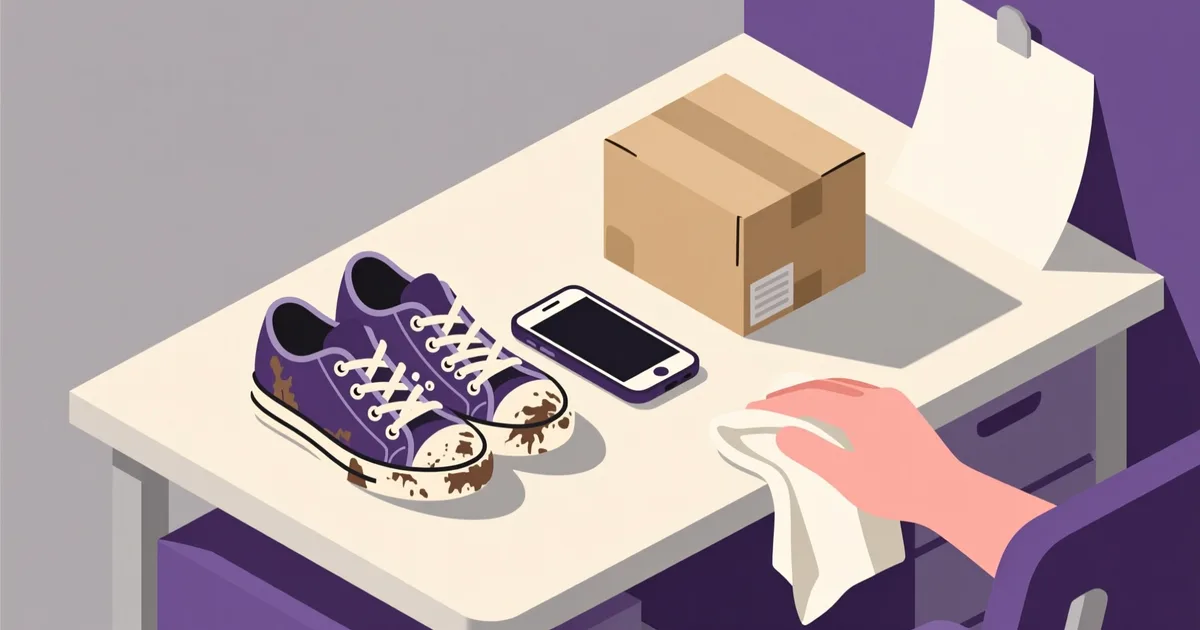
Photos sell more than text. Based on the first photo, the buyer decides within two seconds whether to click on the listing. Photograph the shoes in daylight, by a window, on a solid background. A white wall or wooden floor works better than a patterned carpet.
You need at least five shots: both shoes from the side, a top view, the sole, a close-up of the logo or size label, and a close-up of the wear. The close-up of the wear is what matters most. A buyer who sees the defect in advance won't come back with complaints after the handover.
What to write in the description
Keep the description factual. Include the brand, model, size in European sizing, color, material, and approximate year of purchase. Add how many seasons you wore them and where they've been. Don't hide defects: a peeling sole, a worn heel, a missing shoelace.
Also write why you're selling. Too small, a change of style, the child outgrew them. The sentence "they fit me a size smaller" is more useful information for the buyer than three paragraphs of praise. Put the price in the price field, not in the text, otherwise it will show up twice in the listing.
Photograph the shoes the way you'd want to see them if you were buying them. A disclosed defect in the photo lowers the price by a few hundred, a hidden defect costs the entire sale and sometimes your reputation in seller ratings.
Used shoes listing: where and how to publish it
A listing works best where people filter by city and distance. It doesn't pay to send shoes across half the country, so a local offer always has an advantage. Choose the clothing and footwear category, add your city or district, and set whether you're willing to bring the shoes to a neighboring town.
Put the brand, type, and size in the title. A phrasing like "Rieker boots size 39" works better than "beautiful warm shoes." Buyers search by size and brand, not by adjectives. Then add the condition, material, and handover terms in the text.
On a platform like EX & GO, you can see each seller's history and ratings from previous buyers, which tells you more than the photo alone when buying or selling. Before you publish your listing, go through the listing rules so you know what moderation removes and what details a listing should include.
We see that listings with five or more photos and a filled-in size get significantly more inquiries than listings with one photo and an empty size field. Size is the most common question buyers send as their first message.
Quick sale versus best price versus buyback
Each path has a different price for a different advantage. A quick sale means a discount, the best price means waiting, a buyback means convenience for a lower return. Choose based on whether a month of waiting or a lower amount bothers you more.
| Path | How long it takes | How much you get | Effort |
|---|---|---|---|
| Quick sale via listing | A day to a week | Lower price, 20 to 30 percent discount | Low |
| Best price via listing | Three weeks to two months | The highest possible amount | Higher, you wait and communicate |
| Buyback or second hand | Immediately | A fraction of the market price | Lowest, but the smallest return |
For ordinary worn shoes without a notable brand, a buyback is often the only realistic path. For branded pieces in good condition, a listing is almost always worth it. Posting a listing helps you compare current offers in your city before you set the price.
How to answer interested buyers and spot a scammer
Reply briefly and to the point, ideally within a few hours. The first message usually asks about availability and size. Answer both and add when and where you can hand over. That filters out people who are just browsing.
Scammers have a few favorite tactics. They send a fake payment confirmation screenshot and claim the money will arrive in a few days. They offer to send a courier but want you to pay for shipping or "package insurance" upfront. They ask for confirmation via a link that leads outside the listing. They send an overpayment and want the difference back.
Rules that will protect you
Money in an account is not money in hand. A screenshot can be made in a minute and a confirmation of a sent payment doesn't mean the payment will arrive. Cash on handover or an instant payment you verify in your banking app are the only reliable options.
Never pay anything upfront when you're the seller. Shipping is paid by the person ordering it. If the buyer insists on paying upfront via a link you didn't choose yourself, end the sale. Keep communication inside the listing, where the message history and the other party's ratings are visible.
If you come across a suspicious listing or message, report it to moderation and contact platform support. The sooner others learn about a scam, the fewer people fall for it.
Where to meet and how to hand over the shoes
Hand over in a public, well-lit place. A subway vestibule, shopping mall, café, or parking lot in front of a store is ideal. Avoid apartments, basements, and remote parks, especially for more expensive shoes.
Give the buyer a chance to try the shoes on. Most people will put them on right there, and if the size doesn't fit, the transaction ends without an argument. Bring the shoes in a bag so they don't get dirty on the way, and bring the box too if you have it.
Handle the cash handover only after the try-on. Count the money on the spot, not at home. For a larger amount, choose a place with camera coverage and bring a second person. It's not distrust, it's normal caution.
What applies to private sales in Czechia
A private sale between two people is not the same as buying in a store. When you sell occasionally as a non-entrepreneur, you don't have the same legal liability for defects as a merchant. Still, you must not conceal a defect you know about from the buyer.
With used goods, wear is expected. A buyer can't expect new-shoe condition if you described the condition as worn. That's why the description matters so much: the more precisely you describe what the shoes have been through, the less room for a dispute after the handover.
If you sell repeatedly, in larger volumes, or as part of a business, it's assessed differently and your obligations toward the consumer expand. For a one-off sale of your own shoes at home, it's a normal private transaction. You can find general consumer protection information at the Czech Trade Inspection Authority, which among other things covers sales conditions and complaints.
Be careful with children's footwear and goods that can affect health. The Ministry for Regional Development and other authorities publish consumer protection information at mdcr.cz. For an ordinary sale of a few pairs of shoes from your home closet, this means one thing: describe the condition truthfully and agree on a handover that suits both parties. used shoes
Checklist before publishing the listing
Go through the list before you send the listing to moderation. It takes two minutes and saves you dozens of unnecessary messages.
- The shoes are clean and dry, laces washed or replaced.
- You have five or more photos in daylight, including the sole and a close-up of wear.
- The title includes the brand, type, and size.
- The description includes condition, material, number of seasons, and disclosed defects.
- The price matches similar listings in your city.
- You have filled in the city or district and handover terms.
- You know where you'll meet and have cash ready for change.
Frequently asked questions about selling used shoes
How much can I get for used shoes?
It depends on the brand, condition, and size. For regularly worn shoes without a notable brand, expect ten to forty percent of the normal market price. Branded pieces in good condition sell for forty to sixty percent. Before setting a price, review five to ten similar listings in your city and note how long they have been up. Listings that sit for a month are usually overpriced.
How fast can used shoes be sold through a listing?
With the right price and good photos, the first serious buyer usually gets in touch within one to three days. The sale closes within a week. If no one reaches out in a week, lower the price by ten percent or add better photos. Speed is most often slowed by poor lighting in photos, a missing size in the title, and a price far above the market.
How do I spot a scammer when selling shoes?
The most common signs are a fake screenshot of a sent payment, a courier offer requiring you to pay shipping upfront, a confirmation link outside the listing, and an overpayment offer with a request to refund the difference. Money in an account is not money in hand. Insist on cash on handover or a payment you verify directly in your banking app.
Can I send used shoes by mail or courier?
You can, but with a private sale it carries risk. The buyer may claim the package arrived damaged or contained something else. If you ship, agree on payment in advance, take photos of the packaging, and choose a tracked service. For more expensive shoes, an in-person handover is safer and often faster than waiting for delivery.
Do I have to disclose shoe defects as a private individual?
Yes, you must not conceal a defect you know about from the buyer. With used goods, normal wear is expected, but a hidden defect you did not mention can lead to a dispute. The simplest defense is to describe the condition in both photos and text. A disclosed defect lowers the price by a few hundred, a hidden defect costs the entire sale and damages your rating.
Where is the best place to hand over shoes?
A public, well-lit place with people around. A subway vestibule, shopping mall, café, or parking lot in front of a store. Avoid apartments and remote locations. Let the buyer try the shoes on and accept cash only after they have tried them. For larger amounts, choose a place with camera coverage and bring a second person.
Summary
Selling used shoes fast and risk-free rests on three things: a realistic price based on the local market, honest photos and description, and cash payment on personal handover. If you follow these three steps, you'll avoid most disputes and scams that accompany selling used goods.
Start by going through similar listings in your city and estimating a range. Then photograph the shoes in daylight, write a description including defects, and publish the listing with the size and location filled in. Reply to messages within a few hours and never pay anything upfront. Shoes that have been sitting in the closet for two years still have value. They just need the right price and the right place in the listings.