To buy a used phone without getting scammed, you need to verify the seller before handing over any money. The most common risks are fake payment links, pressure to pay upfront, and accounts with no history. Checking the profile, chatting through the platform's internal messenger, and meeting in a safe place eliminate most of the danger.

The second-hand smartphone market attracts both people looking for cheaper devices and people exploiting that demand for fraud. Scammers follow repeatable patterns. They only change the phone models and cities. In Warsaw, Krakow, or Wroclaw the mechanics are identical. The seller posts an attractive offer, then steers the conversation off the platform or asks for a quick payment.
Platforms like EX & GO introduce phone number verification and listing moderation, which makes it harder for fake accounts to operate. The transaction always happens directly between the parties. The service doesn't hold payments. Responsibility for checking the other party is on you. It's worth knowing what to watch for before you open your wallet.
- Check the seller's account history and other users' reviews before making a decision.
- Keep all communication exclusively through the classifieds platform's built-in chat.
- Never click links to supposed payment gateways sent in private messages.
- If you're scammed, report it immediately to your bank, the police, and the consumer protection authority.
The most common scammer tactics when selling phones
Scammers use a few tried-and-tested methods that rely on the buyer's haste and inattention. Recognizing these schemes lets you avoid financial losses as early as the listing-reading stage.
Fake upfront payment is the most popular scenario. The seller claims there's a lot of interest and demands a deposit by transfer or payment code. Once the money arrives, contact breaks off. Sometimes the scammer poses as a courier and sends a message asking for an extra fee for shipping insurance.
Another method is impersonating payment systems. The buyer receives a link that looks like a bank or postal operator website. Any login details entered there go straight to the criminals. There are also cases of sending forged screenshots confirming a supposed transfer.
Phishing in messaging apps involves moving the conversation off the classifieds site. The scammer asks you to switch to an external messenger, where it's harder to report abuse. There they send malicious files or links.
Sometimes a fake intermediary appears. Someone writes that they represent the phone's owner, who is abroad. They ask for a payment to a third party's account. The real owner often doesn't know their details have been used.
Always check whether the seller's phone number has been verified on the platform. On EX & GO, verified accounts carry the appropriate badge. The absence of that badge doesn't automatically mean a scam, but it does require much greater caution from you during negotiations.
To make it easier to assess the situation, prepare the following checklist before every transaction:
- Check the seller's account creation date. New profiles with no history are a warning sign.
- Read all available reviews from previous buyers on the user's profile.
- Compare the price with other offers in the same category and search radius. A price that's too low should raise suspicion.
- Ask for a photo of the phone with a note showing today's date and the seller's username.
- Arrange to meet in a clearly defined, public place in your area.
- Check the device's IMEI number against the official stolen phone list before handing over cash.
- Test all the device's functions on the spot: camera, speaker, microphone, Wi-Fi connectivity, and fingerprint reader.
How to recognize a suspicious smartphone listing
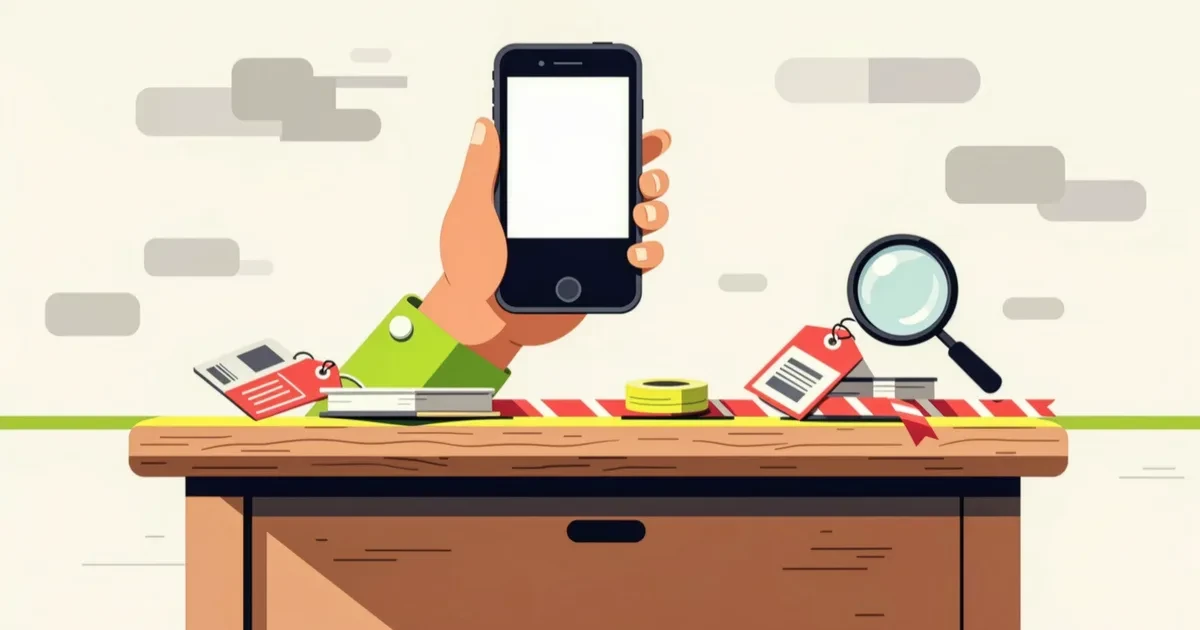
A suspicious listing usually contains logical errors, pressures you to hurry, or avoids specifics about the device's technical condition. Analyzing the content takes a minute and protects you from many problems.
Pay attention to the photos. If they look like they were taken from the manufacturer's website, ask for self-taken photos. Photos from different angles showing any scratches or dents suggest the seller is honest. A lack of detail is a red flag.
The description should include the exact model, storage capacity, battery condition, and information about the phone's origin. Listings like "selling fast, cheap, everything works" without technical specs require follow-up questions. An honest seller knows their device.
Time pressure is a manipulation tool. Messages suggesting that "I'm giving it to someone else in an hour" are meant to switch off your analytical thinking. Don't give in to that pressure. If someone blocks the possibility of calmly inspecting the phone, walk away from the deal. You'll find other offers in the same city on the platform.
You can compare prices of similar models directly in the app under used phones, filtering results by your chosen district or radius from your location. That way you can quickly judge whether the proposed amount fits market reality or is an attempt to grab attention with an unrealistic value.
Where to safely buy a used phone and how to pay
The safest option is to carry out transactions in person, using platforms that verify users and let you check their history. The payment method should prevent a scammer from quickly disappearing with the money without handing over the goods.
Meet during the day, in a public place. Many police stations in Poland provide special safe transaction zones. If there isn't one in your city, choose a shopping mall or a busy cafe. Avoid meeting in remote parking lots or outside apartment blocks in the evening.
During the meeting, check the phone thoroughly. Insert your own SIM card, make a test call, check the camera, and make sure the device isn't locked to the previous owner's account. Ask them to factory reset it in front of you.
Cash payment on personal pickup remains the simplest solution. If you choose a transfer, only make it after physically receiving and testing the device. Avoid paying deposits to unknown accounts. Using the internal chat on EX & GO gives you a record of what was agreed in case of a dispute. The rules for using the service are described in detail on the page exgo.io/pl/rules.
If you're looking for a specific model in your area, start by browsing current offers in the electronics category used phones in Warsaw. Pay attention to sellers with a long activity history and positive reviews from other users in the same region.
What to do after a phone purchase scam
If you've fallen victim to a scam, act immediately. Time matters, especially with bank transfers. You have several institutions in Poland that handle such reports.
Contact your bank. Report the unauthorized transaction or the sharing of login details through a fake link. The bank can block the account or try to reverse the transfer if the funds haven't been withdrawn yet.
Report the case to the police. Prepare all the evidence: screenshots of the conversations, the account details the money was sent to, the listing content, and the seller's email address. Even if the amount seems small, your report may connect with other cases against the same person.
The consumer protection authority accepts reports about violations of collective consumer interests. You'll find information about your rights on the website uokik.gov.pl. The authority won't resolve an individual dispute, but analyzing reports helps pursue organized criminal groups.
Also report the incident to the administrators of the platform where you found the listing. On EX & GO you can do this through the form available at exgo.io/pl/support. Moderation will remove the fake account so other users don't lose money. Your report builds a safer environment for everyone trading electronics.
How to avoid problems when buying a used phone
Can I trust a seller who has no reviews on the platform?
No reviews doesn't automatically mean a scam, but it does require extra caution. New accounts are sometimes created by people who were previously banned for breaking the rules. Always ask for additional photos of the device with a note showing today's date. Arrange an in-person meeting only and never pay any deposit before physically inspecting the phone. If the seller refuses to meet, walk away from the deal.
How do I check whether a used phone is stolen?
Every phone has a unique IMEI number. You can display it by typing star hash zero six hash on the device's keypad. Then check that number in the stolen device database maintained by mobile operators or relevant police services. If the phone is listed as lost, the operator will block it on the network, and you'll run into legal trouble if you try to buy it.
Why does the seller want to move the conversation off the platform chat?
Moving the conversation to external messengers or email is a common scammer tactic. They want to avoid monitoring by the classifieds platform, which scans messages for keywords related to fraud. The internal chat keeps a history of what was agreed. That history is evidence if there's a dispute. Stick to the platform's messenger until you meet in person.
Is an upfront payment for shipping a phone always a scam?
Not every request for an upfront payment is fraud, but with used electronics from private individuals it's a huge risk. Honest sellers usually agree to cash on delivery or use postal services that offer package insurance. If someone insists on an immediate traditional bank transfer and rejects other delivery options, treat that as a clear warning sign.
What should I check during an in-person phone inspection?
During the meeting, test the basic functions. Check whether the screen responds to touch everywhere. Take a photo and record a short video to assess the camera and microphone. Insert your own SIM card and make a call. Make sure the phone charges with the original cable. Look for loose parts in the casing, which may indicate an unprofessional post-accident repair.
Will the classifieds platform refund my money after a scam?
Classifieds services, including EX & GO, act as a bulletin board connecting buyers with sellers. The platform verifies phone numbers and moderates content, but the financial transaction itself happens directly between two people. The service doesn't hold funds or act as an escrow. If you're scammed, report it to your bank and the police.
Your next steps before buying
Before you arrange to pick up the smartphone you've chosen, review the seller's profile on the classifieds platform. Write down a checklist of points to verify during the meeting. Prepare your own SIM card for testing and set an exact location in a safe, public space in your area. Verifying the IMEI number will take you two minutes and protects you from buying a blocked device. Keep all correspondence in the platform chat until you're sure the device works properly.