To buy a second-hand phone without getting scammed, verify the seller's identity, the listing history, and the IMEI number before you pay, and make the payment in person after you've tested the phone. Don't send an advance payment, don't accept payment links received via chat, and don't rush. Most scams happen exactly where you buy without seeing the product.
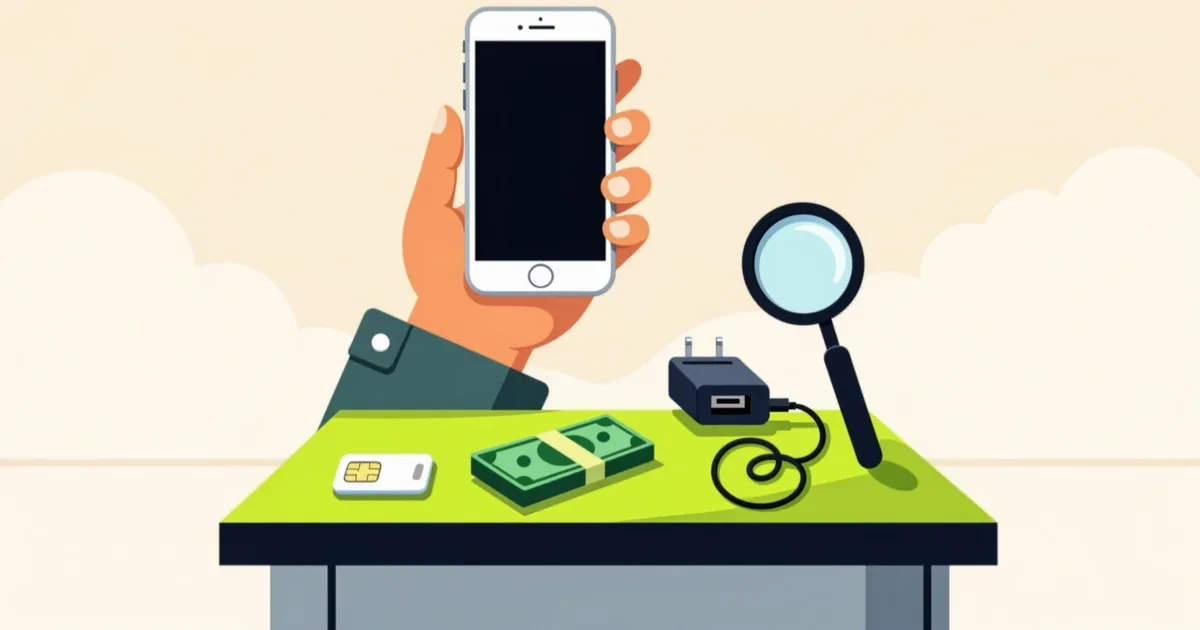
The second-hand phone market in Romania has moved almost entirely online. Listings are posted on classified ad platforms, in Facebook groups, on forums, or on specialized websites. The buyer doesn't see the goods, the seller doesn't see the money, and a screen stands between them. That's exactly the gap scammers exploit.
This guide is for ordinary people in Bucharest, Cluj-Napoca, Iași, Timișoara, or any other city who want a working phone at a fair price and don't want to lose money. We don't promise you'll always find a perfect phone. We promise you'll know what to check, what to ask, and when to walk away.
One thing from the start, to avoid confusion: EX & GO, the classifieds platform where many second-hand phones are listed, does not handle payments. The transaction is made directly between buyer and seller. That means the responsibility for verification is yours, and this article is exactly the checklist you can use.
What fraud patterns appear most often with second-hand phones
Frauds in this category repeat themselves. The scammer doesn't invent something new each time; they use the same three or four scenarios, adapted to an expensive and easily resold product. A phone sells quickly, isn't hard to ship, and has no ownership documents, which makes it an ideal target.
Advance payment requested before delivery
The seller says they have several interested buyers and will hold the phone only if you pay a deposit. They ask for 200, 300, or even 500 lei by bank transfer or card. They promise to ship the phone by courier the next day. After the money arrives, they disappear from the conversation or block the account.
The subtler version: they ask for a deposit for the "courier fee" or "parcel insurance." The amount is smaller, but the loss remains. There's no legitimate reason for a seller to ask for money before you meet them if the product physically exists in the same city.
Fake payment links and screenshots
You receive a link in chat that looks like a courier or payment page. You enter your card details and authorize an amount. In reality, the link leads to a site that copies the appearance of a known service and collects your data. Other times, the seller sends you a screenshot showing "payment made" and asks you to ship the phone immediately. Screenshots can be faked in two minutes in an image editor.
Fake agents, fake owners, fake intermediaries
A common scenario: the person talking to you isn't the owner of the phone. They say they're "selling for a friend," that "the phone is with their brother in another city," or that they're "an agent handling multiple sales." They ask you to deal only with them, not the owner. When you arrive at the meeting, the phone has no box, no invoice, and no clear provenance.
Messaging phishing
After you post in a group or on a classifieds platform, you receive private messages from accounts unrelated to the listing. They ask for your phone number, then send you a code you "need to confirm." That code is an authentication code for one of your accounts. Don't share it with anyone, no matter the story.
The simple rule that cuts most frauds: money is handed over in person, in the same place and at the same time as the phone. Any variant that breaks this simultaneity-advance payment, link, courier paid by you-is a risk you're taking for nothing.
How to recognize a suspicious listing or seller

Fraudulent listings have signs visible from the first read. Not all indicate definite fraud, but a combination of two or three should make you stop the conversation. Check the listing before you message the seller, not after.
- The price is clearly below market, 30-40% lower than similar models in the same city, with no explanation.
- The photos look taken from the internet: studio background, cropped watermark, the same image appears in multiple listings.
- The description is short and generic, with no details about condition, warranty, box, or invoice.
- The seller insists on an advance payment, on rushing, or on "I have another buyer waiting."
- They refuse to meet in a public place and propose only courier delivery.
- The account is new, with no history, no other listings, and no reviews.
- They ask for personal data or SMS codes before any discussion about the phone.
- Communication immediately moves to a messaging app, so no trace remains on the platform.
A serious listing has real photos, taken at home or on a table, with the phone turned on and the screen showing something concrete. It mentions whether it has a box, charger, invoice, or remaining warranty. The seller answers technical questions directly: battery capacity, whether the screen has been replaced, whether the phone has been repaired.
What to check before the meeting
Ask for the IMEI number in advance. It's a 15-digit number that identifies the phone. You can check it in public databases that show if the device is reported stolen or lost. Also ask for the seller's full name and, if possible, a short phone call. A scammer usually avoids voice calls.
Check the seller's history on the platform where you found the listing. On EX & GO, for example, the account has a visible history of listings and reviews from other users, and phone numbers are verified at registration. An account with old activity and real reviews is a better signal than an account created yesterday. The publishing and behavior rules on the platform are described in the EX & GO rules.
If the seller asks you to continue the discussion off the platform, ask why. It's not forbidden, but you lose exactly the mechanisms that protect you: the conversation history, the ability to report the listing, and proof of the message exchange. More about how reporting and support work can be found in the support section.
Questions to ask in chat
Ask questions a scammer doesn't have a prepared answer for. For example: how long have you used it, why are you selling it, do you have the purchase invoice, has it ever been opened for repair, what's the battery capacity now, is it locked to any carrier. Ask for a photo of the phone next to a piece of paper with today's date. That's hard to fake in real time.
If the answers are vague or change from one message to the next, stop the discussion. You're not obligated to buy. In a market with thousands of listings, the next phone will appear in a few days.
Comparison: fraud pattern, warning sign, safe alternative
The table below gathers the most common situations and what to do instead. Use it as a checklist before you respond to a listing.
| Fraud pattern | Warning sign | Safe alternative |
|---|---|---|
| Advance payment requested before delivery | "I need a deposit to hold the phone for you" | Full payment at the meeting, after testing the phone |
| Payment or courier link sent via chat | Short link, domain that doesn't match the real service | Don't open the link. Pay directly, without online intermediaries |
| Screenshot showing payment made | "See, I've paid, ship the parcel now" | Check the money in your account, not in the screenshot received |
| Fake owner or fake intermediary | "I'm selling for a friend, I can't come myself" | Deal only with the person who physically has the phone |
| Messaging phishing | You're asked for an SMS code | Don't share any code. Codes are personal |
| Phone with IMEI reported stolen | Seller refuses to give the number before the meeting | Check the IMEI in advance and compare it with the device on site |
| Product that doesn't match the description | Replaced screen, degraded battery, undisclosed repairs | Test the functions on the spot and ask for a discount or walk away |
What a safe meeting and payment look like
The meeting is the decisive moment. Choose a public, well-lit place with people around: a café, a pharmacy, a bank lobby, a busy metro station. Avoid the stairwell, the empty parking lot, or the seller's home. Tell someone close where you're going and at what time.
- Set the time and place in writing, in chat, so there's proof.
- Bring someone with you if possible. You don't have to justify it.
- Ask to see the phone turned on, not off, from the first second.
- Compare the IMEI shown in settings with the one on the box and the one received in chat.
- Test the screen on a white and black background to see dead pixels or burn-in marks.
- Call someone and talk for 30 seconds to check the microphone and speaker.
- Take a photo and record 10 seconds of video, then check the result in the gallery.
- Test Wi-Fi, mobile data, Bluetooth, GPS, and the fingerprint reader or facial recognition.
- Check the charging port with your own cable, if you have one handy.
- Ask if the phone is carrier-unlocked and if it has any system accounts still connected.
- Pay after all checks pass. Cash or instant transfer, in front of the seller.
- Ask for a simple written agreement, signed, with the date, IMEI number, amount, and both parties' details.
Some buyers prefer bank transfer because it leaves a transaction trail. Others prefer cash because it closes everything on the spot. Both work if done at the same time as handing over the phone. What doesn't work is paying in advance and waiting.
If the seller asks for a deposit to "reserve" the phone, you can propose a simple solution: meet the same day, pay in full on the spot, and if they don't show up, you've lost nothing. A real seller accepts. A scammer refuses and disappears.
What to do after you've been scammed
You paid and the phone didn't arrive or doesn't match. Act quickly, in the order below. Each step leaves a trail that matters later.
- Gather the evidence: screenshots of the listing, the conversation, payment details, name, and phone number.
- Notify your bank immediately and ask to block or reverse the transaction if still possible. The less time that passes, the better the chances.
- File a police report. You can go to any police station, not necessarily in the city where it happened. Bring all evidence and a written description of events.
- Report the listing on the platform where you found it, so the account gets blocked. On EX & GO, reporting is done from the listing page.
- If you bought from a company, not an individual, you can file a complaint with the National Authority for Consumer Protection. Information about the procedure is on the ANPC website.
- If you paid by transfer and have the seller's full details, check with DRPCIV if you need information about persons or vehicles for the case, depending on the situation.
Not all cases get resolved. Recovering the money depends on the bank involved, how quickly you report it, and the amount. It's still worth taking every step, because a scammer who loses accounts wastes time and changes their method.
Frequently asked questions about buying a second-hand phone
What should you check first on a second-hand phone?
Start with the IMEI number and the seller's history. Ask for the IMEI in chat, check it in public databases that flag stolen or lost phones, then compare it with the number in the phone's settings when you meet. Check if the seller has an old account, previous listings, and reviews. A new account with no history asking for an advance payment is an unnecessary risk.
How can I tell if the seller is a scammer?
The signs add up. They ask for an advance payment before delivery, refuse to meet in a public place, send payment links via chat, ask for SMS codes, don't answer simple technical questions, or say they're selling for someone else. One sign alone doesn't automatically mean fraud. Two or three together are enough reason to walk away.
Is it safe to pay by bank transfer in advance?
No. Once the money is gone, recovery depends on the bank and how quickly you report it, and the outcome isn't guaranteed. Paying in advance breaks the simultaneity between money and product, which is the simplest protection. If the seller is in another city, it's better to look for another listing than to send money without seeing the phone.
What should I do if I received a phone that doesn't match the description?
Contact the seller immediately and ask for a solution: return, price reduction, or repair at their expense. If they don't respond, report the listing on the platform and keep all evidence. If you bought from a company, you can file a complaint with the National Authority for Consumer Protection, according to the information published on the institution's website.
Where do I report a suspicious listing?
On the platform where you found it, directly from the listing page. Reporting helps block the account and protects other buyers. On EX & GO, listings go through moderation and phone numbers are verified, but user reports remain important. If you've lost money, file a police report and notify your bank.
Next step: verify, meet, pay on the spot
You now have the complete list. Pick a listing, ask for the IMEI number, check the seller's history, and arrange a meeting in a public place. Test the phone step by step with the list above in hand, and pay only after everything works. If something doesn't add up, walk away without regrets: a good phone will come along, but lost money doesn't come back as easily.
See also: second-hand phones, second-hand phones in Bucharest.