Buying used shoes in Ukraine is easiest through private listings: on EX & GO and similar platforms, you filter by city and category, check photos, price, and seller history, and inspect the item in person. Pay after inspection. Prepaying a stranger to their card is the main risk that cancels out all the savings from a low price.
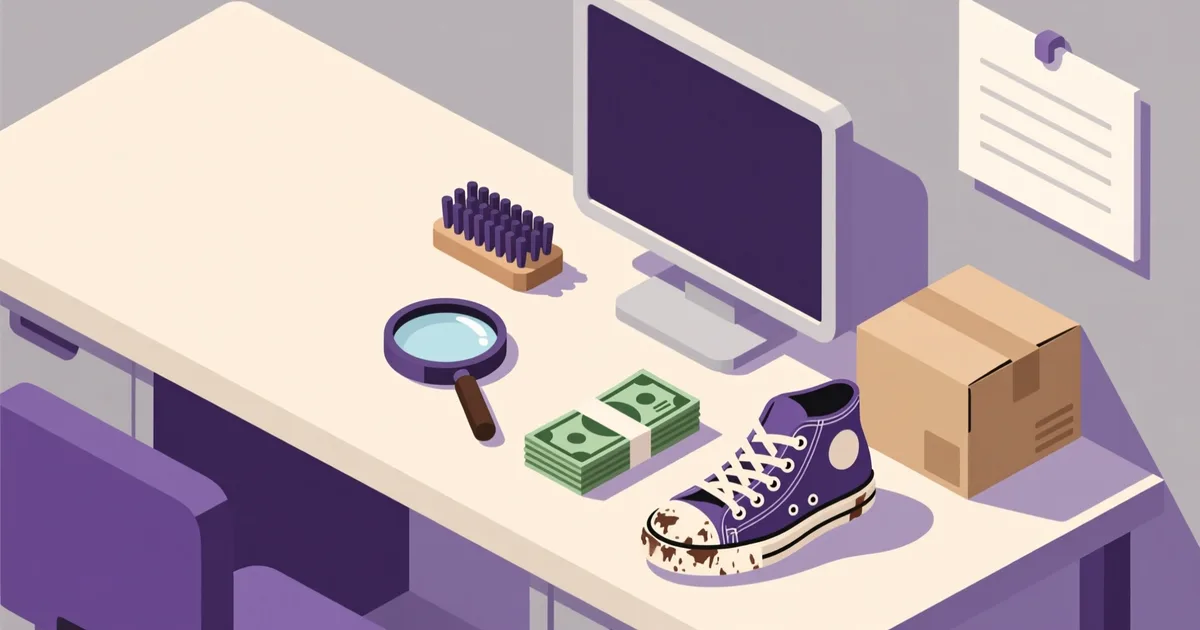
The used shoe market in Ukraine depends on a few things: seasonality, the sizing of a specific brand, and the condition of the sole. People sell pairs that didn't fit, bought online without trying on, or nearly new boots after one season. That's why listings are full of "worn twice" notes. Your job is not to take their word for it but to verify. Below I'll cover where to look, how to read listings, what to check at the meeting, how to negotiate, and what rights a buyer has by law. This guide is for a buyer with a phone in hand who wants a checklist, not theory.
- Search by city and category, not nationwide: shipping shoes without trying them on almost always ends in a return.
- Check the seller by listing history and reviews, not by the number of photos.
- Hand over money only after inspecting the pair in your hands.
- Start negotiating from the defects you can see yourself, not from an abstract "cheaper."
Where to buy used shoes: private sellers, shops, platforms
Private listings offer the lowest price and the widest choice, but they require verification. Consignment shops handle inspection and cleaning, so they're more expensive. Online platforms with seller history are the middle ground: private-seller prices but with some reputational insurance.
In Kyiv, most offers are concentrated in residential areas where people order shoes online en masse and then resell the pairs that didn't work. In Kharkiv and Dnipro, family sales are more active: kids' shoes, teens' sneakers. Odesa and Lviv offer more seasonal pairs, summer and transitional respectively.
How the city and category filter works
On the platform, you choose a category, city, and district radius. This matters for shoes: traveling across the country for a pair worth a thousand hryvnias makes no sense, and by mail you can't try them on. A radius filter within the city narrows the choice to sellers you can reach within an hour.
Then sort by date, not price. A fresh listing means the seller is still responding to messages. Old listings often stay up after the sale.
How to read used shoe listings and avoid scammers
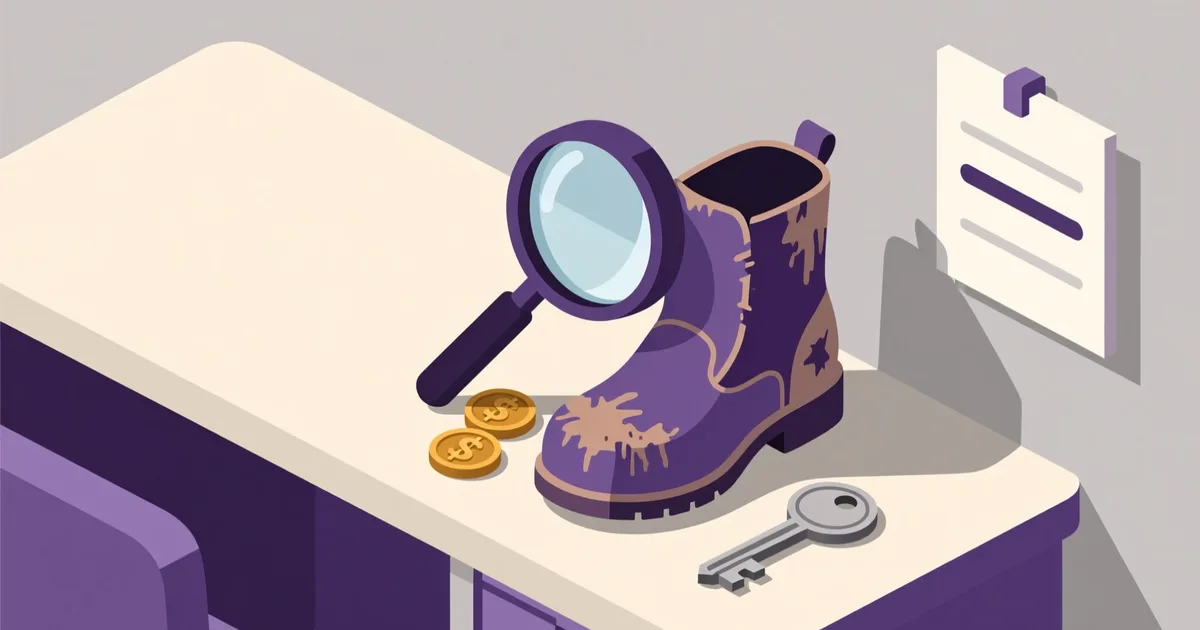
A good listing includes the size in centimeters along the insole, brand, model, and an honest description of defects. A bad one consists of three stock photos and the word "perfect." The difference is visible in ten seconds.
Signs of a scam listing
The first and main one: a request to prepay to a card before inspection. Second: the seller avoids meeting in a public place and suggests "I'll send it by courier." Third: photos taken from the internet, which you can find with a reverse image search. Fourth: a price three times lower than the market for that model and condition.
Also suspicious is a seller who won't name the meeting area until you confirm you're ready to pay. A normal conversation looks different: they immediately tell you the metro station or street, the time, and send extra photos on request.
Ask for a photo of the sole from the side and the insole from above in daylight. These two shots reveal tread wear and insole deformation, and those determine whether the pair is worth your money.
What to check in the description
Read the text, not the headline. Look for mentions of sole replacement, ungluing, heel scuffs. If nothing is said about condition, ask directly in a message. "It's all good, come see" is not an answer.
Ask whether the box is included and whether the insole is original. For branded shoes, having the original box is not a small thing: it confirms the pair's origin.
Meeting checklist: how to inspect shoes in five minutes
Meet during the day, in a public place, with a chance to sit and try them on. Inspection takes five minutes if you know where to look.
- Sole: place the pair on a flat surface. A tilt means uneven wear or deformation.
- Tread: look closely at the heel and toe. Worn pattern there indicates active use.
- Seams and glue: stretch the pair by hand at the joints. Cracks and separation are immediately visible.
- Insole: remove it if it's removable. Dark spots and dents under the toes don't come out.
- Inner lining: look inside. Heel scuffs quickly turn into holes.
- Smell: a sharp odor indicates moisture or fungus. Airings won't fix it.
- Size: try them on with the socks you'll wear. Different brands fit differently.
If the seller won't let you stretch the pair or try them on, that's a reason to leave. A normal seller understands that no one will buy without trying them on.
We see that buyers most often ask in messages about the real insole size and the possibility of a daytime inspection, so it's worth clarifying these two points before you head out.
How much do used shoes cost and how to negotiate
Price depends on three things: brand, condition, and season. Kids' shoes cost less than adults', branded sneakers more than mass-market clothing. Transitional pairs are more expensive in spring and autumn than in the middle of summer.
Use the city median, not the lowest listing. One cheap offer among a hundred normal ones is almost always either a scam or a hidden defect. Compare five or six similar pairs before arranging a meeting.
How to negotiate a better price
Negotiation works when you name a specific reason. "I see a worn heel and ungluing on the left, I'll take them for this much" sounds more convincing than "will you go cheaper." A private seller is often ready to compromise because the alternative is weeks of waiting.
Don't pressure the seller with threats and don't offer ridiculous sums. But also don't pay full price if you find a defect that wasn't mentioned in the listing. That's a normal reason to lower the amount.
Before heading out, it's worth reviewing the listing rules to understand which posts pass moderation and what to complain about if the seller behaves inappropriately.
Comparison: private seller, shop, and platform
| Option | Price | Condition check | Buyer rights |
|---|---|---|---|
| Private seller | Lowest | Yours only, on site | Minimal, verbal agreement |
| Consignment shop | Medium or high | Done by the shop | Receipt and return option per shop terms |
| Platform with seller history | Close to private | Yours, but with reviews and history | Depends on agreement, plus report to admin |
The choice comes down to how much you're willing to pay for peace of mind. A shop charges for inspection and the option to return the item; a private seller charges nothing but the risk.
If you need fresh listings in your city, filtering by district will do more than browsing a hundred nationwide posts.
Buyer rights in Ukraine: what applies when buying second-hand
Buying from a private individual is an agreement between two people, not retail. Consumer protection law governs relations with a seller-entrepreneur, not with a person selling their own pair. This means a simple thing: you can't return shoes to a private seller two days later if you inspected and accepted them yourself.
That's why on-site inspection is not a formality but your only guarantee. Agree on everything before handing over money: condition, completeness, price. If the seller promises something important, it's better to record it in the platform chat.
It's also worth knowing the limits: if you were sold an item that doesn't legally belong to the seller, or you became a victim of fraud, that's no longer a quality dispute but a criminal case. In such cases, contact the police, not the seller. General guidelines on consumer protection are described on the website of the State Service of Ukraine on Food Safety and Consumer Protection, and the rules for safe payments and personal data protection should be checked against the recommendations of the State Service for Special Communications and Information Protection.
Another practical point: don't send a copy of your passport or other documents to the seller for "processing." They're not needed to buy shoes second-hand. used shoes in Kyiv
Frequently asked questions
Where is the best place to look for used shoes in Ukraine?
Online classifieds with city and category filters offer the widest selection, along with local social media groups. Consignment shops are more convenient because they handle inspection, but prices are higher. For quick results, choose a platform where seller history and reviews are visible.
Can I return used shoes bought from a private individual?
Generally no. Buying from a private individual is a civil agreement, not retail, so the 14-day return right doesn't apply. The only reliable protection is a careful inspection before handing over money. If it's fraud or the item doesn't belong to the seller, contact the police.
How do I avoid scammers when buying used shoes?
Don't pay in advance. Meet during the day in a public place, reverse-search the photos, and check the seller's listing history. If the price is significantly below market and the seller avoids meeting and suggests a courier, that's almost always a reason to walk away.
How much do used shoes actually cost?
Price depends on brand, condition, and season. Kids' pairs cost less than adults', branded sneakers more than mass-market models. Use the median for similar listings in your city, not the cheapest offer: a sharply low price often signals a defect or a scam.
What should I do if the shoes have a hidden defect?
If the defect was deliberately hidden and the seller knew about it, it's a dispute about good faith, not quality. Message the seller through the platform, save the conversation and photos. If you can't resolve it, report to the platform admin, and in case of fraud, contact the police.
Is it worth buying shoes by mail without trying them on?
For used shoes, it's risky. Sizing varies by brand, and you can't assess the sole and insole condition from photos. If you decide to go ahead, ask for extra daylight photos, confirm the insole length in centimeters, and arrange payment after delivery if the seller agrees.
Summary
Buying used shoes is worth it if you approach it as an inspection, not a blind purchase. Search by city and district, read the description, not the headline, and check the seller's history. At the meeting, check the sole, seams, insole, and lining, and try them on with the socks you'll wear. Hand over money after inspection and never in advance.
Remember the limits: a private deal doesn't give you a right to return, so all responsibility for inspection lies with you. If the seller pressures you to hurry, avoids meeting, or asks for prepayment, just move on to the next listing. There are enough pairs on the market, and your time and money are limited.
See also: second-hand shoes.