Selling books in the US works fastest through a classifieds listing: you photograph the book, set a price based on similar listings, add your city and neighborhood, and the buyer messages you directly. Then you arrange a meetup or shipping, verify payment, and hand over the books. The whole transaction happens directly between you and the buyer.
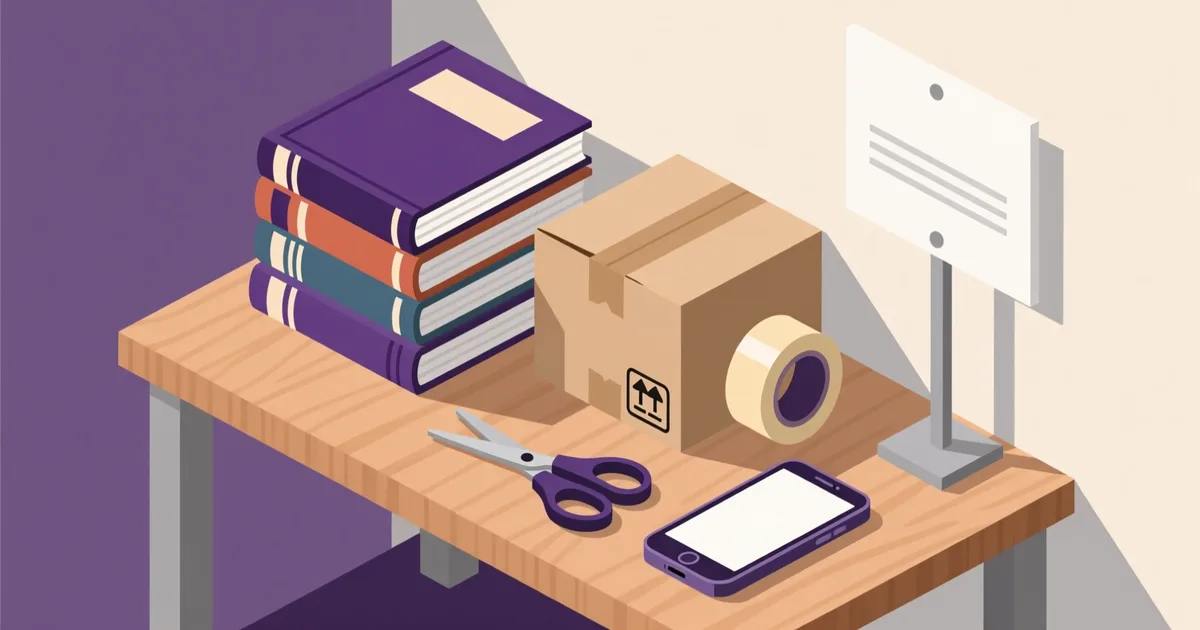
A home library rarely sells as one lot. Someone is looking for a specific edition, someone needs textbooks for their child, someone is collecting a series. So it pays to think not about "selling everything" but about how to present each book so the right buyer finds it. In big cities like New York, Los Angeles, Chicago, Houston, and Phoenix, demand for used books comes from students, parents, and collectors. In smaller cities there are fewer buyers, but competition among sellers is lower, and your price can be higher than in a major metro.
Below is a practical step-by-step guide: from assessing a book's condition to safely handing over the money. You'll see how to set a price, how to write a listing, how to respond to buyers, and how to avoid losing a book or money to scammers.
- Set your price based on three to five similar listings, not on what you once paid in a store.
- Photos on a light background, plus the spine and title page: buyers judge condition from these.
- Accept payment only after you confirm the funds have cleared, not from a screenshot in a messaging app.
- Meet during the day in a public place or ship after full payment, no exceptions.
How to assess condition and price used books
The price of a used book depends on three things: condition, demand for that specific edition, and year of publication. A 2019 textbook costs more than the same one from 2008 because the curriculum has changed. Fiction by a popular author holds its value, while Soviet-era collections often have no takers.
Before listing, go through your shelf and divide books into three groups. First: what actually sells, meaning modern textbooks, children's books, nonfiction, popular series. Second: collectible or rare editions that should be sold separately. Third: what you can't sell for money but can give away or recycle.
What affects the price
Condition is judged by simple signs. A cover without creases, an intact spine, pages without stains or pen marks, no torn pages. If there are pencil underlines, that's usually not critical for a textbook, but you should mention it in the listing.
Year of publication matters for educational and technical literature. For fiction, buyers look at the publisher and translation. Independent publishers that print contemporary literature often hold higher resale value than mass-market reprints.
How to compare with other listings
Search by the book title and author, not by the word "books." See what similar copies sell for in the same city. If there are no listings in your city, look nationwide and add shipping cost to your price.
Set your price 10-15 percent below the most expensive similar listing if you want to sell within a week. If you're not in a hurry, set the average price and be prepared to wait a few weeks. The difference between "selling fast" and "selling high" almost always comes down to those percentages.
The most common mistake private sellers make: pricing a set when the buyer needs one book. Break the series into separate listings, and offer the set as a discount in the description.
How to create a listing that gets replies
A listing works when the title includes the author, title, and condition, and the photos show what the buyer can't check by hand. A title like "Books, lots" will never be found. A title like "Kobzar, Taras Shevchenko, 2015, good condition" will be found by a direct search.
Photos
Shoot in daylight, place the book on a light table or sheet of paper. You need at least three shots: the full cover, the spine, and the title page with the year of publication. If there are defects, photograph them separately: a buyer who saw them in advance won't come back with a complaint.
Don't use stock photos from the internet. Even if the edition looks identical, the buyer will compare at the meetup and walk away. A few real phone shots are better than a perfect image from someone else's site.
Description and keywords
In the text, include the author, title, publisher, year, language, number of pages, condition, and reason for selling if relevant. Add words buyers will search for: genre, grade level, series. This isn't decoration; it's how you get into the buyer's filters.
State the price as a number, not "negotiable." "Negotiable" attracts messages from people who want to buy for pennies and wastes your time. Also specify whether you're willing to ship the book to another city and who pays for shipping.
List on a platform where buyers filter by city and neighborhood, not just category. On EX & GO, listings go through moderation, and the seller's history and reviews are visible to the buyer before the first message, which reduces empty inquiries. Before publishing, it's worth reading the listing rules so you don't waste time on edits.
How to respond to buyers without wasting time
The first message usually contains one of three questions: is it still available, can you go lower, or will you ship. Answer briefly and to the point, without emotion. A template response covering all three questions at once saves you dozens of messages a day.
Don't lower the price in the very first message. If the buyer haggles, offer a discount on condition: they buy several books or pick up in person. That way you don't lose money and get a faster deal.
Signs of a scammer
The most common scheme: the buyer sends a payment screenshot and asks you to ship immediately. A screenshot is not proof of deposit. Check your balance in the banking app, not an image in a messaging app.
Second scheme: they ask you to prepay for a courier on your end. A private book seller never pays the buyer upfront. If someone asks you to arrange shipping through their link and enter card details, that's an attempt to steal your information.
Third sign: the buyer avoids specifics about the city and meeting time, pressures you for urgency, writes from a new account with no history. Calmly declining such a deal costs zero dollars, while a lost book costs full price.
Where to meet and how to hand over books safely
Meet during the day in a public place: near a subway station, in a coffee shop, at a post office, or in a shopping mall. Don't invite a stranger home and don't go to theirs. If the book is expensive, bring someone with you.
Verify the money before you hand over the book. Count cash on the spot, confirm transfers in the banking app. If the buyer wants to examine the book, hand it over but don't let it out of your sight.
Shipping to another city
Ship after full payment, not partial. Wrap the book in a bag or film, then cardboard on top so corners don't bend. Keep the tracking number and send it to the buyer: this eliminates most unnecessary questions.
Agree on who pays for shipping before sending. An argument over $5 after the package is already on its way ruins both the deal and the review.
What to know about private sales in the US
Selling your own items that you didn't buy for resale is not a business activity. But if you buy books and sell them systematically, that's a business with corresponding rules. The line is defined by regularity and intent, not by the number of books on your shelf.
Consumer protection issues are regulated by the government, and private transactions between individuals follow different rules than a store. If you're selling as a business, you should refer to the FTC for consumer protection guidance. Tax questions on income from systematic sales fall under the IRS, and it's better to clarify them in advance than later.
We see in the catalog that listings with real photos and an exact price get the most messages, while complaints most often involve sellers who asked for prepayment without confirming the deposit. If a dispute arises about a listing or a user's behavior, contact support: moderation responds to reports and can restrict listing access.
Comparison of three ways to sell books
The choice between speed, price, and convenience is always a trade-off. The table below will help you decide what matters most for your situation.
| Criterion | Fast sale | Highest price | Trade-in |
|---|---|---|---|
| Time to deal | 1-7 days | 2-8 weeks | 1 day |
| Price per book | 20-30 percent below market | market or higher | lowest, often 20-40 percent of market |
| Your effort | one listing, quick response | separate listings, photo of each book | take it in and drop it off |
| Best for | moving, clearing shelves | collectible and rare editions | when you need to clear volume |
| Risks | haggling and many messages | long wait, some won't sell | loss of part of the value |
Most often a mixed strategy wins: you sell expensive and rare books in separate listings at market price, and group the rest into a few lots at a lower price. That way you don't keep the shelf for months and don't give away valuables for pennies.
Checklist before publishing a listing
Go through this list every time you add a new book. It takes two minutes and saves hours of messaging.
- The title includes author, title, year, and condition.
- There are at least three photos: cover, spine, title page.
- Defects are photographed and described in text.
- The price is a number, not "negotiable."
- City, neighborhood, and willingness to ship are specified.
- It states who pays for shipping.
- The listing doesn't duplicate the same edition in multiple posts.
- You're ready to confirm payment in the banking app, not from a screenshot.
If you're selling many books at once, keep a simple list: title, price, who you promised it to, status. This saves you from the situation where a book was promised to two buyers but given to a third.
Frequently asked questions
How long does it usually take to sell a used book?
Popular textbooks and children's books sell within days if the price is close to market value. Rare or niche titles may wait weeks or months for a buyer. Speed depends not on the platform but on the balance of price and demand for that specific edition in your area.
Can I sell books if they're in bad condition?
Yes, but honestly describe the flaws and set a fair price. Textbooks with pencil underlining sell to students if the price is lower. Books with stains, mold, or torn pages are better not sold: the buyer will come back with a complaint, and you'll lose time and reputation.
How do I avoid scammers when selling?
Don't ship a book based on a payment screenshot; verify the deposit in your banking app. Never pay for a courier on your end or enter card details through a link from the buyer. Meet in person during the day in a public place. If the person pressures you for urgency and avoids specifics, walk away.
Who pays for shipping a book to another city?
It's negotiable, but you must agree before shipping. Typical practice: the buyer pays for shipping, and the seller spends time packing. If you want to sell faster, cover shipping yourself and add its cost to the book price upfront.
Do I need to pay tax on selling my own books?
A one-time sale of personal items is generally not a business activity. If you buy books and sell them systematically, that's a business, and you should clarify tax questions with the IRS or a tax professional. Don't rely on forum advice for money matters.
What if the buyer doesn't pick up the package?
Keep the tracking number and the chat history on the platform. After the package is returned, ask the buyer to cover shipping or cancel the deal. For new buyers without history, require full payment including shipping upfront. This is standard practice for private sales.
Summary
Selling books within a week is realistic if you approach it like a small project: divide the library into groups, check prices against similar listings, take honest photos, and describe condition without embellishment. Speed comes from a lower price, maximum profit comes from a separate listing for each valuable edition. Safety comes from a simple rule: money confirmed in the bank, then the book handed over.
Don't delay publishing out of fear of haggling or scammers. One well-crafted lot with three photos and an exact price already brings the first messages, and then you'll quickly understand which books are in highest demand in your city. Post a listing to compare similar offers before finalizing your price. Used books will help when you want to check whether your listing duplicates existing ones.


