Sell men's clothing in Romania by listing each item on a classifieds platform with clear photos, a realistic price checked against similar listings, and a city or district buyers can filter by. You keep the item until cash is in hand, arrange a public handover, and ignore any buyer who asks you to ship before payment or sends a payment screenshot instead of money.

Romania has a deep second-hand market and a steady flow of private sellers moving jackets, suits, jeans and shoes they no longer wear. The hard part is rarely finding a buyer. It is pricing without guessing, writing a listing that survives the first scroll, and spotting the small set of tricks that turn a normal sale into a loss.
This guide is for private sellers and small shops in Bucharest, Cluj-Napoca, Timișoara, Iași and smaller towns who want a sale completed in days, not months. It covers how to price against what is already listed, how to photograph and describe garments so people actually message you, how to answer those messages, where to meet, and what Romanian consumer rules mean for a private sale. Nothing here promises a specific result. It is a process you can follow.
- Price from three to five comparable listings, not from what you paid.
- Photograph on a plain background in daylight, and show every flaw in one honest shot.
- Meet in a busy public place during the day; cash or instant bank transfer before the item leaves your hands.
- Treat payment screenshots, courier prepayment requests and overpayment offers as red flags.
How to price men's clothing for a fast sale in Romania
Start with the current asking prices of the same garment, size and condition, then price at or slightly below the middle of that range. A quick sale usually means accepting 20 to 40 percent under the original retail price for a well-kept item, and more for anything with visible wear.
Search the category by city first, then widen to the whole country. A wool coat in Cluj-Napoca competes with coats in Bucharest once shipping is on the table, so national prices set the ceiling. Note the size on the label, because a 52 EU jacket and a 42 EU jacket are different markets entirely.
Condition drives the number more than brand does. New with tags holds the most value. Worn once or twice sits just under it. Anything with a stain, a pulled thread or a faded collar belongs in a lower bracket, and hiding that in the price only wastes your time later.
What actually moves the price up or down
Brand recognition matters in Romania for suits, shoes and outerwear. Size matters everywhere: common sizes sell faster than extremes. Season matters too. Listing a winter parka in July means it sits until October, while a linen shirt in April goes in days.
Accessories attached to the garment help. Original box for shoes, spare buttons, a garment bag, a receipt for a recent alteration. These are small proofs of care and buyers notice them.
How to photograph and describe a men's clothing listing
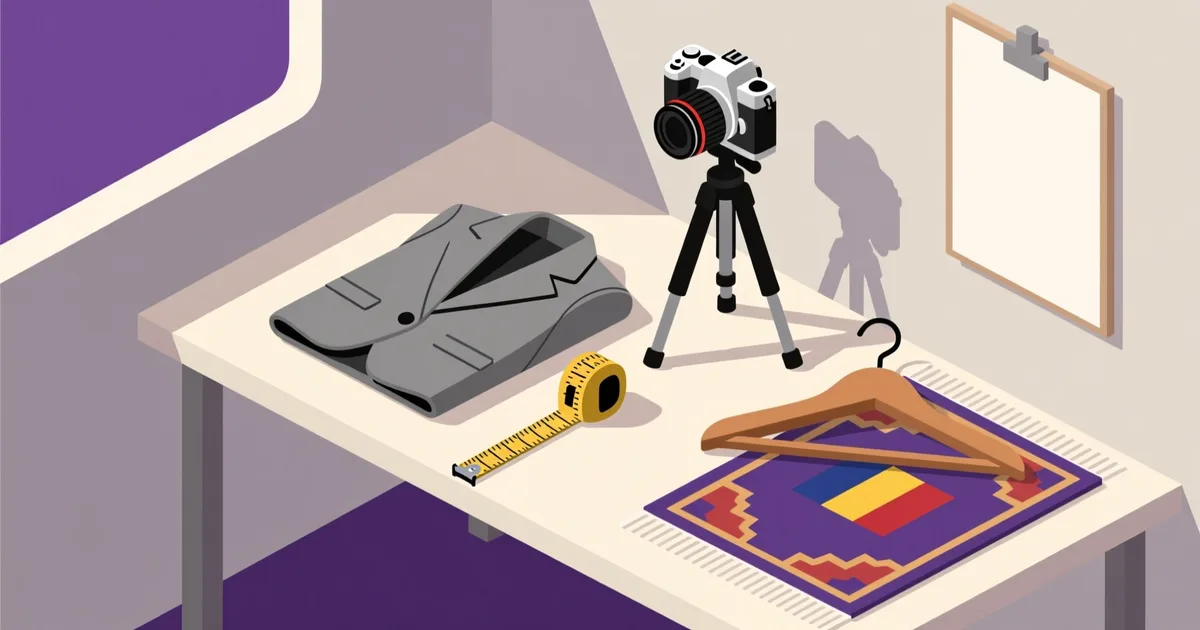
Photograph the garment on a hanger against a plain wall, in daylight, with the whole item in frame. Add close-ups of the label, the size tag, the fabric texture and any flaw. Six to ten photos is enough; more than that and buyers stop scrolling.
Your first photo decides whether anyone opens the listing. It should show the item alone, not on a bed with other clothes, not in a dark room, not cropped. Natural light through a window beats a phone flash every time.
Writing a description that answers questions before they are asked
Lead with the item, the size and the condition. Then add brand, colour, material, measurements and the reason you are selling. Measurements matter most for suits and shirts, because Romanian sizing varies between brands and buyers know it.
State flaws plainly. A short line like "small mark on the left cuff, visible in photo 5" builds more trust than a perfect-sounding listing that disappoints at handover. Buyers who arrive expecting the flaw complete the deal. Buyers who discover it walk away.
Where to list matters as much as how. A classifieds platform with city and district filters puts your listing in front of people nearby, which is exactly the audience for a handover sale. Listings on EX & GO pass moderation, phone numbers are verified, and the seller's history and reviews are visible to buyers, so a clean profile does real work for you. Read the posting rules at /en/rules before you publish, because a removed listing costs you a week.
How do you answer buyers and filter out scammers?
Reply within a few hours, confirm the item is still available, and ask one question that moves the deal forward: which day and which part of the city works for them. Short, specific replies filter out casual browsers faster than long ones.
Most messages are genuine. A minority follow a small number of scripts, and once you know them they are easy to spot.
Common tricks and how to shut them down
Fake payment screenshots are the most frequent. A buyer sends an image of a bank transfer and asks you to hand over the item or ship it before the money lands. A screenshot is not a payment. Check your own banking app, and wait for the balance to change.
Courier prepayment is the second pattern. The buyer insists on a specific courier and asks you to pay a small fee or buy a code first. You do not need to pay anything to sell an item you already own.
Overpayment offers are the third. Someone sends more than the asking price and asks you to return the difference. The original transfer is later reversed and you are out the difference. Decline and stop replying.
If a buyer refuses a public meeting place during the day and pushes for a courier, a deposit or a payment link, end the conversation. A real buyer in the same city has no reason to avoid meeting you.
Keep the conversation inside the platform where possible. Messages there stay on record, and the seller's history and reviews are visible to both sides. You can report a suspicious account through the support pages at /en/support.
Where to meet and how to hand over safely
Meet in a busy, well-lit public place during the day: a shopping centre entrance, a metro station, a bank branch lobby. Bring the garment in a bag, let the buyer inspect it, and take payment before it leaves your hands.
Cash is simplest. An instant bank transfer confirmed in your own app is equally fine. Do not accept a promise to pay later, and do not split the payment across two meetings unless you know the buyer.
For higher-value items such as a leather jacket or a good suit, meeting inside a bank branch is reasonable and both sides usually agree. For bulky items like a coat, a car boot handover in a busy car park works if the location is public and the time is daylight.
What applies to private sales in Romania is worth knowing before a dispute appears. A private seller is not the same as a trader, and consumer protection rules that bind shops do not apply in the same way to a one-off sale between individuals. The National Authority for Consumer Protection sets out the rules that apply to traders at ANPC, and the Directorate for Driving Licences and Vehicle Registration handles vehicle paperwork, not clothing, so it is not relevant here. If you sell regularly as a business rather than clearing a wardrobe, the trader rules do apply to you and a human editor should verify the current obligations before publishing a business-facing version of this guide.
Quick sale, best price or trade-in: which route fits you?
Pick the route before you write the listing, because the three options ask for different amounts of your time and return different amounts of money.
| Route | Typical time to sell | Price you get | Effort | Best for |
|---|---|---|---|---|
| Quick sale | Days | Below market, often 30 to 50 percent under similar listings | Low: one listing, flexible on price | Clearing space, moving house, no storage |
| Best price | Weeks | At or near the top of comparable listings | High: good photos, detailed description, patient replies | Quality suits, shoes and outerwear in common sizes |
| Trade-in | Same day | Lowest, set by the shop | Minimal: you hand it over and leave | Items with little resale demand, or when time matters most |
Most private sellers land between quick sale and best price. Price at the top of the range, then drop by 10 percent every ten days if messages are slow. That single habit turns a stalled listing into a completed sale without giving the item away on day one.
If you sell several garments at once, group them into one listing only when they share a size and a style. Mixed bundles confuse buyers and attract low offers. post a listing
Small businesses moving stock should keep the same discipline: photograph each item, price from live comparables, and answer within a working day. second-hand men's clothing
Checklist before you publish the listing
Run through this list once and you remove most of the reasons a listing fails.
- Price checked against three to five live comparable listings in the same size and condition.
- Six to ten photos, plain background, daylight, first photo shows the item alone.
- Label, size tag and every flaw photographed.
- Description states brand, size, material, measurements and reason for selling.
- City and district set correctly so local buyers find it.
- Phone number verified and profile history visible.
- Posting rules read before publishing.
- Meeting place and payment method decided in advance.
Frequently asked questions
How fast can I sell men's clothing in Romania?
A correctly priced item in a common size usually gets its first serious messages within a few days, and a completed sale within one to two weeks. Speed depends on three things: price against comparable listings, season, and how quickly you reply. Items priced at the top of the range with flaws hidden in the description take far longer, and often never sell.
How do I price second-hand men's clothing in Romania?
Search the same garment, size and condition, note three to five asking prices, and set yours at or just below the middle. Expect roughly 20 to 40 percent under the original retail price for good condition. If messages are slow after ten days, drop the price by 10 percent rather than rewriting the listing.
What should a men's clothing listing in Romania include?
Brand, size on the label, material, measurements, condition and the reason you are selling. Add six to ten clear photos covering the whole item, the label and any flaw. Set the city and district so local buyers can filter to you. A complete listing gets fewer questions and more serious messages.
Is it safe to sell men's clothing to a stranger?
Yes, if you keep three rules. Meet in a busy public place during daylight, take payment before the item leaves your hands, and ignore anyone who asks you to pay a courier fee or return an overpayment. Cash or a transfer confirmed in your own banking app is the only proof that matters.
Do consumer protection rules apply to a private clothing sale in Romania?
Consumer protection rules bind traders, not individuals clearing their own wardrobe. A one-off private sale between two people is treated differently from a shop transaction. If you sell regularly as a business, the trader rules do apply. Check the current obligations before you publish a business-facing listing.
Should I accept a payment screenshot as proof?
No. A screenshot can be edited and does not mean money has arrived. Open your own banking app and confirm the balance changed before handing anything over. If the buyer pressures you to release the item first, that is the moment to end the conversation.
What if the item does not sell for weeks?
Change one variable at a time. Drop the price by 10 percent first. If that does not work, reshoot the main photo in better light, then rewrite the description with clearer measurements. A listing that sits for a month is usually priced above the live market, not badly photographed.
Getting the sale done
Selling men's clothing in Romania comes down to three habits: price from live comparables instead of memory, photograph and describe the item honestly, and keep the handover public and paid before the item moves. Everything else is detail. The scams are few and they repeat, so once you recognise the payment screenshot, the courier fee and the overpayment, they stop costing you anything.
Start with the garments you are least attached to. They teach you what your local market pays, and the first completed sale makes the next listing faster to write. If you sell regularly, keep your profile history clean, read the rules before each batch, and treat every buyer the way you would want to be treated at a handover. That is the whole method.