Buying used tools in Poland is cheapest from private sellers in local listings, but only if you check the machine's condition, the seller's history, and the real market price before transferring money. This guide walks you through every step, from browsing offers to in-person pickup, negotiation, and complaints.
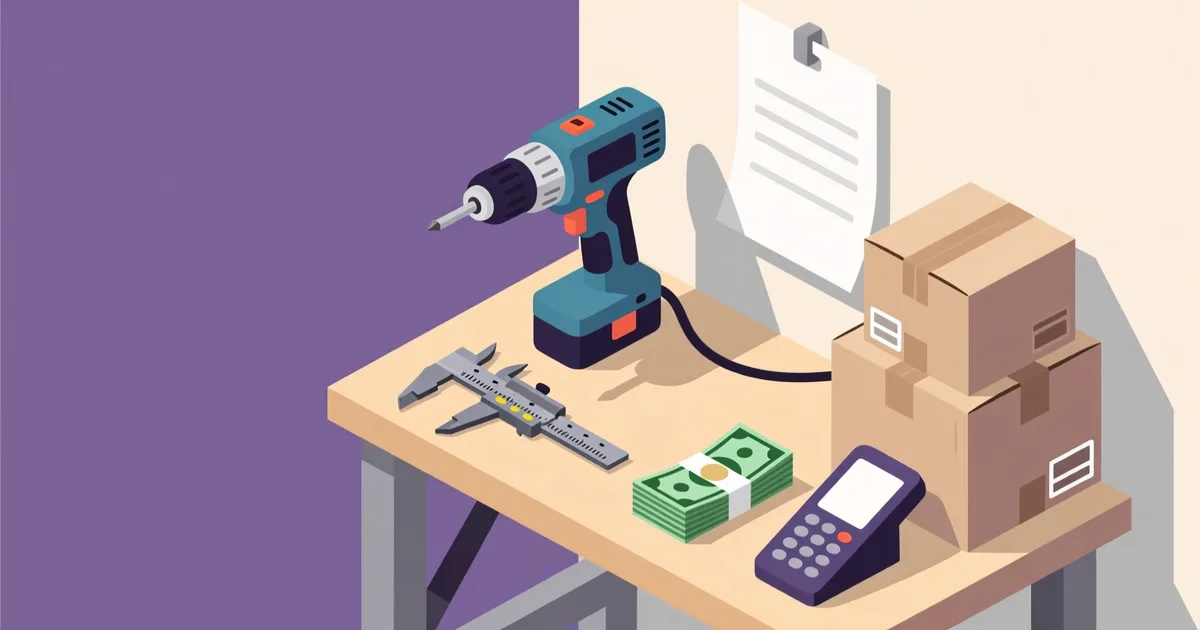
The secondary tool market in Poland is large and highly fragmented. Grinders, hammer drills, saws, compressors, and cordless power tools mainly change hands between private individuals: after a renovation, after finishing a house build, or after closing a small workshop. In Warsaw, Krakow, Lodz, Wroclaw, and Poznan, supply is highest because that's where most people and businesses are. Prices can be 30 to 60 percent lower than in stores, but the difference comes from risk, not a miracle. Your job is to limit that risk before you send money.
- Buy from sellers with a visible history and a verified phone number, not from accounts created yesterday.
- Never send a deposit before seeing the tool, unless you pay through a secure method with a possibility of reversal.
- At the meeting, check the serial number, play in the spindle, the condition of the brushes, and the complete set of accessories.
- Set your price after comparing several similar listings in your city, not based on the first offer.
Where to Buy Used Tools: Listings, Shops, and Local Markets
Most offers appear in online local listings, because there sellers don't pay commission and buyers can see the city and district. On EX & GO, listings are grouped by category and city, so you can narrow results to Warsaw, Krakow, or Wroclaw and the surrounding area within a few dozen kilometers. This is practical when the tool weighs 12 kilograms and you prefer to pick it up in person rather than pay for a courier.
The second channel is used tool shops and service points that buy back equipment after repair. The price is higher than from a private seller, but you get a receipt or invoice and often a short startup warranty. The third channel is flea markets and antique fairs in larger cities, where you can view several machines in one place, though the selection is less predictable.
How to Filter Listings in Practice
Start with the category and city, then narrow the radius to districts you can realistically reach in one day. Enter the model, not just the tool type: "Makita HR2470 hammer drill" gives fewer results than "drill," but they are relevant. Sort by date added, because good offers disappear within a few days.
Check whether the seller has a history and reviews from previous transactions. An account with several successful sales is a different level of trust than a profile with no trace. It's worth verifying the phone number before the conversation, so you don't waste time on anonymous listings.
How Does Buying from a Private Seller Differ from a Shop?
The difference is not just about price. A private seller does not run a business under consumer sales regulations, so your complaint rights are narrower than in a shop. With a business, you have statutory warranty and the option to file a written complaint, and consumer affairs in Poland are overseen by the President of the Office of Competition and Consumer Protection, which is worth remembering when the seller runs a company and avoids responding UOKiK.
With a private individual, you rely mainly on what you agree and what can be proven. That's why it's so important to inspect the equipment before payment and keep the correspondence from the listing. If the seller promises something in writing, e.g., that the tool was serviced, ask for confirmation in a message. Such a record matters later.
Comparison of Three Purchase Channels
| Channel | Price | Rights in Case of Defect | Risk |
|---|---|---|---|
| Private seller from a listing | Lowest, often 30 to 60 percent cheaper than in a shop | Individually agreed, no consumer warranty | Higher, depends on seller's history |
| Used equipment shop | Higher by a dozen or so percent | Statutory warranty, receipt or invoice, often short warranty | Low |
| Platform with seller history | Intermediate, depends on offer competition | Depends on seller type, private or business | Medium, limited by moderation and reviews |
How to Recognize a Scam in a Tool Listing?
The most common scheme is a request for a deposit or full payment before shipping, combined with no possibility to inspect the equipment. The seller explains it away with a trip, lack of time, or that "there's a long queue of interested buyers." The second signal is photos taken from the internet: identical shots appear in several listings in different cities, sometimes with a different background than the rest of the seller's offers.
The third signal is a price detached from the market. If a new saw costs 900 zlotys and someone offers it for 250 zlotys with shipping, that's not a bargain, it's a hook. The fourth is pressure for a quick decision and payment outside the platform, e.g., via BLIK code to a phone number that doesn't belong to the seller. In such situations, simply end the conversation.
Before transferring money, ask one question: can you see the tool live or record a short video of it running. An honest seller has no problem with that, and a scammer will disappear after this question.
List of Warning Signs
- Request for a deposit or full payment before any visual contact with the equipment.
- Photos identical to another listing in a different city.
- Price lower by half than the cheapest similar offer in the area.
- No in-person pickup, only courier shipping with cash on delivery.
- Phone number from a different province than the declared pickup location.
What to Check at the Meeting Before Buying?
Arrive with a charged phone and a list. Inspect the housing for cracks, check whether the screws are worn and the gaps are full of dust from long use. Ask for a demonstration on the spot, preferably under load, e.g., by pressing a drill bit into a piece of wood. Listen to the motor and check for knocking or interruptions.
Ask for the serial number and compare it with the nameplate. Check whether the tool comes with a complete set: keys, case, charger, extra batteries. A missing charger for an older model can cost more than the price difference between two listings. For cordless tools, ask about battery capacity and age, as it's the most expensive part to replace.
Checklist for the Meeting
- Serial number matches the nameplate and the listing description.
- Startup on site, under load, for at least a minute.
- Play in the spindle, chuck, and guide.
- Condition of brushes, power cord, and insulation.
- Complete set of accessories and attachments listed in the ad.
- Check whether the tool was flooded or repaired in a way visible by glue marks.
We see that buyers ask the most questions about battery condition and whether the equipment was used professionally. It's worth asking directly, because a tool from a workshop has worked differently than one from a home garage.
How Much to Pay for Used Tools and How to Negotiate the Price?
The price depends on three things: brand, technical condition, and completeness of accessories. Tools from well-known manufacturers hold value better because spare parts are available in shops and service centers. Before the conversation, check several similar listings in your city and within the radius that interests you, so you know the real range. Based on that, you set your maximum price and don't exceed it under emotional pressure.
Negotiate calmly and concretely. Instead of saying "too expensive," point out a fact: "the same model in Poznan is listed for 400 zlotys with a case." Offer a price you're ready to pay immediately and give a reason, e.g., missing charger or need to replace brushes. Private sellers respond better to factual arguments than to pressure.
When buying remotely, compare several offers side by side before choosing used tools. The rules for adding and moderating listings can be found in the site's terms of service used tools in Warsaw, and this helps assess whether the seller is acting in good faith.
How to Close the Transaction
The safest form is in-person pickup and cash payment on pickup, after inspecting the equipment. If you buy with shipping, determine who pays for the shipment and what happens if the tool arrives damaged. Keep all correspondence from the listing and the payment confirmation. When buying from a company, ask for a receipt or invoice, because without a document it's harder to pursue a complaint.
If the equipment turns out to be inconsistent with the description, write to the seller and describe the difference. If the seller runs a business, you can file a complaint and refer to consumer rights regulations. Information on how to proceed in a dispute with a business can be found in UOKiK materials and on the consumer information website gov.pl.
Do Used Tools in Poland Have a Warranty?
A warranty is a voluntary commitment by the manufacturer or seller, so when buying from a private individual, it usually doesn't exist. It's different with a business, where statutory warranty for physical and legal defects applies. Its length and scope depend on whether the seller is a consumer or a company, and on the contract content. Therefore, before buying, ask directly whether the seller issues a sales document and on what terms they accept complaints.
For tools from the secondary market, real protection is good verification before purchase and a record in correspondence of what the seller declares. If you want greater security, choose a used equipment shop and pay more. The price difference is then a fee for peace of mind, not for the brand.
Frequently Asked Questions About Buying Used Tools
Is it worth buying used tools from a private individual?
Yes, if you can inspect the tool before paying and the seller has a visible transaction history. A private individual does not provide consumer warranty, so all protection relies on your verification and written correspondence. For branded tools with a complete set of accessories, the savings can be significant, but for cheap models without spare parts, the risk grows faster than the savings.
How can I avoid being scammed when buying tools with shipping?
Do not pay upfront if you have not seen the tool live or on video. Check whether the photos repeat in other listings and compare the price with several similar offers in the region. Arrange for in-person pickup or cash on delivery. Keep the entire conversation and payment confirmation, as this is the basis for any potential report.
How much can I negotiate when buying a used tool?
Much depends on the condition of the tool and how long the listing has been up. For tools with missing accessories, worn batteries, or visible signs of use, negotiating 10 to 20 percent off the asking price is realistic. Argue with specific offers from the same city, not a general statement that the price is too high.
Which tools are hardest to buy second-hand?
It is hardest to find well-maintained measuring, precision, and specialized workshop tools, as they rarely come on the market and quickly find buyers. Popular power tools like drills, grinders, and saws are easier to find, with large supply in every major city. For measuring equipment, ask about the last calibration and documentation.
What should I do if the purchased tool turns out to be defective?
Write to the seller and describe the difference between the actual condition and the listing description. If the seller runs a business, you can file a complaint under statutory warranty. With a private individual, negotiation for a return or price reduction remains. If the seller avoids contact, check the procedure in UOKiK materials and on gov.pl.
Is it worth buying used cordless tools?
Yes, if the battery system is still in production and available in stores. The biggest cost is often battery replacement, so ask about its age, capacity, and storage method. A tool with a set of two working batteries and a charger is usually a better buy than a cheaper unit without accessories, even if the asking price is higher.
Summary
You can buy used tools in Poland cheaply and safely if you treat the purchase as a short process, not a hunt for a bargain. Start with local listings in your city, check the seller's history, and compare several prices before you even write the first message. At the meeting, start the equipment, check the serial number and complete accessories, and leave payment for last.
Don't send a deposit without seeing the tool, don't give in to time pressure, and record agreements in correspondence. If you buy from a company, ask for a sales document, because then you have statutory warranty. In a dispute, refer to UOKiK and gov.pl information. Reasonable verification takes a dozen or so minutes and saves several hundred zlotys and nerves.