The easiest way to buy used men's clothing in Poland is where the seller has a visible history and a stated pickup address: on local classified platforms, in consignment shops, and in neighborhood groups. First set your size and budget, then filter listings by city, and at the meeting check the tags, seams, and condition under the arms. Pay on pickup, never in advance.
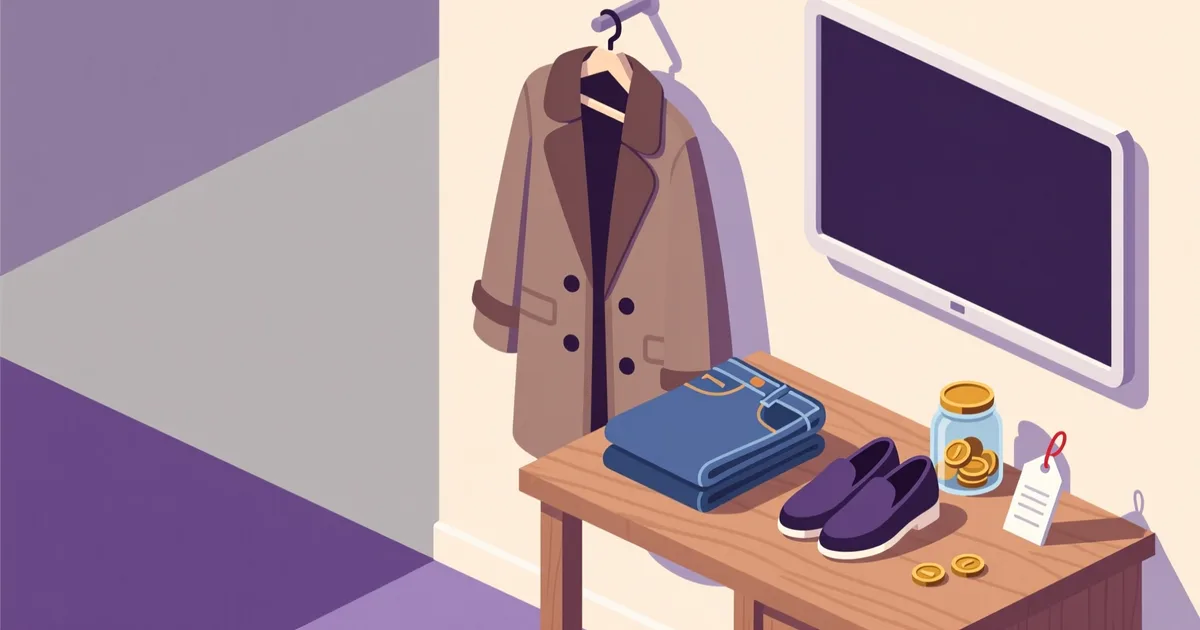
The secondhand market in Poland works differently from a chain of stores. Under one search term you'll find three different worlds: a private listing from a neighbor in your building, a consignment shop with reworked goods from the West, and an online store with curated clothing. Each has a different price, different return rules, and different risk. Before you spend money, it's worth knowing which one you're actually messaging.
This guide is for buyers who read on their phone and want a checklist at hand. No theory about sustainable fashion, no gushing. Concrete steps, questions for the seller, and price ranges you'll see in Warsaw, Kraków, or Łódź.
- Filter listings by city and district, not the whole country: shipping cost and risk rise with distance.
- Check the seller's history and reviews before you write. No history isn't a death sentence, but it requires payment on pickup.
- At the meeting, look at tags, seams, underarms, and pockets. Listing photos rarely show those spots.
- Never send a deposit to a phone number or click links for a "courier surcharge".
Where to buy used men's clothing in Poland
Three channels cover most purchases: classified platforms, brick-and-mortar consignment shops, and neighborhood groups. The choice depends on whether you care about time, price, or the ability to try things on.
Classified platforms and city filters
On EX & GO the catalog is divided into categories and cities, and a radius filter lets you narrow results to your district. That matters in practice. A listing from Praga Południe and one from Gdańsk look the same until you look at shipping cost and waiting time.
In the men's clothing category, jackets, blazers, jeans, and shoes appear most often. Listings go through moderation, and phone numbers are verified, so the list is shorter than on portals with no filter at all. Still, you arrange every transaction directly with the seller.
Consignment shops and curated stores
A consignment shop in Łódź or Poznań gives you something a listing can't: a fitting room. The price is higher, often two or three times, but you're paying for the ability to return goods to the store and for the fact that someone already rejected items with stains. It's worth knowing the return rules at a specific shop, because not every one offers them.
Neighborhood groups and local exchange
Groups in Wola, Wilda, or Krzyki move fast and locally. Sellers often agree to pickup outside the building entrance the same day. The downside: no transaction history at all, so the entire risk is on your side.
How to read a listing and spot a scam
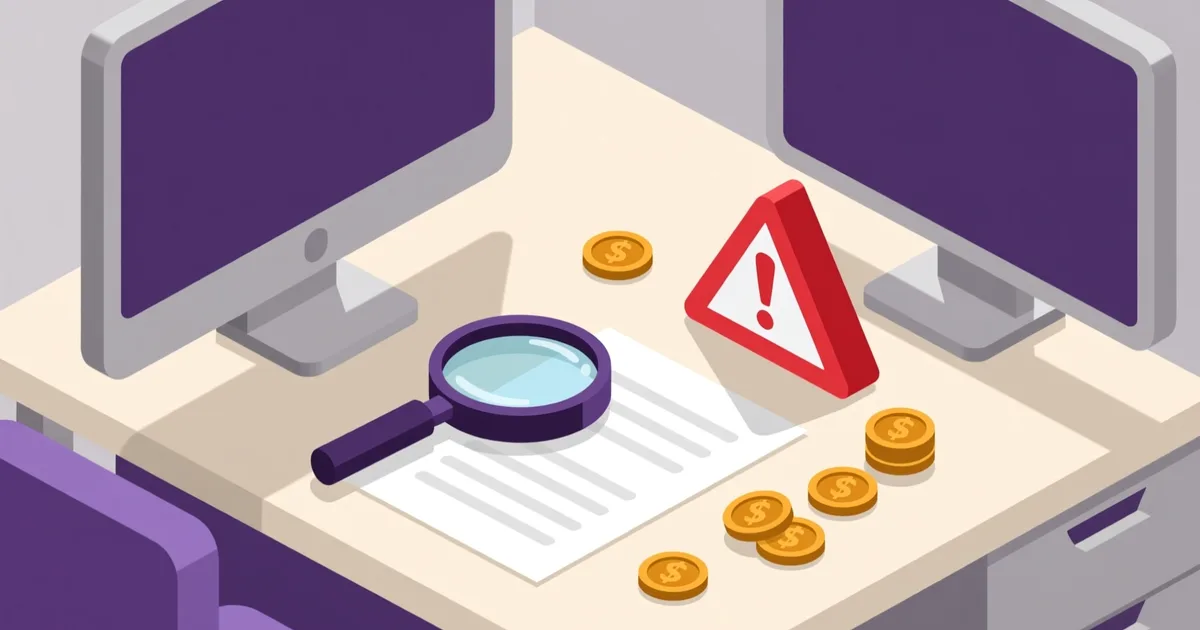
A good listing answers four questions without you having to ask the seller: what size it is, what condition it's in, where it can be picked up, and whether the price is negotiable. If two of those are missing, expect a longer exchange of messages.
Warning signs
- A request for a deposit or a "reservation" before you see the item.
- A link to an external site with a courier surcharge or a form asking for card details.
- Photos from a manufacturer's catalog instead of photos of the specific item.
- A price well below market with a description of "new, original".
- Time pressure: "someone's already asking, decide today".
The last one is often the most effective, because it works on haste, not logic. An honest seller will wait until the evening.
Before you message the seller, ask for one extra photo: the tag with size and composition. Anyone who has the item in hand will take it in a minute. Anyone copying someone else's description will disappear.
What the description says and what it doesn't
Terms like "perfect condition" and "like new" mean everything and nothing in listings. The specifics are elsewhere: "wear on the cuff", "missing button", "small stain near the pocket". Sellers who write about flaws are less likely to hide them. That's the single best indicator you have before the meeting.
How much to pay for used men's clothing
Prices depend on brand, condition, and city, but the orders of magnitude are consistent. The table below is a reference point, not a price list. If a listing deviates sharply upward, ask why.
| Type | Typical used price | What to watch for |
|---|---|---|
| Cotton shirt | 15 to 45 PLN | Collar and cuffs, that's where wear shows |
| Jeans | 30 to 90 PLN | Knees, crotch, condition of stitching at pockets |
| Transitional jacket | 60 to 200 PLN | Zipper, lining, condition of the water-repellent finish |
| Blazer | 50 to 180 PLN | Lining under the arm, shape of the shoulders |
| Leather shoes | 70 to 250 PLN | Sole, insole, toe impressions |
| Wool sweater | 25 to 80 PLN | Pilling, holes, stretched cuffs and hem |
In Warsaw and Kraków prices are higher than in smaller cities by a dozen or so percent, mainly due to demand. In Łódź and Poznań it's easier to find a good item for half that amount if you don't care about the brand.
Checklist for the meeting
The meeting usually lasts five minutes. Those five minutes decide whether the item stays in your closet or ends up in a donation bin. Bring a phone with a flashlight.
Order of inspection
- The tag with composition and size. Check whether the print is worn off and whether the size matches the description.
- Seams under the arms and at the crotch. Gently stretch the fabric and hold it up to the light.
- Zipper and buttons. Pull the zipper both ways, check every button.
- Lining. Turn the jacket or blazer inside out, that's where stains show up.
- Smell. Musty odor is hard to remove, and dry cleaning costs more than the item.
- Try-on. If you can't try it on, ask for measurements taken with a tape measure, not "by eye".
What to ask the seller
Ask how long the item was worn, whether it was dry cleaned, and whether it has a receipt or store tag. The answers matter less than the way they're given. Hesitation at the cleaning question says more than an assurance.
Can I return used clothing bought from a private individual?
From a private individual you don't have a statutory right of return, because sales between consumers aren't subject to the same rules as buying in a store. What counts is what you agree and whether the item has a hidden defect the seller didn't disclose.
A purchase from a company is different, even if it sells online. Then you have the right to withdraw from the contract within 14 days of receiving the item, without giving a reason, as long as the seller hasn't excluded that right in accordance with the regulations. Exceptions include, among others, items made to order.
The practical difference is significant. With a private seller, rely on goodwill and on agreeing things before the purchase. With a company, check the terms and return conditions before you click "buy". You can find more about publishing and transaction rules in the EX & GO terms of service.
If the seller won't refund you for an item with a hidden defect, you can file a complaint or seek help from a consumer ombudsman. General information about consumer rights in Poland is published by the Office of Competition and Consumer Protection.
How to negotiate the price of used clothing
Negotiating in listings is the norm, not the exception. Sellers often leave a margin of a dozen or so percent precisely so someone will haggle. Giving a specific amount works better than asking "can you do anything on the price".
Three rules that work
Give the amount and the reason in one sentence. "I'll give 70 PLN because the zipper sticks" is stronger than "maybe cheaper". Offer same-day pickup, that's real value for the seller. And don't negotiate after agreeing to buy, because then you lose credibility.
If you also sell your own things, it's worth knowing the other side of the table. The rules for posting offers and what passes moderation are described in the help center.
Private seller, consignment shop, or platform with history
Each channel has a different ratio of price to safety. The comparison below shows what to expect, not what's better. The choice depends on how much time you have to search.
| Criterion | Private seller | Brick-and-mortar consignment shop | Platform with history and reviews |
|---|---|---|---|
| Price | Lowest | Higher, even three times | Average, depends on the seller |
| Try-on possible | Usually yes, at the meeting | Yes, on site | Yes, if pickup in person |
| Return | No statutory right | Depends on the shop | Depends on whether a company is selling |
| Scam risk | Higher with shipping | Low | Lower thanks to verification and reviews |
| Search time | Short if you filter by city | Medium | Short, with a district filter |
We see that the most common buyer questions are precisely about shipping and whether you can pay on pickup. So it's worth settling that in the first two messages, rather than only after arranging a meeting.
How closing the transaction works
Cash payment on pickup is the simplest option and still the most common in Poland. For shipping, cash on delivery makes sense, because the money goes through the carrier rather than a private account number. A bank transfer in advance only makes sense if the seller has a long history and reviews.
Keep all correspondence, the listing photos, and the transfer confirmation. In a dispute, those are the only evidence you have. If you're buying from a company, also save the order confirmation and the terms of service as of the purchase date.
Listings on the platforms go through moderation, but moderation doesn't check the condition of the clothing. It checks the content and verifies the phone number. The rest is up to you, which is why the checklist in this guide matters more than any filter.
Frequently asked questions
Where is it easiest to buy used men's clothing in a big city?
In Warsaw, Kraków, Łódź, Wrocław, and Poznań, most listings appear on local platforms with a city and district filter. The second source is brick-and-mortar consignment shops in the centers and on the outskirts, where you can try items on the spot. Neighborhood groups move fastest but have no seller history, so the risk is higher. Start with a radius filter around your home to cut travel time.
How much does used men's clothing cost?
A shirt usually runs 15 to 45 PLN, jeans 30 to 90 PLN, a transitional jacket 60 to 200 PLN, and leather shoes 70 to 250 PLN. Prices in Warsaw and Kraków tend to be higher than in smaller cities. Brand raises the price more than condition, so compare a few similar listings before you talk. If the price is much lower than the others, treat that as a signal to inspect more carefully.
Can I return an item bought from a private individual?
You do not have a statutory right of return if the seller is a private individual. What matters is what you agree between you and whether the item has a hidden defect you did not know about. When buying from a company, including online, you usually have 14 days to withdraw from the contract from the moment you receive the item. Check the seller's terms before buying, because exceptions vary.
How do I avoid getting scammed when buying online?
Don't send a deposit to a private phone number and don't click links for courier surcharges. Check whether the photos look phone-taken rather than like a manufacturer's catalog. Ask for an extra photo of the size tag. Arrange payment on pickup or cash on delivery. If the seller pressures you for a quick decision, walk away, because time pressure is the most common mechanism in these scams.
What should I look at when trying clothes on?
Check the seams under the arms and at the crotch, pull the zipper both ways, and look at the lining after turning the garment inside out. Smell the fabric, because musty odors are hard to remove. Look at the cuffs and collar, where wear shows fastest. If you can't try it on, ask for measurements taken with a tape measure: chest width, sleeve length, total length.
Is it worth negotiating the price in a listing?
Yes, it's the norm on the secondhand market. Sellers often leave a margin of a dozen or so percent. Give a specific amount with a short justification, such as the condition of the zipper or a small fray. Offer same-day pickup, because that's a real benefit for the seller. Don't reopen negotiations after agreeing to buy, or you'll lose credibility.
How do I check the seller before buying?
Look at the account history and feedback from previous transactions. Check whether photos in different listings are identical, as that's a sign of copied offers. Ask one specific question about the item, such as the material composition. An evasive answer to a simple question is a warning sign. For shipping, choose cash on delivery if you're not sure about the seller.
Where to start this weekend
Buying used men's clothing without risk is possible when the order is reversed compared to a store. First size and measurement, then the city filter, and price last. Set notifications for two or three categories and check them once a day. New listings disappear faster than old ones, and a good jacket in your size in your district is a matter of days, not weeks.
Take the checklist from this article to the meeting. Six points, five minutes, one decision. If the seller won't show the tag or pressures you for a deposit, end the conversation and go back to the filter. On the secondhand market, patience costs less than one bad jacket.
Start with one thing you really need, rather than browsing the whole category. That way the purchase takes less time and less stress.