To buy second-hand men's clothing in Slovakia, check three channels: brick-and-mortar second-hand shops in Bratislava, Košice, Prešov, Žilina and Nitra, online classifieds where private sellers post by city, and charity or vintage stores. Private listings usually cost less, but you carry the risk. Inspect seams, labels and measurements before you pay, and never send a deposit to someone you have not met.
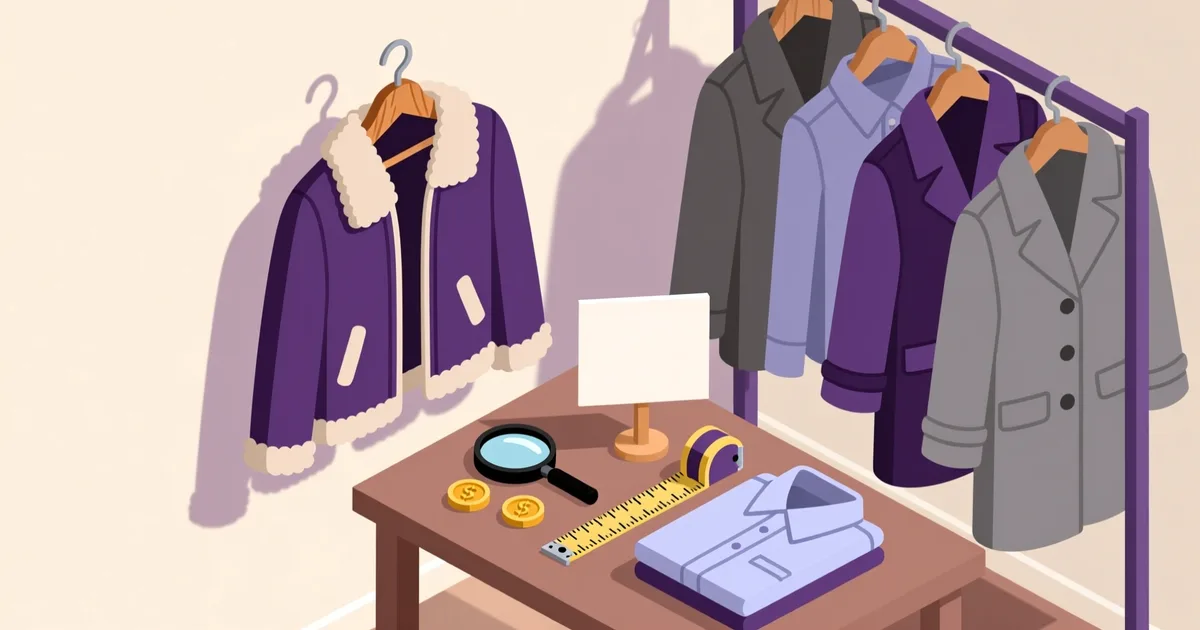
Slovakia has a deep second-hand market. Men's coats, jeans, wool sweaters and leather shoes move fast, and most of the supply sits in classifieds rather than in shops. A private seller in Petržalka clearing a wardrobe prices a winter jacket lower than a store on Obchodná that has to cover rent and staff. That gap is the whole reason this market works.
What follows is a practical route through it. Where to look, how to read a listing before you message anyone, what to check with your own hands at the meeting, how the deal closes, and what you can do if the item turns out to be a fake or the seller disappears. Most people read this on a phone outside a shop, so the checklist is built to be used standing up.
- Classifieds give the best prices; shops give you the chance to try the item on before money changes hands.
- Read the listing for real photos, measurements and a city, not just a brand name.
- At the meeting: check seams, zips, inner labels, armpits and the soles before you pay.
- Never send a deposit to a seller you have not met, and never accept a courier link from a stranger.
Where to buy second-hand men's clothing in Slovakia
Most men's second-hand clothing in Slovakia changes hands through three channels, and each one has a different risk profile. Knowing which channel you are in tells you how much checking you owe the item before you commit.
Second-hand shops and charity stores
Bratislava has the widest choice. You will find second-hand and vintage shops around the old town and in Ružinov, plus charity shops run by foundations where stock turns over weekly. Košice concentrates its second-hand shops near Hlavná and in the Terasa area. Prešov, Žilina and Nitra each have a handful of stores, usually one or two per district, and stock is thinner outside the regional capitals.
In a shop you can try the item on, check the fit in a mirror and walk away with no obligation. Prices run higher than private listings, and the shop owner has already filtered out the obvious junk. For a coat or a suit jacket, that filtering is worth paying for.
Classifieds and online marketplaces
Online classifieds carry the largest volume and the lowest prices. Sellers post photos, a price and a city, and you filter by city, district radius and category. This is where you find a Barbour jacket in Žilina for a fraction of retail, or a pair of unworn Loake shoes in Bratislava because the owner ordered the wrong size.
On EX & GO, listings pass moderation, phone numbers are verified, and each seller has a visible history and reviews. You message the seller inside the site, agree on a place and time, and close the deal in person. The platform holds no payments, so the money and the item change hands directly between you and the seller. Read the posting rules at /en/rules if you plan to sell your own clothes later.
What to avoid
Skip any listing that exists only on social media with no seller history and no city. Skip sellers who push you toward a specific courier service. Skip anything priced far below the going rate for the brand, because that gap is the bait. second-hand men's clothing
How to read a listing before you message the seller

A listing tells you more than the seller intends. Read it in this order and you will filter out most problems before you spend a message.
Photos
Real photos show the item on a floor, a bed or a hanger, with the seller's own background. Stock photos, catalogue shots and images with a foreign watermark mean the seller does not have the item in hand. Ask for one photo of the inner label and one of the sole or cuff. A genuine seller sends them within minutes.
Measurements and brand
Men's sizing drifts between brands, so a size tag alone tells you little. Ask for chest width, shoulder width, sleeve length and total length for a jacket, or waist and inseam for trousers. A seller who refuses to measure is usually a seller who does not have the item.
Price and city
A realistic price sits between a tenth and a third of the original retail for a used item in good condition, higher for sought-after brands and lower for fast fashion. If the city is listed as Bratislava but the seller wants to ship from elsewhere, treat that as a warning. second-hand men's clothing in Bratislava
How do you spot a scam in second-hand clothing classifieds?
Scams in this category follow a small number of patterns, and all of them depend on you paying before you see the item. Once you recognise the pattern, the listing is easy to drop.
Prepayment requests
The most common ask is a deposit to "hold" the item for you. A real private seller in Slovakia meets you, lets you inspect the item, and takes payment at that moment. There is no reason to send money to a stranger's account for a jacket you have not touched.
Courier and shipping tricks
The second pattern is a fake courier. The seller insists on a specific delivery service and sends you a link that looks like a tracking page but asks for your card details. Real couriers do not collect payment for private sellers through a page the seller sends you.
Pressure and urgency
Messages that say another buyer is coming in an hour, or that the price holds only until tonight, are designed to stop you from checking. A genuine seller waits. If the seller will not give you a time and place, walk away.
Ask the seller to photograph the item next to a piece of paper with today's date written on it. A seller who has the item does this in a minute. A seller working from stolen photos cannot do it at all.
Checklist for the meeting
Meet in daylight, in a public place, ideally near a metro or tram stop where you can leave easily. Bring the exact cash amount and a tape measure if the item is a jacket. Run through this list before you hand over money.
Jackets and coats
Check the shoulder seams for pulling or repair. Open the zip fully and close it again. Look inside the armpits for staining and at the lining for tears. Check the cuffs and collar for shine, which means heavy wear. Read the inner label for material and care instructions, then compare it with the seller's description.
Trousers and jeans
Look at the crotch seam, the belt loops and the hems. Jeans that have been taken in will show a second stitch line. Check the back pockets for wear and the inner waistband for a faded label. Turn them inside out if you can.
Shoes and leather
Bend the sole gently. Cracks at the flex point mean the shoe is near the end of its life. Check the heel for uneven wear, which tells you about the previous owner's gait. Look at the welt and the stitching, and smell the inside for mould. Leather that has been stored damp will not recover.
Knitwear
Hold wool and cashmere up to the light. Moth holes show as small bright spots. Pull the fabric gently at the seams and check the elbows for thinning. A sweater that has been washed hot will feel stiff and look felted.
Private seller, shop or marketplace with seller history

Each channel trades price against certainty. The table below sets out what you actually get for your money.
| Channel | Typical price | Try before paying | Seller history visible | Main risk |
|---|---|---|---|---|
| Private seller in classifieds | Lowest | At the meeting | Often yes, with reviews | No-shows, fakes, prepayment requests |
| Second-hand shop | Mid to high | Yes, in store | Not applicable | Higher price, thinner stock outside big cities |
| Marketplace with seller history | Low to mid | At the meeting | Yes, with reviews and past listings | Distance if the seller is in another region |
We see the same pattern in our catalogue: listings with clear measurements and several real photos sell, and listings with one stock image and no city sit untouched. That is the whole filter, and it costs you nothing to apply it.
How do you negotiate a price on second-hand clothing?
Negotiation in this market is short and factual. You are not haggling over a car. A single well-argued offer usually settles it.
Open with a question about the item, not the price. Ask how long the seller has owned it, or whether it has been altered. Then make one offer, ten to twenty percent below the asking price, and give a reason: a visible repair, a missing button, a long trip across the city. Sellers respond to reasons, not to numbers alone.
If the seller holds firm and the price is still fair, decide on the item, not on winning. A jacket at the asking price that fits you is worth more than a jacket twenty percent cheaper that does not. If you are buying several pieces from one seller, ask for a bundle price. That request is normal and rarely refused.
Closing the deal and your rights in Slovakia
Pay in cash at the meeting, after you have inspected the item. Count the money in front of the seller and take the item with you. That is the entire transaction, and it is the cleanest form of it.
Consumer rights in Slovakia differ depending on who you buy from. A business seller, including a second-hand shop, owes you the statutory rights that apply to a purchase in a shop, and you can raise a complaint if the item does not match what was described. A private seller selling personal belongings is not acting as a business, and the statutory consumer protections built for shop purchases do not apply in the same way. That difference is the price of the lower price.
If a deal goes wrong, keep the messages, the listing screenshots and the payment record. For a business seller, the first step is a written complaint to the seller. If that fails, the Slovak Trade Inspection handles consumer complaints in this area; its site is Slovak Trade Inspection. For questions about identity documents and reporting fraud, the Ministry of the Interior is the relevant authority: Ministry of the Interior of the Slovak Republic. Support for issues on the platform itself is at /en/support.
Frequently asked questions
Where can I buy second-hand men's clothing in Slovakia?
You have three main routes. Second-hand and charity shops in Bratislava, Košice, Prešov, Žilina and Nitra let you try items on. Online classifieds carry the largest volume and the lowest prices, with sellers posting by city and district. Vintage stores in the larger cities sit between the two. For a coat or a suit, a shop is usually worth the higher price because the stock has already been filtered.
How much should I pay for second-hand men's clothing in Slovakia?
A used item in good condition typically sells for between a tenth and a third of its original retail price. Fast fashion sits at the low end, sought-after brands at the high end. A wool coat might go for 30 to 70 euros, jeans for 10 to 25, and leather shoes for 20 to 50, depending on brand and condition. Compare three or four similar listings in your city before you make an offer.
Is it safe to buy second-hand clothing from private sellers?
It is safe when you meet in person, inspect the item and pay only after you have seen it. The risk comes from paying before you meet. Never send a deposit to hold an item, never follow a courier link a seller sends you, and never pay by card on a page that is not the platform's own. Meet in daylight in a public place.
What should I check on a second-hand jacket before buying?
Check the shoulder seams for pulling, open and close the zip fully, and look inside the armpits for staining. Inspect the lining for tears and the cuffs and collar for shine. Read the inner label for material and compare it with the seller's description. Ask for chest, shoulder, sleeve and total length measurements before you travel to the meeting.
Can I return second-hand clothing bought from a private seller in Slovakia?
Generally no. A private seller selling personal belongings is not acting as a business, so the consumer protections that apply to shop purchases do not cover that deal in the same way. A second-hand shop is a business, and you can raise a complaint there if the item does not match the description. Keep your messages and any receipt either way.
How do I avoid fake branded clothing in Slovak classifieds?
Ask for a close photo of the inner label, the care tag and the stitching on the logo. Fakes usually show uneven stitching, a misspelled brand name or a care tag in the wrong language. Compare the price with the going rate for that brand. If a listing claims a premium brand at a fraction of the usual second-hand price, treat it as a warning sign.
What to do next
Start with your own city. Filter listings by district radius, shortlist three items, and ask each seller for measurements and one extra photo before you agree to meet. That single step removes most of the risk from buying second-hand men's clothing in Slovakia, and it costs you two messages.
When you meet, use the checklist. Seams, zips, labels, armpits, soles. Pay in cash after you have inspected the item, and keep the messages until you have worn it once. If you are also clearing out your own wardrobe, the same rules apply in reverse: clear photos, real measurements, an honest description and a city. Sellers who do that get replies.
The market rewards patience more than speed. A jacket that fits you will come up again in a week or two, in Bratislava or Košice or wherever you happen to be looking, and the seller who measured it properly is the one worth meeting. Buy second-hand men's clothing in Slovakia on those terms and you will spend less and keep the item longer.