To buy a used camera in Israel, check listings on classifieds sites, camera shops and Facebook groups, then meet the seller in person to test the sensor, shutter, autofocus and lens before you pay. Private deals usually cost less than shop prices, but you carry the risk. Expect to pay roughly 60 to 75 percent of the new price for a body in good condition.
Most buyers in Tel Aviv, Jerusalem, Haifa, Rishon LeZion and Petah Tikva start online and finish the deal in a cafe, a mall or a train station. That works, as long as you know what to look at. A camera is one of the few secondhand items where a five minute check tells you almost everything. Dust on a sensor, a worn shutter, a lens with fungus, a battery that no longer holds charge: all of these show up quickly if you know where to look.
This guide covers where used cameras are listed in Israel, how to read a listing without getting fooled, what to inspect at the meeting, how the deal closes, and how to negotiate a fair price. It is written for a phone screen, so you can follow it while standing in front of the seller.
- Private listings on classifieds sites are usually the cheapest route, but payment protection is on you.
- Never prepay, never accept a courier delivery, and treat stock photos as a warning sign.
- Test the sensor, shutter count, autofocus, screen, buttons and lens at the meeting.
- Shop prices run higher but include a warranty and a receipt you can use later.
Where do people buy used cameras in Israel?
Three channels cover almost every used camera sale in Israel: online classifieds, physical camera shops, and social media groups. Each attracts a different kind of seller, and each carries a different level of risk.
Online classifieds
Classifieds are where most private sales happen. Sellers post photos, a price and a city, and buyers filter by category and location. On EX & GO, the phones and electronics category holds camera bodies, lenses, tripods and lighting, and you can narrow results by city or by a district radius, which matters when you live in Be'er Sheva and do not want to drive to Kiryat Shmona for a lens.
Listings pass moderation, phone numbers are verified, and you can message the seller inside the site. The seller's history and reviews are visible on the profile, which is the single most useful signal you have before a meeting. The deal itself is arranged directly between the two of you, and the site holds no payments. Read the posting rules at /en/rules if you want to know what gets a listing removed.
Camera shops and secondhand dealers
Shops in Tel Aviv, Jerusalem and Haifa sell trade-ins with a receipt and, usually, a short warranty. You pay more, often 15 to 30 percent above a private sale, and you get a place to return to if something fails in the first weeks. For a first camera or an expensive body, that premium buys real peace of mind.
Social media and forum groups
Photography groups on Facebook and Israeli camera forums move a lot of gear between hobbyists. Prices are close to classifieds, and the community sometimes polices bad sellers. There is no moderation, no verified phone number and no listing history, so you rely entirely on your own judgment.
How to read a used camera listing without getting scammed
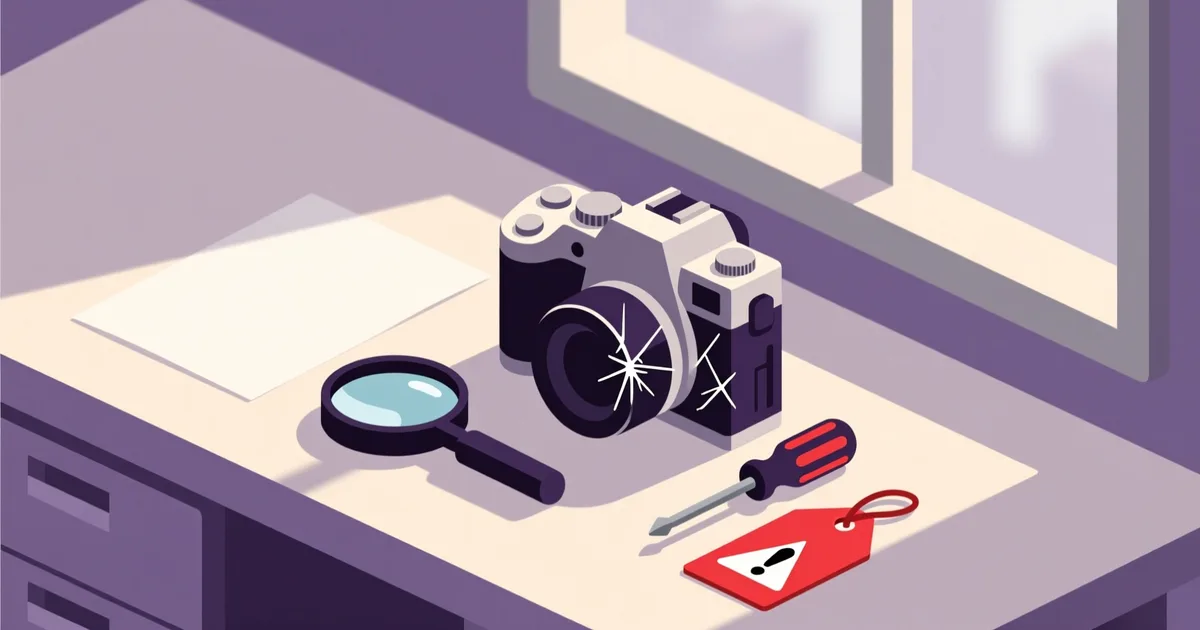
A good listing answers four questions before you message: what exactly is for sale, how many shots the body has taken, what is included, and where the seller is. If any of those is missing, ask. If the seller avoids the question, walk away.
Red flags that repeat in Israel and everywhere else:
- The price is far below the market for that model, with a story attached about needing money fast or leaving the country.
- The seller asks for a deposit or full prepayment by bank transfer before you see the camera.
- The seller offers to send the camera by courier or a delivery service instead of meeting.
- The photos are stock images or are copied from another listing. Ask for a photo of the camera next to a handwritten note with today's date.
- The seller refuses to meet in a public place, or insists on meeting at night in a parking lot.
- The listing was posted today, the profile is empty, and the phone number does not match the name.
Prepayment is the single most common way buyers lose money here. There is no platform holding the funds, so a transfer to a stranger is gone. Cash at the meeting, after the test, is the only payment method that protects you.
Ask the seller for the shutter count before you travel. Most mirrorless and DSLR bodies record it, and a seller who genuinely owns the camera can find it in a minute. A vague answer usually means the number is high.
What should you check when you meet the seller?
Bring a memory card, a charged battery if you have the right one, a phone with a flashlight, and this checklist. The whole inspection takes ten to fifteen minutes.
Body and sensor
Look at the body under good light. Small scuffs are normal. Deep dents, a cracked mount or a bent card slot door are not. Open the mount with the lens off and shine the flashlight at an angle across the sensor. Dust is common and cleanable. Scratches or a cloudy film are not, and they show up as marks on every photo.
Shutter, autofocus and controls
Take a few shots in single and continuous mode. Listen for a consistent shutter sound. Fire the autofocus at something near and something far, and check that it locks quickly and does not hunt. Press every button and turn every dial. Open the menu and check the date, the language and the firmware version.
Screen, viewfinder and battery
Tilt the screen through its full range. Look for dead pixels and cracks in the hinge. Look through the viewfinder and check the diopter. Ask how old the battery is and how many shots it gives. A worn battery is a 200 to 400 shekel replacement, so factor it into the price.
Lens
Shine the flashlight through the lens from both ends. Fungus looks like fine white threads, and haze looks like a milky film. Both are expensive to fix and often return. Check the zoom and focus rings for grit, and look at the front element for deep scratches. A small internal dust speck rarely affects photos.
Private seller, shop or marketplace: which is right for you?
| Channel | Typical price | Warranty | Risk | Best for |
|---|---|---|---|---|
| Private seller via classifieds | Lowest, often 60 to 75 percent of new | None | Medium to high, depends on the seller | Buyers who know the model and can test it |
| Camera shop or dealer | Higher, 15 to 30 percent above private | Short warranty, receipt | Low | First camera, expensive bodies, gifts |
| Marketplace with seller history | Close to private | None, but reviews and verified phone | Medium | Buyers who want a traceable seller |
| Social media group | Close to private | None | Medium to high | Enthusiasts trading within a community |
We see the same pattern in our catalogue every week: listings with clear photos, a stated shutter count and a city in the title get serious replies within hours, while vague listings sit for weeks and then get reposted. Moderation removes the obvious fraud, but it cannot test a sensor for you. That part stays with the buyer.
How is the deal closed, and what are your rights?
Meet in daylight, in a public place with people around: a mall, a cafe, a train station, a bank branch. Test the camera, agree the price, and pay in cash. Ask for the original receipt if the seller still has it, and for the box and accessories. A short written note with the seller's name, ID number, date, model and serial number, and the price protects both of you if a dispute comes up later.
Israeli consumer protection law applies mainly to transactions with a business, not to a sale between two private individuals. That is the key difference. Buy from a shop and you have a receipt and a warranty you can enforce. Buy from a private seller and the principle of caveat emptor applies: what you saw and agreed to at the meeting is what you get. There is no cooling off period for a private sale.
If a seller misrepresented the camera, for example by claiming a low shutter count that turns out to be false, you may have grounds for a civil claim. In practice, the amounts are small and the process is slow, which is why the inspection matters more than the paperwork. For anything above a few thousand shekels, a shop purchase is worth the premium.
When you compare prices across listings, used cameras and used cameras in Tel Aviv help you see what the same model is going for in different cities before you commit.
How do you negotiate a fair price?
Know the new price and the current used range before you message. Check three or four comparable listings for the same model in Tel Aviv, Jerusalem and Haifa. Prices in Israel tend to run higher than in Europe or the US, partly because of import costs and VAT, so do not anchor to a foreign price you saw online.
Negotiate on facts, not on feelings. A missing charger, a worn battery, no box, a high shutter count, a scratch on the screen: each is a concrete reason to ask for a reduction. A reasonable opening is 10 to 15 percent below the asking price, with your reasons stated. Sellers who priced fairly will hold. Sellers who priced high will move.
Walk away if the seller pressures you, changes the price at the meeting, or refuses the test. There is always another camera. The Israeli market is small but active, and good listings appear every week.
Frequently asked questions
How much should I pay for a used camera in Israel?
A used body in good condition typically sells for 60 to 75 percent of its new price, and lenses hold value better, often 70 to 85 percent. Shop prices run 15 to 30 percent above private sales because they include a warranty and a receipt. Check three or four comparable listings in your city before you agree on a number, and factor in a replacement battery if the original is worn.
Where can I find cheap used cameras in Israel?
The lowest prices usually come from private sellers on classifieds sites and photography groups, not from shops. Filter by city and district radius so you are not paying for a long trip. Set a price ceiling and check new listings daily, because well priced cameras sell within hours. Be careful with prices that sit far below the market: that is the most common sign of a scam.
Is it safe to buy a used camera from a private seller?
It is safe if you follow three rules: meet in person in a public place, test the camera before paying, and pay in cash only after the test. Never send a deposit or full prepayment, and never accept a courier delivery instead of a meeting. Check the seller's history and reviews where the platform shows them, and ask for the shutter count before you travel.
What should I check on a used camera before buying?
Check the sensor with a flashlight for scratches and haze, take test shots, fire the autofocus at near and far subjects, press every button and dial, tilt the screen through its range, and inspect the lens for fungus and haze. Ask about the shutter count and the battery age. Bring your own memory card so you can review the files at home.
Do I have consumer protection when buying a used camera in Israel?
Consumer protection law applies mainly to purchases from a business, so a shop sale gives you a receipt and a warranty you can enforce. A private sale between two individuals does not carry the same protections, and there is no cooling off period. If a seller misrepresented the item, you may have grounds for a civil claim, but the amounts are usually small and the process is slow.
Should I buy a used camera body or a kit with a lens?
A kit usually costs less than buying the body and lens separately, and it is the simpler route for a first camera. If you already own lenses for that mount, buy the body alone. Check the lens as carefully as the body: fungus and haze are expensive to repair and often come back. Ask whether the lens was ever dropped or serviced.
Before you hand over the cash
Buying a used camera in Israel comes down to preparation and a careful meeting. Know the model, know the price range in your city, and know what a worn battery or a scratched sensor costs to fix. Meet in daylight, test everything on the checklist, and pay only after you are satisfied. Private sellers on classifieds give you the best price, shops give you the safest purchase, and a marketplace with visible seller history sits between the two.
If you are still choosing a model, start by deciding what you shoot: street and travel in Tel Aviv, family events, or wildlife in the Negev. That decision sets your budget and your lens mount, and everything else follows. Take your time with the listing, and do not rush the meeting. A camera you inspected properly will serve you for years.