Buying a used tool in Ukraine makes the most sense where you can see the seller's history and city: on moderated classifieds, from private sellers in your area, or from used-goods shops. Before paying, inspect the item in person, check the serial number, accessories, and wear, and hand over the money only after testing.
The price of a used tool is usually 40-70% of the new cost if it's in working condition and comes with a full set. The biggest savings are in the professional segment: rotary hammers, screwdrivers, chainsaws, welding machines. Cheaper categories like hand tools barely lose value, so buying them used makes little sense.
Next, we'll look at where to find listings, how to read the text and photos, what to check at the meeting, how to negotiate, and what rights you have under Ukrainian law. This material is for a buyer reading on a phone who wants a short checklist at hand.
- Look where you can see the city, district, and seller's history, not just photos and price.
- Avoid prepaying to a stranger's card if you can't see the item in person.
- At the meeting, check the motor number, accessories, cable, battery, and performance under load.
- Pay after testing, and get a receipt or written note even from a private individual.
Where to buy used tools: private sellers, shops, and platforms
Online classifieds offer the largest selection. Private sellers list tools there after repairs, relocations, or closing a workshop, and their prices are the lowest. Used-goods shops and consignment stores charge more but offer a warranty for a few weeks and returns.
On EX & GO, the catalog can be filtered by city, district, radius, and category. This matters for heavy tools: you won't haul a 5 kg rotary hammer or a chainsaw from Kharkiv to Lviv, so the radius filter saves both time and delivery costs. The "Home & Garden" and "Services" categories cover most needs.
Listings go through moderation, and phone numbers are verified. This isn't a guarantee of the seller's honesty, but it filters out some obvious scammers. Before posting, it's worth reading the listing rules to understand what gets removed from the catalog.
In big cities, the selection is wider: in Kyiv, Dnipro, and Odesa, dozens of listings appear daily; in smaller cities, you have to wait or travel to the regional center. In Lviv and Kharkiv, searching by district works well because workshops are often located on the outskirts.
How to read listings and not waste time
Look at three things: photos, description, and the seller's profile. Photos should be taken in a real room, with dust, scratches, and a workbench in the background. Stock images with a white background or photos from the manufacturer's website almost always mean either a reseller or a scammer.
Check the description for specifics. A good listing includes the model, power, year of purchase, reason for selling, and a list of what's included. If it just says "selling a rotary hammer, good condition," there will be more questions than answers.
A seller's profile with history and reviews matters more than the price itself. A seller with a dozen completed deals in your city risks their reputation, and that works better than any promises in chat.
How to spot a scammer: prepayment, courier, stock photos
Scams in the used-tool market repeat year after year, and most are recognizable from the first messages. Here's what should raise a red flag immediately.
Asking for prepayment to a card. The seller might explain it as a queue of buyers, a business trip, or "someone else will pick it up tomorrow." After the transfer, both the seller and the listing disappear. In the vast majority of cases, a normal seller agrees to payment upon meeting.
Courier schemes. You're offered "secure delivery" through an unknown service, sent a phishing link, and asked to enter card details. Real delivery doesn't require entering the CVV on a third-party site.
Stock photos and a suspiciously low price. A professional screwdriver at a quarter of the market value isn't real. Check photos with reverse image search: if it has already appeared in dozens of listings in different cities, it's a copy.
Refusal to name the district or show the item in a workshop. An offer to meet "near the metro" with a box in hand doesn't give you a chance to test the tool under load.
We see in the catalog that most buyer complaints are about card prepayments and listings with stolen photos, so moderation removes such posts, and the seller's history remains visible to future buyers.
Meeting checklist: what to check before paying
The meeting decides everything. Bring a phone with a flashlight, gloves, and, for power tools, an extension cord. Here's the sequence to follow before talking about money.
Body and mechanics
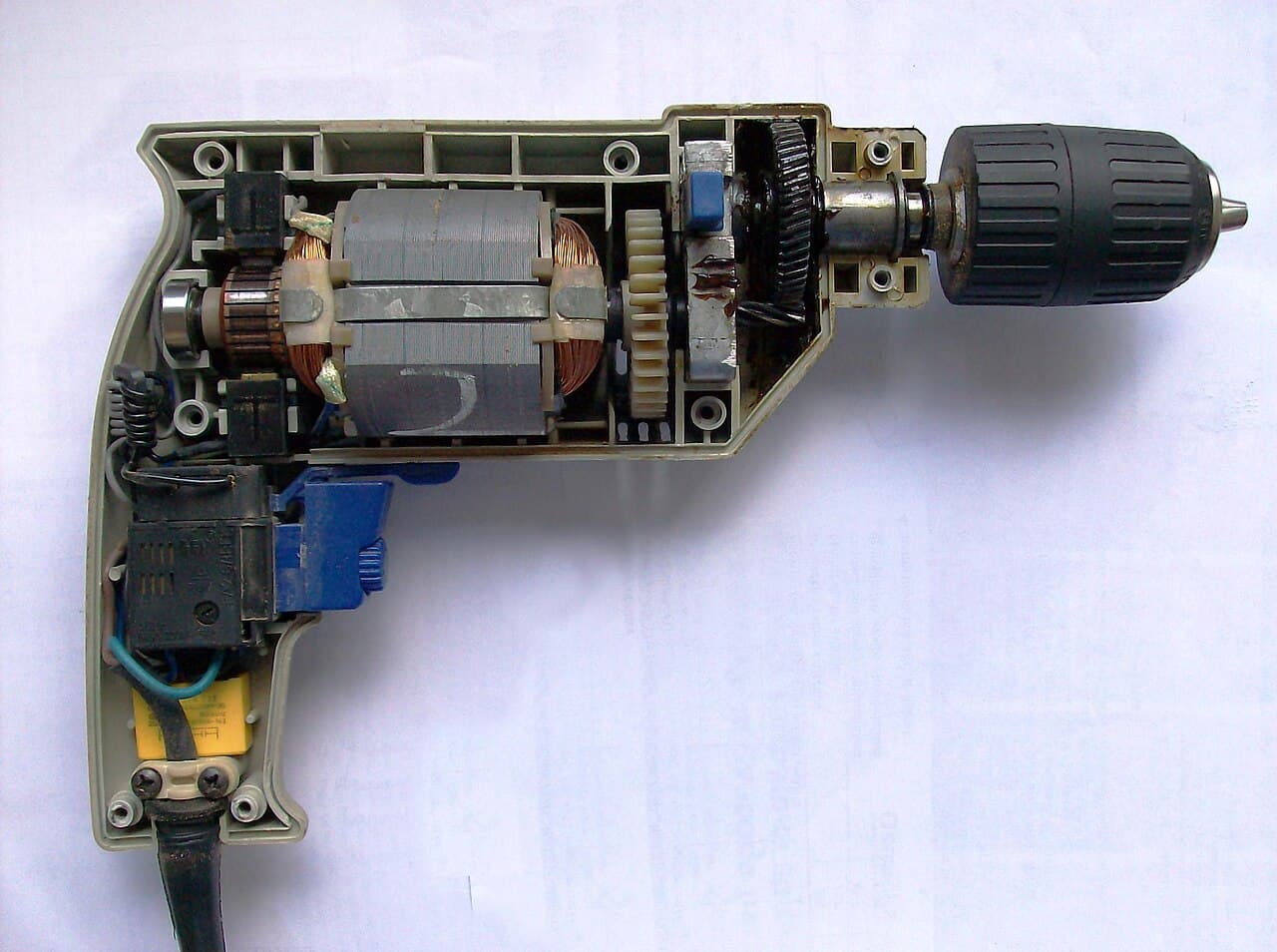
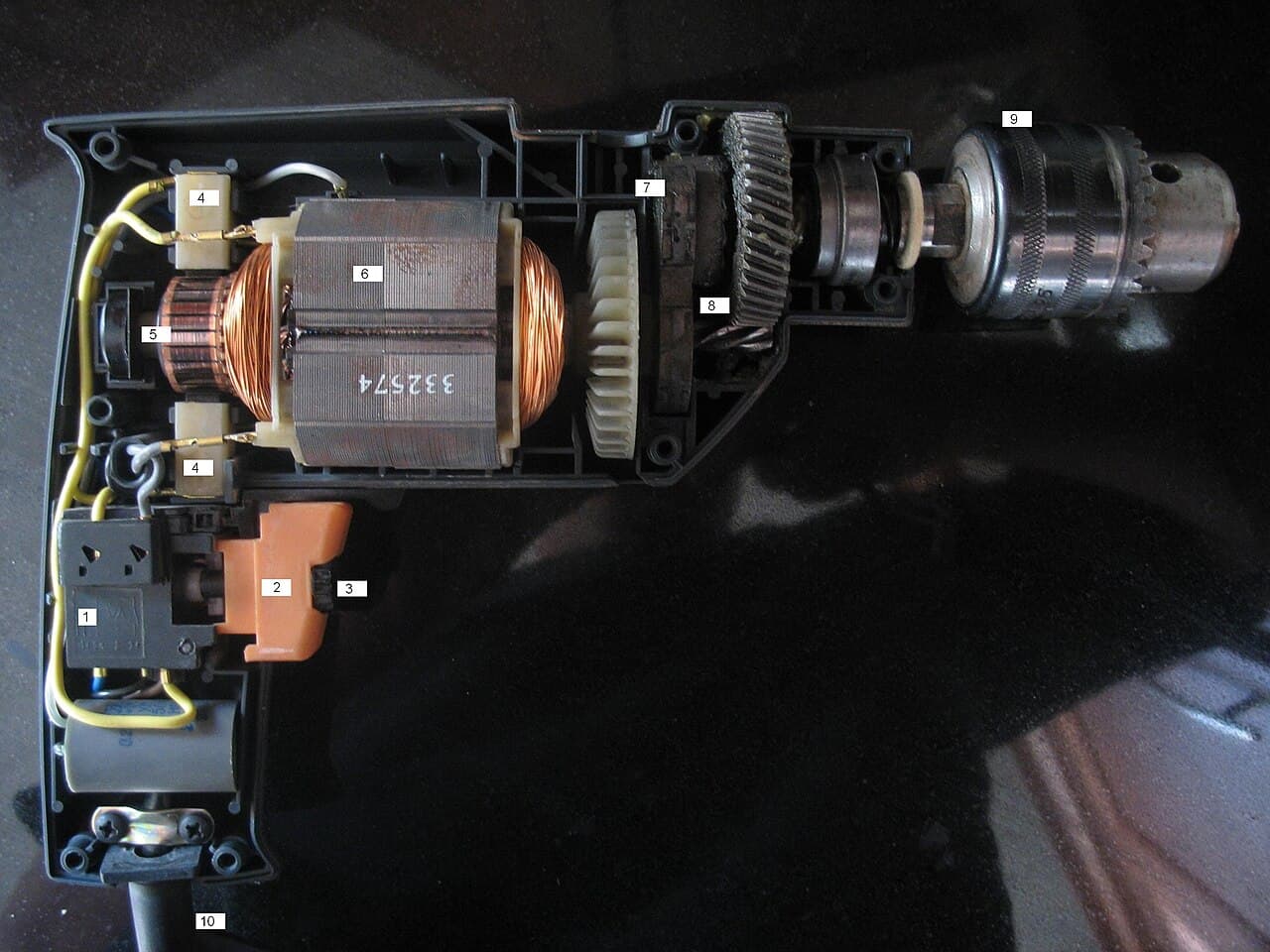
Inspect the body for cracks, welding marks, and signs of disassembly under the screws. Check for play in the chuck, spindle, and gearbox. Turn the shaft by hand: unusual noise or jamming means worn bearings.
Electrics and power
Plug in the tool and let it run idle for at least a minute. Smell the air from the vents: a burnt varnish smell indicates overheated motor windings. Check the cable along its entire length, especially near the entry point.
For cordless tools, the battery matters more than the body. Bring the charger, plug it in, and see if the battery charges and doesn't overheat. One new battery can cost as much as half a used kit.
Accessories and documents
Count what's included: case, keys, interchangeable bits, dust collector, manual. Missing small items lowers the price, and that's a reason to negotiate. Ask for the serial number and match it with the document if the tool was bought in a store.
For gas-powered tools, check compression, spark plug condition, gearbox oil level, and cold start. Starting a warm engine shows nothing.
How much do used tools cost and how to negotiate
Focus on three numbers: the new price, the average used price in your city, and the price in the specific listing. The difference between the second and third is your room to negotiate. Look at 5-7 similar listings in your city to have an argument.
Cordless lines without manufacturer support and discontinued models lose value fastest. Professional brands with repairability hold their price longest: parts are available, so demand is stable.
Base your negotiation on facts, not emotions. A worn cable, missing case, battery that holds a charge four times less, an old batch without service support: each point is a specific amount. State your price calmly and be ready to walk away if it doesn't work.
It's convenient to compare prices where you can see the city, publication date, and the seller themselves. used tools
Private seller, shop, or platform with seller history?

Each option has its own risk price. A private seller offers the lowest price but no warranty. A shop offers a warranty but is more expensive. A platform with seller history gives you information to decide, though it doesn't participate in the deal.
| Criterion | Private seller | Used-goods shop | Platform with history |
|---|---|---|---|
| Price | Lowest | 15-30% higher | Depends on seller |
| Warranty | None | Yes, usually 14-30 days | None, but reviews exist |
| Check before payment | Yes, in person | Yes, in shop | Yes, in person |
| Documents | Often missing | Receipt provided | By agreement |
| Selection in city | Medium | Narrow | Widest |
| Who is responsible in a dispute | Seller | Shop | Parties directly |
If you need a tool for a one-time job, a private seller is more cost-effective. If the tool earns money daily, paying extra for a shop warranty is often justified. used tools in Kyiv
Buyer's rights under Ukrainian law
Buying from an individual is a sales contract between two people, and the Law "On Consumer Protection" barely applies here. You can't return a tool a week later just because it didn't suit you. So checking before payment isn't a formality-it's your only protection.
Buying from a shop or sole proprietor is a consumer relationship. You should receive a receipt or other proof of payment and a warranty card if a warranty is provided. Return and exchange terms are set by the seller and recorded in the document.
If the seller broke the agreement, such as not delivering the paid item, that's grounds for contacting the police. Useful explanations on consumer protection are published by the State Service of Ukraine on Food Safety and Consumer Protection, and income tax issues from sales are regulated by the State Tax Service.
Keep the conversation, listing number, screenshots, and photos of the item. If the deal falls through, these materials will help both in a complaint to the platform administration and in a conversation with the police. The procedure for appeals is described on the support page.
Frequently asked questions
Where are used tools most often sold in Ukraine?
The largest selection is on online classifieds, where private sellers and shops post photos, prices, and locations. Next come consignment shops, local messenger groups, and flea markets like those in Kyiv, Kharkiv, and Odesa. For heavy tools, it's more convenient to search within your city or district, as delivery is expensive.
How much do used tools cost and what does the price depend on?
Roughly 40-70% of the new price if it's in working condition and comes with a full set. The price depends on the brand, availability of spare parts, condition of batteries and cables, completeness, and model age. Discontinued tools lose value faster. Professional lines with repairability hold their price longer, so there's less room for negotiation.
How do I check a tool before buying?
Inspect the body for cracks and signs of disassembly, check for play in the chuck and gearbox. Plug it in and let it run idle, listen for noise, and smell the air from the vents. Check the cable along its entire length, the accessories, and the serial number. For cordless tools, be sure to test battery charging.
Can I return a used tool bought from a private individual?
There's no general right of return here, as it's an agreement between two individuals. You can return the item only by agreement with the seller or if they violated the terms. That's why inspection and testing before payment are more important than any verbal promises. Buying from a shop gives you more rights than buying from a private individual.
How do I avoid scammers when buying used tools?
Don't send prepayment to a stranger's card and don't follow links to 'secure delivery' from third-party services. Check photos with reverse image search, look at the seller's history and reviews. Meet in a public place or a workshop where you can turn on the tool under load. A suspiciously low price is a reason to check more carefully.
What should I do if the seller demands prepayment?
Offer to pay upon meeting or after a video call demonstrating the tool working. If the seller insists on a transfer and won't agree to either an inspection or cash on delivery with inspection, it's better not to make the deal. Send a complaint to the platform administration with screenshots of the conversation and the listing number.
Do I need a receipt or contract when buying a used tool?
The law doesn't require a written contract between individuals, but a document helps in a dispute. A receipt for the money with the model, serial number, date, and amount is enough. In a shop, ask for a receipt and warranty card. Keep the conversation and photos of the item until you've fully tested the tool in operation.
Summary
Buying a used tool is worthwhile if you control three things: where you search, checking before payment, and the price for similar listings in your city. A private seller offers the lowest price, a shop offers a warranty, and a platform with seller history gives you information to decide. The worst scenario is prepaying to a card without inspecting the item.
Make a short checklist on your phone: body, play, cable, battery, accessories, serial number. Go through it completely before naming your price. If the seller rushes you or avoids inspection, calmly decline and keep looking.
Spend twenty minutes comparing 5-7 listings in Kyiv, Kharkiv, Odesa, Dnipro, or Lviv, and you'll see the real price range. This is the cheapest way not to overpay for a tool that will work for years.