Selling used audio gear works fastest when your listing has a realistic market price, clear photos and an honest condition report. Then all that's left is to reply to buyers without delay, verify payment before handing anything over, and meet in a busy public place. Below is the step-by-step process for a private seller in Ukraine.
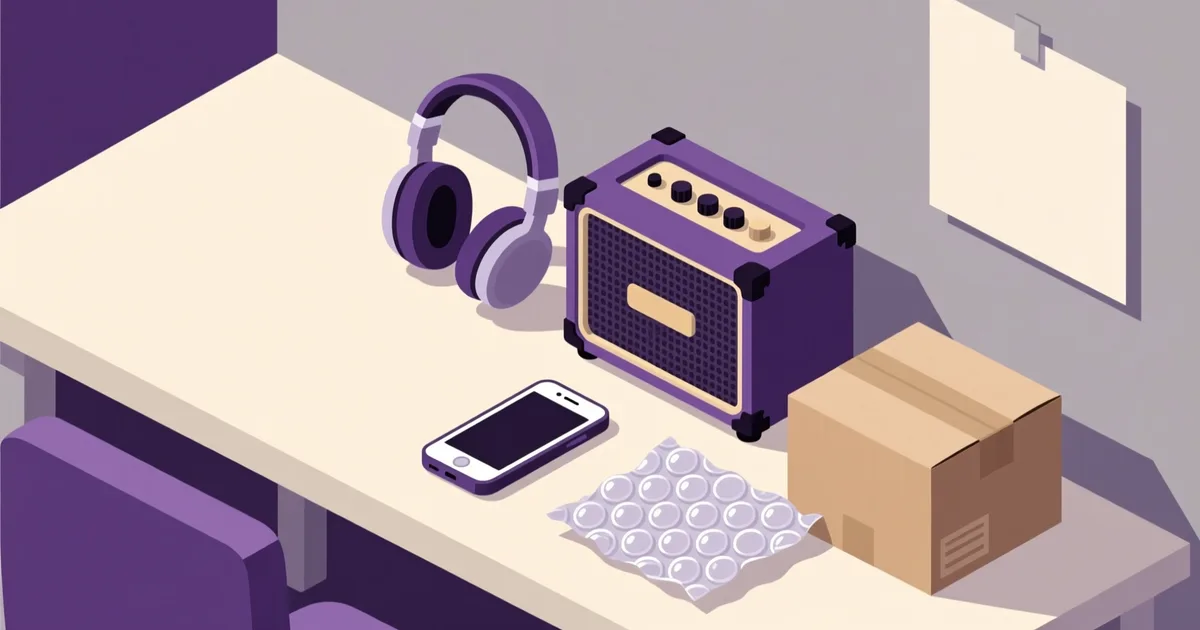
By audio gear here we mean amplifiers, receivers, speakers, turntables, DACs, studio monitors, mixing consoles, headphones and portable speakers. The used market in Ukraine is alive: some units get bought for home systems, some for studios, cafés and bars, and some get stripped for parts. Buyers know the models well and immediately ask about the year of manufacture, what's included, and any signs of repair. That's why the winner isn't the person who writes the most, but the one who provides verifiable details. Price, condition and handover method decide almost everything.
- Set your price based on three to five similar listings, not on what you once paid yourself.
- Shoot in daylight, and show scratches, connectors, the model nameplate and included cables separately.
- Accept payment only after you've confirmed it's credited, and arrange to meet in a busy place with cameras.
- Before publishing, run through a short checklist: price, photos, description, city, contact method.
How to price used audio gear
Go by active listings in your city and those that have already disappeared from search results: disappearing usually means sold. For an amplifier, receiver or pair of speakers, five comparable listings are enough. Look not at the seller's asking price, but at the range where deals actually close.
The gap between your unit and a similar one comes down to condition, accessories and history. Having the original remote, box, power cables or speaker cable adds to the price. Signs of repair, replaced capacitors, re-soldered connectors, a dead channel or hum in the speakers bring it down noticeably. Better to write about this yourself than to hear the question at the meeting.
The age of a unit doesn't always mean it's cheap. Some amplifier and turntable models hold their value for years because people seek them out specifically. If your model is one of those, don't rush to lower the price: first check how many of them are even for sale across Ukraine.
Three selling strategies
| Approach | When it fits | Timeline | Price |
|---|---|---|---|
| Quick sale | Need to free up space, moving, urgent cash | A few days | 15-25 percent below market |
| Best price | Rare model, you have time to wait for a buyer | Weeks or months | Top of the range |
| Trade-in or buyout | No time for messaging and showings | One day | Lowest of the three |
Store trade-in or a buyout by a technician is convenient when the unit needs to be gone today. The price difference is what you pay for speed, sometimes a significant one. For expensive items, it's better to spend two weeks on private listings.
How to write a listing people respond to
Photos decide whether anyone opens your listing at all. Shoot in daylight near a window, no flash and no filters. The first shot shows the unit as a whole, then: front panel, back panel with connectors, the nameplate with model and serial number, scratched areas, included cables and remote.
Structure the description so the buyer finds answers without messaging you. Model, year of manufacture, power or impedance, condition, what's included, whether there are signs of repair, reason for selling. State the city and district, and whether you're willing to ship. For speakers, add dimensions and weight: that affects shipping cost.
Write the title the way people search: manufacturer, model, device type, city. No words in parentheses, no all caps, and no listing cities where you aren't. Moderation on classifieds pulls listings with contacts in the text and duplicates of one item across multiple sections, so it's worth reading the rules in advance on the posting rules page.
What to write about condition
An honest description saves time for both sides. Phrasing like "working condition, no external defects" adds nothing. Better to be specific: "right channel sometimes crackles at low volume", "scratch on the top cover about 3 cm", "volume knob crackles when turned".
Minor defects don't kill a sale, but hidden ones become a reason for a scandal and a return. Audio gear buyers usually show up with their own test track or phone to check the sound on the spot.
How to sell used audio gear fast: messaging and buyers
Speed depends on response time. The first hours after publishing bring the most inquiries, and whoever replies within half an hour closes the deal before someone who writes in the evening. Keep short answers ready for typical questions: is the price negotiable, is the remote included, will you ship, can I listen to it.
Build negotiation room into the price. If you want to get 8,000 hryvnias, list at 8,500 and calmly come down within reason. Buyers who ask for half off without a single question about condition rarely follow through.
We see in listings that buyers most often ask about what's included, signs of repair, and whether they can check the sound on the spot, not about the year of manufacture. Worth keeping in mind when you're preparing the text.
How to spot a scammer
A screenshot of a transfer is not proof of payment. Proof is the amount in your account or in your banking app. Requests to send an advance payment for shipping, a "transfer fee", a "security deposit", or to click a link to receive money mean the buyer is fake.
These signs are red flags: they pressure you on time, write from a new account with no history, suggest moving the conversation to another messenger, send a file instead of a message, ask for an SMS code. Never share codes with anyone, even if the person claims to be a bank or delivery service employee.
The most reliable payment check is money in your account, not a screenshot or a messenger message. If the buyer is rushing you and asks you to hand over the item before the money is credited, stop the deal.
Where to meet and how to hand over the item
Choose a busy place with cameras: a bank branch, a café in a shopping mall, a metro lobby, a delivery branch. For heavy speakers and receivers, it's easier to arrange the meeting near the buyer's building entrance or at a pickup point where the item can be inspected and shipped right away.
Give the buyer ten to fifteen minutes to check. An amplifier gets connected to speakers and a source, speakers get listened to at different volumes, a turntable gets checked for rotation speed. That's normal. Don't rush and don't take the item back until the person has finished inspecting.
Accept money as cash hand to hand or as a transfer you can see in your banking app. After the handover, send the buyer a short confirmation in the chat: model, date, amount, condition. It's not a contract, but it comes in handy if questions come up later.
Shipping across Ukraine
You can ship audio gear by mail, but pack it carefully: foam, bubble wrap, a rigid box, separately wrapped tubes and control knobs. Declare the parcel value and choose cash on delivery with inspection if the buyer is in another city. Shipping terms and carrier liability are described in the service's rules, in particular on the Ukrposhta page about forwarding and packaging.
If the amount is significant, it makes sense to draw up a written receipt or a short purchase agreement in two copies. For private sales it's not mandatory, but it helps both sides. The general principles of private transactions are set by the Civil Code of Ukraine, and personal income tax matters fall under the authority of the State Tax Service. If you sell gear regularly and earn income from it, it's worth clarifying your status with the tax office or an accountant.
Where to post your listing and how to work with the platform
A classifieds site with moderation and phone number verification produces less spam in your messages than open boards. On EX & GO listings go through review, buyers filter by city, district and category, see the seller's history and reviews, and the parties negotiate directly. We don't hold funds or take part in payment, so all financial matters are settled between buyer and seller. It's convenient to compare prices using similar items in the catalog, and if a dispute arises about a listing, contact support.
Post one item in one section. If you're selling a bundle, for example an amplifier with speakers, create a separate listing or clearly state in the title that it's sold together. Duplicates in different cities reduce trust and get flagged by moderation. post a listing
Update the listing if the price changes, and take it down after the sale. Buyers who call a month after the deal waste your time. used audio gear
Pre-publishing checklist
Run through this list five minutes before hitting the button. It covers most of the reasons a listing doesn't work.
- Price checked against five similar listings in your city.
- Photos taken in daylight, with a shot of the nameplate and a shot of the defects.
- Description includes model, year, condition, what's included, reason for selling.
- City, district and willingness to ship are stated.
- Title includes manufacturer, model and device type.
- Contacts only in the contact field, not in the text.
- Short answers ready for questions about negotiation and inspection.
- A meeting place with cameras has been chosen.
Frequently asked questions
How long does it take to sell used audio gear?
It depends on the price and demand for the specific model. A popular item at market price finds a buyer within a few days. A rare unit at the top of the range may wait weeks. If you need to sell fast, drop the price 15-25 percent below the average for similar listings and reply to messages within an hour.
Do I need to pay tax on selling my own gear?
Selling personal items you didn't buy for resale is generally not considered business activity. But if you sell gear regularly, earn income from it, or buy units to resell, tax questions become relevant. Check specific cases with the State Tax Service or an accountant, not forum advice.
How do I safely get paid for audio gear?
The simplest way is cash at an in-person meeting or a transfer you can see credited in your banking app. Screenshots, messages about a "bank delay", and requests to pay a transfer fee are not proof of payment. Don't hand over the item or share SMS codes until the money is in your account.
Where's the best place to meet a buyer?
Choose busy places with cameras: a bank branch, shopping mall, metro lobby, delivery pickup point. Avoid meeting at home, especially if the buyer comes alone and the item is expensive. If the gear is heavy, arrange to meet where it can be plugged in and listened to, such as the buyer's place, but give advance notice.
What if the buyer wants to return the item?
In a private sale between individuals, returns aren't handled the way they are in a store. So describe the condition upfront and give the buyer time to inspect before money changes hands. If a defect turns up after the sale and wasn't disclosed, the parties work it out themselves. A written confirmation in chat helps avoid disputes.
Can I sell non-working audio gear?
Yes, but state it honestly in the listing. Non-working amplifiers, speakers with damaged drivers, and old turntables get bought for repair or parts. The price in that case is a fraction of a working unit. Hiding a fault leads to returns, complaints, and lost reputation on the platform.
Summary
You can sell used audio gear without unnecessary risks in a few days if you act consistently. First the price based on similar listings, then honest photos and a description with defects, then quick replies to messages. Accept payment only after it's credited, arrange meetings in busy places, and hand over the item after the buyer has inspected it.
Preparation saves the most time: five comparable prices, eight photos, a paragraph about condition, and a pre-chosen meeting place. That takes an evening and speeds up the deal by weeks. If the unit is rare, don't rush to lower the price: an attentive buyer will find your listing if it has all the details they're looking for.