You can buy a used car in Israel through classified boards, private sellers, or dealerships. Before closing the deal, you check the car's history using its chassis number, inspect the body and engine, and then transfer ownership at a Ministry of Transport branch. The total cost includes the seller's asking price, the ownership transfer tax, and the fee for an independent inspection.
The second-hand car market in the country operates year-round. In Tel Aviv, the selection is wider, but traffic jams make test drives difficult. In Haifa, you'll often find cars with mountain mileage, while Netanya and Ashdod offer plenty of options from families who upgrade their vehicles every three years. Jerusalem adds its own quirks: steep inclines wear out brakes and clutches much faster.
You're reading listings on your phone right in the parking lot. That's why you need a concise action plan, not general musings about the market. Below, we've gathered specific steps for meeting the seller, checking documents, and negotiating.
- Compare offers across different cities to understand the real value of a specific model.
- Request a chassis number report before inspecting the body.
- Ownership transfer takes just one visit to the Ministry of Transport branch, provided you have all the receipts.
- We ensure every car listing on our platform goes through moderation, and sellers' phone numbers are verified.
Where to look for listings to buy a used car in Israel
Your search starts with choosing a platform. Private sellers list their cars on classified boards, social media, and the lots of small consignment dealerships. Each channel has its own limits when it comes to transparency.
Classified boards offer the highest volume. You can see photos, prices, and cities, and message the seller directly. On EX & GO, the seller lists the car with photos and a price, and you filter the results by radius around your neighborhood. The seller's history and reviews from other buyers are visible on their profile. The transaction is concluded personally between you and the owner; the platform does not process payments. You can review our posting principles on the publishing rules page.
Consignment lots act as middlemen. They take a percentage or a fixed fee for the sale. Cars there have usually had a basic wash, but their mechanical condition remains the previous owner's responsibility.
Private seller vs. dealership
Choosing between a private individual and a business affects the final price and your risk level. Compare the three main search options.
| Criteria | Private seller | Dealership | Classified board with reviews |
|---|---|---|---|
| Price | Below market | 10-15% higher | Market rate, depends on the seller |
| Warranty | None | Limited | Depends on agreements |
| History check | Solely your initiative | Partial | Profile history is visible |
| Negotiation | Possible | Minimal | Via messages |
If you want to find a budget-friendly option, focus on private listings in the suburbs. Residents of Petah Tikva or Rishon LeZion are more likely to sell cars directly, without middleman markups. If you're looking for affordable options, check out used cars, where fresh offers from owners are gathered.
How to inspect a used car in Israel before buying?
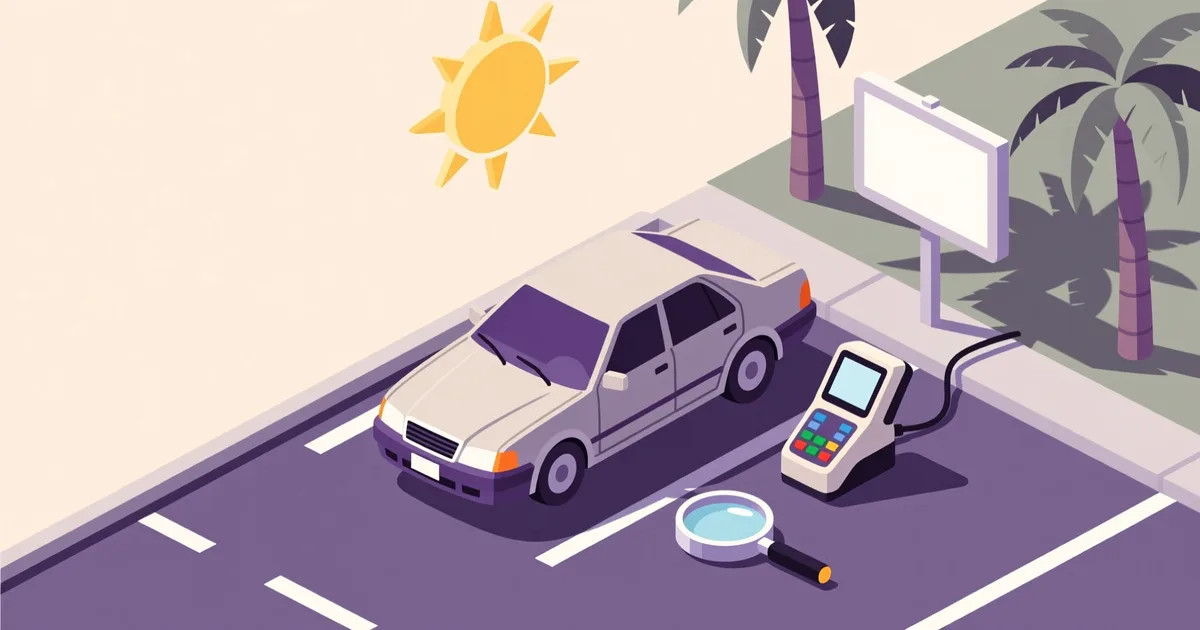
The inspection is divided into legal and mechanical parts. First, you find out if there are any liens, then you evaluate the hardware. Skipping either step can cost you money.
Legal clearance is confirmed via the Ministry of Transport database gov.il. You need the chassis number (mispar shasi). It reveals the number of previous owners, accident records, and lien or seizure status. If the car is reported stolen or pledged to a bank, you cannot proceed with the deal.
A mechanical check requires a garage with a lift. In Israel, this procedure is called "bdikat rechev". A mechanic inspects the frame rails, undercarriage, suspension condition, and engine compression. The buyer pays for this inspection.
Inspecting the body and electronics
Start with the panel gaps. Uneven gaps indicate body repairs. Bring a paint thickness gauge if you know how to use one. Factory paint is applied in a specific thickness, and any deviation points to filler or a repaint.
Electronics control everything in modern cars. Test the air conditioning, power windows, infotainment system, and parking sensors. In a hot climate, the AC runs constantly, so its compressor wears out faster.
Test drive
Ask for a route that includes smooth roads and speed bumps. Listen to the suspension over bumps. Pay attention to how the transmission behaves during shifts. An automatic should shift smoothly, while an automated manual shouldn't hesitate off the line.
When inspecting a car in Tel Aviv or Haifa, always check the cooling system. Engines here overheat in summer traffic jams faster than in Europe. Inspect the hoses for cracks and make sure the fan kicks in on time.
How much does a used car cost in Israel and how to negotiate
The price of a second-hand car is determined by its year, mileage, number of owners, and trim level. The purchase tax for new vehicles is already baked into the original price, so when buying used, you only pay for the car itself and the transfer fee.
Mileage in Israel is often higher than the age suggests. Distances between cities are short, but people spend hours stuck in traffic. A three-year-old car might have more miles than a five-year-old one driven in lighter traffic. Pay attention to engine hours if they are displayed on the onboard computer.
The number of owners heavily impacts a car's appeal. One-owner vehicles are valued higher. If the registration document shows four ownership changes in five years, that's a reason to lower the price or walk away.
Arguments for lowering the price
Haggling is appropriate if you've found objective flaws. A worn steering wheel, bumper scratches, bald tires, or an approaching timing belt replacement deadline are valid reasons for a discount. Name the exact amount it will cost to fix the issue.
Don't start negotiating by criticizing the color or the brand. The seller will take it as disrespect. Point out worn brake pads and suggest deducting the replacement cost from the final price. If you plan to buy a car within a specific budget, browse used cars in Tel Aviv to understand the range of offers in your city.
How to register a used car purchase in Israel?
Ownership transfer takes place at a Ministry of Transport (Misrad HaTachbura) branch or authorized service centers. Both parties must be present in person or provide a notarized power of attorney.
You will need the ID cards (teudat zehut) of the buyer and seller, a valid vehicle license (rishayon rechev), and a receipt for the transfer fee payment. The fee is calculated using a formula based on engine size and vehicle type.
The procedure takes about an hour if the paperwork is in order. You receive a new vehicle license in your name. Insurance (bituach chova) must be arranged before you start driving. Driving without mandatory insurance is strictly prohibited.
Costs beyond the car's price
Budget for the inspection, state fee, and insurance. The inspection costs a few hundred shekels. The state fee depends on the engine specifications. Mandatory insurance is calculated based on your driving experience and age.
If you buy a car in Ashdod but live in Netanya, you can transfer ownership at any branch in the country. There is no tie to the seller's city of registration. The main requirement is that the previous owner has no outstanding fines or road tax debts.
Common mistakes when trying to buy a used car in Israel?
The biggest mistake: paying a deposit before checking the documents. The seller might disappear, and the car could turn out to have a lien. Only hand over money after confirming legal clearance and signing the bill of sale.
The second mistake: skipping the independent inspection. The seller might offer "their" mechanic. Only agree to an inspection at a garage you chose yourself. This eliminates collusion.
The third mistake: ignoring the service history. Ask for the service book or garage receipts. If the owner changed the oil once every two years, the engine's lifespan has been shortened. No receipts means maintenance might not have been done at all.
Regional specifics
In Jerusalem, pay close attention to the clutch and brake discs. Constant uphill and downhill driving accelerates their wear. In Haifa, especially in the Mount Carmel neighborhoods, the strain on the braking system is similar.
In coastal cities like Netanya or Ashdod, humidity and salty air promote corrosion. Inspect the sills and wheel arches particularly carefully. Rust appears in these areas faster than in the central regions of the country.
Frequently asked questions about buying a used car?
What documents are needed to transfer car ownership?
Transferring ownership requires the ID cards (teudat zehut) of both parties, the original vehicle license (rishayon rechev), and a receipt for the state transfer fee. If one party cannot attend, a notarized power of attorney is required. All previous owner fines must be paid before visiting the Ministry of Transport.
How much does a pre-purchase inspection cost?
The cost of a comprehensive inspection at an independent garage varies by region and vehicle class. The procedure includes a lift inspection, computer diagnostics, and paint thickness testing. The buyer pays for these services before transferring money to the seller.
Can I return a car to a private seller?
Transactions between individuals in Israel are conducted on an "as-is" basis. Consumer protection laws generally do not apply. You can only return the vehicle if you can prove in court that the seller intentionally concealed a serious defect.
How do I check a car's accident history?
Accident history is available through the Ministry of Transport database using the chassis number. The report shows whether collisions were registered, bodywork was performed, or structural elements were replaced. Requests can be made online or via self-service kiosks.
Do I need to change the license plates when buying a car?
License plates stay with the car when ownership changes. You don't need new plates when buying from a private individual. The exception is if the previous owner keeps the plates for another vehicle, which requires a separate procedure.
When is the best time to negotiate the price?
Discuss the price after the inspection and test drive. By then, you will have gathered your arguments: identified faults, upcoming maintenance costs, or discrepancies between the claimed mileage and actual interior wear. Quote a specific figure, justifying it with the costs of bringing the car up to standard.
Action plan for buying a used car in Israel
To buy a used car in Israel without wasting time, follow these steps. First, set your budget, factoring in the transfer tax and insurance costs. Then open a classified board and filter the options by your city, whether it's Tel Aviv, Haifa, or Jerusalem.
Contact the sellers, ask about the number of owners and the reason for selling. Arrange an inspection during daylight hours. Bring a checklist: body, engine, electronics, and test route.
If you like the car, head to an independent inspection. Once you have the mechanic's report, start negotiating. The final stage: a joint visit to the Ministry of Transport, paying the fee, and receiving the new vehicle license. Only after this should you transfer the full amount to the seller. This approach reduces the risk of buying a problematic vehicle and saves you money.