Selling women's clothing is fastest when the listing has clear photos, an honest description of condition, a realistic price based on similar offers, and a safe handover to the buyer. Below we'll break it down step by step: how to evaluate an item, how to photograph it, what to write in the listing, how to respond to buyers, and how to avoid scammers.
Used women's clothing sells slowly in only one case: when the seller hasn't shown the item the way the buyer sees it in real life. Buyers look for specifics. Size according to the Ukrainian grid or in centimeters, sleeve length, fabric composition, signs of wear, city and district where it can be picked up. The fewer questions a listing raises, the faster messages arrive.
This text is for private sellers and small shops in Ukraine who want to sell women's clothing through classified listings. There are no promises of instant results. There are criteria by which you decide for yourself: list the item at a lower price and sell to the first buyer, hold out for a higher price and wait, or take it to a consignment shop or reseller.
- Set the price based on three to five similar listings in your city, not on the purchase price.
- Photos on a neutral background in daylight: the item fully, the tag with composition, areas of wear close-up.
- The description should include size, measurements in centimeters, condition, reason for selling, and handover terms.
- Agree on payment and handover only after the buyer sees the item in person or in additional photos.
How to sell women's clothing fast: the price the buyer compares with others
Speed of sale is determined by price, not by the number of listings. Before writing anything, open search in your city and see what similar items of the same type, brand, and size are listed for. Don't use the retail price as a reference: a buyer of used items compares your offer with other used ones.
Three reference points for pricing
First: the average price of similar listings in your city. Second: the price at which the item actually sells, not just gets listed. Third: your minimum below which selling makes no sense. The difference between the first and third shows how long you're willing to wait.
If the item is new with tags, you can set 50-70% of retail. If it's worn but without defects, aim for 30-50%. Items with noticeable signs of wear sell for 10-25%, and here it's important to be honest, because the buyer will see the defect in person and walk away.
What to do about haggling
Build a small buffer for haggling into the price, but don't inflate it so much that the listing looks unserious. In the text you can write directly: the price includes a small negotiation margin for a quick purchase. This removes some of the back-and-forth where the buyer is just checking if you'll budge.
If there's not a single message in a week, the problem is almost always the price or the photos. Lower it not by ten hryvnias, but by 10-15% and refresh the listing. If messages come but people disappear after the first reply, it's about the description or the handover terms.
Women's clothing listing: what to show in photos and what to write in the text
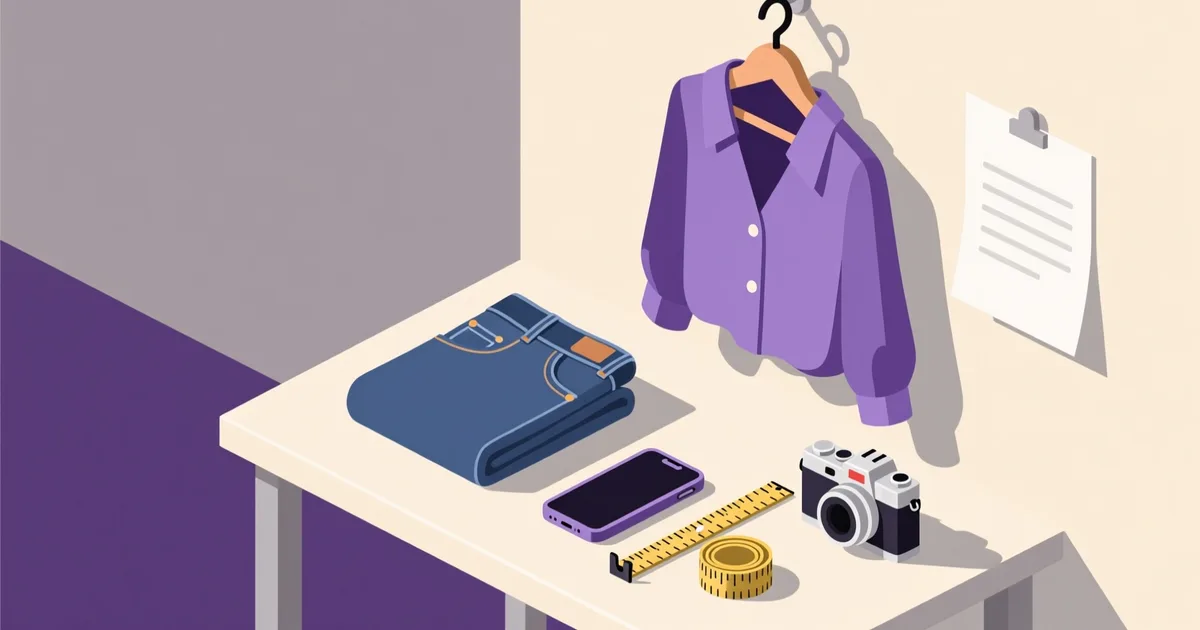
A listing works like a remote inspection of the item. The buyer can't try it on, so your job is to answer all the questions they'd ask in person. Photos without details and a two-line description give exactly one result: the person scrolls on.
Photos that reduce the number of questions
Shoot in daylight near a window, without flash and without filters. You need at least five shots: the item fully on a hanger or on a flat surface, a close-up of the fabric, the tag with composition and size, all areas of wear separately, shoes or a bag next to it if it's a set. The color in the photo should match reality, otherwise a return is almost guaranteed.
Don't be shy about showing defects. A worn seam, pilling, a stain that couldn't be removed, a missing button. One honest shot saves three messages and one meeting that ends in nothing.
Text worth copying as a template
Write in this order: type of item, brand, size on the tag and actual measurements in centimeters, fabric composition, condition, reason for selling, city and district, handover method. Measurements are mandatory because sizing grids from different manufacturers don't match. For a dress, that's bust, waist, hips, and length from shoulder. For jeans, add inseam length.
State the reason for selling briefly and without stories: didn't fit, changed style, item left over after closing a shop. People read this as a sign of a real seller. The same works for mentioning that the item was stored in a wardrobe, not a garage.
Selling used women's clothing: how to respond to buyers and not waste time
The first messages are almost always the same: is it still available, do you have more, can I try it on, will you negotiate. Reply briefly and to the point, but don't reduce everything to one word, because the buyer loses trust. A ready three-line response covers most conversations.
How to filter out scammers
Three schemes are most common. First: the buyer sends a screenshot of payment and asks to ship the item immediately. A screenshot proves nothing, verify the funds in your own banking app. Second: they ask for prepayment for a courier or for shipping from you. You're the seller, you don't pay for shipping to the buyer. Third: they ask you to move to a messenger and send an SMS code. Never share the code with anyone.
Another marker: the buyer agrees to everything and asks no questions about size or condition. A real person almost always clarifies at least the size. If they pressure you for speed and ask you not to show the item but to ship immediately, the conversation is over.
Where to meet
In-person handover is safer for both sides. Choose a busy place: a metro entrance, a shopping mall, a cafe near your home. During the day, not in the evening. If the buyer asks you to bring the item to their home or stairwell, that's a reason to decline. For shipping, use tracked services and send in your name with a description of contents.
The most effective buyer check: ask them to name two or three questions about the item before meeting. A scammer won't ask them, while a real buyer will immediately ask about measurements, condition, or the possibility of a fitting.
Fast, expensive, or via consignment: comparing three approaches
The choice between speed, price, and handing the item to an intermediary depends on how much time you're willing to spend and how liquid the item is. Compare the options for your situation, not by general advice.
| Criterion | Fast sale | Maximum price | Consignment shop or resale |
|---|---|---|---|
| Price vs retail | 20-35% | 50-70% | 30-50%, part goes to the intermediary |
| Time to money | 1-3 days | 2-6 weeks | 1-4 weeks |
| Your actions | Photos, listing, meeting | Listing, messages, haggling, several meetings | Hand over the item, then the shop works |
| Control over price | Full | Full | Limited, the shop sets the price |
| Best for | Need money now, item takes up space | Branded item, good condition, enough time | No time for messages and meetings |
For branded items in good condition, the second column is beneficial. For mass-market items without a brand, a fast sale is almost always smarter: storing at home doesn't add value. A consignment shop wins when you have ten or more items and don't want to handle ten separate conversations.
It's convenient to compare prices where listings are gathered by city and category, and the seller's history is visible to buyers. That's how EX & GO works: listings go through moderation, phone numbers are verified, and the buyer sees reviews and previous listings from the seller. We see that buyers most often ask about measurements in centimeters and real photos of defects, so listings without these details almost get no messages.
It's worth reading the posting rules before your first listing to avoid wasting time on corrections: listing rules. If you have questions about moderation or complaints, the user support section will help. post a listing
What's important to know about private selling in Ukraine

Selling your own items for personal needs is not business activity. This means a one-time handover of a used dress or coat to a buyer doesn't require registering as a sole proprietor. The situation changes when you sell regularly, in batches, for profit: then it already resembles business activity, and it's worth consulting about registration.
General rules on personal income and declaration procedures are described on the State Tax Service of Ukraine website: State Tax Service of Ukraine. Occupational safety and safe conditions, if you set up a place for handing over items, already concern entrepreneurs and are regulated separately: State Service of Ukraine on Labor.
As for buyer rights, consumer protection applies to purchases in a shop or from an entrepreneur. A deal between two private individuals is governed by the parties' agreement, so record the condition of the item with photos before handover, and make payment after inspection. This is not legal advice, but a guideline for deciding how to act in your situation.
If you sell many items, keep simple records: date, item, price, buyer, handover method. This helps both in disputes and in understanding which items sell faster. used women's clothing
Checklist before publishing a listing
Go through the points in one minute. Each missed line is an extra message or a lost meeting.
- Price checked against three to five similar listings in your city.
- Five or more photos in daylight, without filters and flash.
- A separate shot of the tag with composition and size.
- A separate shot of each defect, if any.
- Measurements in centimeters are included, not just the size letter.
- Reason for selling and handover terms are stated directly.
- City and district are included so the buyer understands logistics.
- Payment method described: cash on meeting or transfer with confirmation of receipt.
- Platform rules read before publishing.
After publishing, check the listing from your phone as the buyer sees it. Often it turns out the main photo is cropped or the description collapses at the third line. A small thing, but it's exactly what affects the first impression.
Frequently asked questions about selling women's clothing
How long does it usually take to sell used women's clothing?
It depends on price, season, and city. An item listed at 20-35% of retail with a full description and measurements usually finds a buyer within a few days. Branded items at a higher price may wait two to six weeks. Seasonality matters too: winter coats are better listed from October, summer dresses from May.
Can I sell women's clothing without a fitting?
Yes, if the buyer sees exact measurements and honest photos. Include bust, waist, hips, and length, and add a photo of the tag with fabric composition. People who buy online are used to relying on centimeters. If the item has specific fit quirks, state them clearly to avoid wasting time on returns.
How can I tell if a buyer is a scammer?
Three things should raise suspicion: a screenshot instead of confirmation of funds received, a request for you to pay for a courier or shipping, and pressure to hurry. It's also suspicious when someone asks no questions about size or condition. Verify payment in your own banking app and never send SMS codes.
Where is the best place to meet a buyer?
In a busy place during the day: near a metro entrance, in a shopping mall, or at a cafe near your home. Avoid stairwells, courtyards, and evening meetings. If the buyer insists on meeting at their place, that's a reason to decline. For shipping, choose tracked services and send with a description of contents.
Do I need to pay tax on selling my own items?
A one-time handover of personal items for personal needs is not business activity. If you sell regularly, in batches, and for profit, it may be considered business activity. General rules on personal income are described on the State Tax Service of Ukraine website. In disputed cases, it's better to consult a specialist.
What should I do if an item doesn't sell for weeks?
First, review the price: a 10-15% reduction usually brings interest back. Then reshoot photos in better light and add the missing shots: tag, measurements, flaws. Rewrite the first line of the description so it names the item specifically. If that doesn't help, consider a consignment shop or selling as a bundle of several items.
Summary
Selling women's clothing fast and risk-free is realistic if you approach it as a small project: check prices against similar listings, take honest photos, write measurements and condition, reply to buyers briefly, and accept money after the item is inspected. Each of these steps takes minutes, and together they remove most of the reasons items sit in a wardrobe for months.
Start with one item you haven't worn in a long time. Photograph it, write a description using the template, set a price, and see how buyers react. The experience of your first listing will show you what to change in the next ones, and from there you'll work faster.