To sell toys in Czechia quickly, photograph the item in daylight, price it against live listings for the same toy in your city, and write a title that names the brand, the age range and the condition. Post it on a classifieds site with verified phone numbers, meet the buyer in a public place, and take payment only when the toy changes hands. Most toys sell within days when the price matches the local market.
Czech households hold a lot of children's goods that never get used again. Lego sets sit in boxes after a child outgrows them, strollers gather dust in a cellar in Brno, wooden puzzles from a grandparent stay untouched in a panelak in Ostrava. Selling them is not complicated, but the difference between a listing that gets ten messages and one that gets none usually comes down to three things: the photos, the price, and how clearly you describe what you have.
This guide covers the whole path for a private seller or a small shop in Czechia. You will see how to check what a toy sells for, how to write a listing that answers buyer questions before they are asked, how to spot the common scams, and where to hand the item over. No marketplace can promise a sale or a particular price. What you can control is how attractive your listing looks next to the twenty others in the same category.
What does a used toy sell for in Czechia?
Price is the single decision that moves a toy fastest. Buyers in Czechia compare your listing against every other copy of the same item within a few clicks, and a price that sits above the local norm gets skipped even when the condition is better. Start by searching the exact product name, not the category. If you have a Lego Technic set, search that set number. If you have a Pilsner-made wooden toy from a small workshop, search the maker's name.
Look at what similar items are listed at, then look at what has disappeared from the listings over the past two weeks. Items that vanish were priced to sell. Items that stay listed for a month are usually priced 20 to 30 percent too high, and the seller is waiting for a buyer who will not come.
Three pricing rules that hold up in practice:
- Sealed or unused toys keep roughly 60 to 70 percent of the retail price if the box is intact.
- Used toys in good condition with all parts present land around 40 to 50 percent.
- Anything missing pieces, with a torn box or worn paint, sells for whatever the buyer offers, so price it low and say what is missing.
For collectible items, the brand and the year matter more than the condition. A 1980s Kovap tin toy or an early Merkur set can hold value well above the original price, and buyers for those items search by name and year. Do not guess. Check completed listings and ask in a collector group before you set a number.
Where a toy is bulky, factor in transport. A large plastic playhouse or a ride-on car is worth less to a buyer who has to rent a van to collect it, and that cost shows up in the offer you receive.
How do you photograph and describe toys so the listing gets messages?
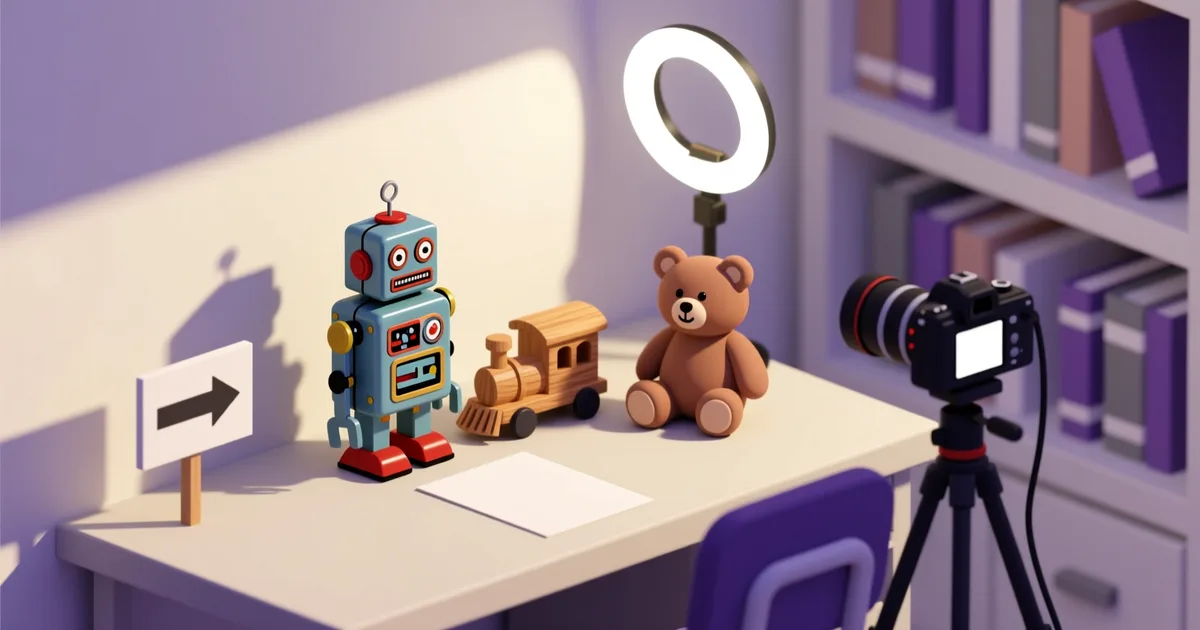
Your photos do 80 percent of the work. Buyers scroll, and the first image decides whether they open the listing at all. Shoot in daylight near a window, on a plain surface, with the toy clean and complete. Take one shot of the whole item, one of any damage or wear, one of the box or the label, and one with a common object next to it so the size is obvious. A ruler or a hand works fine.
Write the title as the buyer would search it: brand, product name, age range, condition. Something like "Lego Duplo 10874 steam train, complete, age 2 to 5, good condition" tells the buyer everything in one line. A title like "kids toys cheap" gets buried and attracts the wrong messages.
In the description, answer the questions you would ask. How old is it. Are all pieces there. Does it work, if it has batteries or a motor. Is the original box included. Are instructions included. Any smell, any cracks, any missing stickers. Buyers in Czechia ask about completeness more than anything else, because a missing piece turns a bargain into a problem.
Say whether the toy comes from a smoke-free and pet-free home if that is true. Say whether you have the receipt for a warranty claim, which matters for items bought recently. If you are selling several toys, group small items into one lot and price the lot, because single inexpensive toys are not worth a trip for most buyers.
The fastest listings are the ones where the buyer has nothing left to ask. If your description already covers completeness, wear, box and pickup location, the first message you get will be about timing, not about the item.
Quick sale, best price or trade-in: which route fits?
Not every toy should be sold the same way. A single rare item and a box of plastic figures call for different strategies, and picking the wrong one costs you either time or money. The table below compares the three realistic routes for a private seller in Czechia.
| Route | Typical time to sell | Price you get | Effort | Best for |
|---|---|---|---|---|
| Quick sale at a low price | Same day to a few days | Below market, often 30 to 50 percent off the going rate | One listing, one meeting | Clearing space, moving house, bulky items |
| Best price with patience | Two weeks to two months | At or slightly above the local average | Good photos, detailed description, several conversations | Collectibles, complete sets, branded items in high demand |
| Trade-in or shop credit | Same day | Lowest of the three, often store credit rather than cash | Minimal, you hand the item over | Items you want gone with no negotiation |
Most sellers get the best result from the middle route, with a realistic price rather than a hopeful one. Set the price at the local average, leave a small room for negotiation, and hold it for two weeks. If nothing moves, drop it by 15 percent and repost. A listing that has been up for a month with no messages is not a listing problem, it is a price problem.
Trade-in makes sense when the toy is heavy, awkward or low value, and you would rather have it out of the flat today than earn an extra few hundred koruna next month. For a single valuable item, patience usually pays better.
How do you spot toy scams and meet buyers safely in Czechia?
Most buyers are ordinary parents and grandparents, but the common scams are worth knowing because they repeat in the same shapes. The pattern is always the same: someone wants you to send money, send the item, or click a link before any real transaction happens.
Watch for these signals:
- A buyer sends a screenshot of a payment confirmation and asks you to ship the toy immediately. Screenshots are easy to fake. Check your own bank account or the payment app, not the image.
- A courier service is offered to collect the item, and you are asked to pay a small fee or a deposit first. A real buyer arranges their own courier and pays for it.
- A link arrives asking you to enter card details to receive money. Receiving money never requires your card number.
- The buyer is abroad, cannot meet, and wants the toy shipped after a partial payment. For a private sale, cash on collection is the safe default.
- Someone offers more than your asking price and asks you to refund the difference. That is a classic overpayment fraud.
For the handover, meet in a public place with people around: a shopping centre entrance, a metro station, a cafe. Bring the toy fully assembled so the buyer can check it works. Let the buyer inspect it, then take payment. Cash is simplest. If you use a bank transfer, confirm the money has arrived in your account before you hand the item over, because a transfer can be cancelled or reversed in some cases.
For larger items that need a car, meet at your building entrance or a nearby parking lot during daylight. Do not invite strangers into your flat for a small sale. If the buyer wants to test a ride-on car, choose a quiet street or a park path where there is space.
What applies to private sales in Czechia is worth understanding before you list. A private sale between two individuals is not the same as a purchase from a shop. Consumer protection rules that apply to businesses do not automatically cover a private seller, which means the buyer has fewer statutory rights to return the item. That cuts both ways. It also means you should describe the condition honestly, because a buyer who feels misled can complain. The Czech Trade Inspection Authority handles complaints about businesses, and its guidance at COI explains the difference between a private seller and a trader. If you sell toys regularly as a business, the rules change and you carry more obligations. The Ministry of Industry and Trade publishes the framework at MDCR.
We see the same mistakes repeated across the kids' goods category: listings with a single dark photo, a price set from memory rather than from a search, and a description that leaves the buyer guessing about missing pieces. Fixing those three things is usually enough to turn a silent listing into a busy one. On EX & GO, buyers can filter by city and district radius, message you inside the site, and check your seller history and reviews before they write, which means a clean profile with a few completed sales helps you. Before you publish, read the posting rules at /en/rules so your listing is not removed during moderation, and if a deal goes wrong, the support page at /en/support tells you where to report it.
Checklist before you publish your toy listing
Run through this list once, and your listing will be ahead of most of the competition in the same category.
- Search the exact product name and note the current asking prices in your city.
- Set a price at the local average, with a small margin for negotiation.
- Clean the toy and check that every piece is present.
- Take four photos in daylight: full item, any wear, box or label, size reference.
- Write a title with brand, product name, age range and condition.
- Write a description that covers completeness, working condition, box and pickup point.
- State your city and the district where you can meet.
- Decide your payment method in advance and refuse anything that asks you to pay first.
- Check your seller profile and reviews are up to date.
- Publish, then answer messages within a few hours, because the first reply usually wins the sale.
Your next step is simple: pick one toy, check the going price, and post it today. The longer an unused toy sits in a cupboard, the less it is worth, and the demand for a complete, well-photographed item in your city is there right now. If a buyer does not appear within two weeks, lower the price rather than rewriting the listing, and use the comparison table above to decide whether patience or speed matters more for that particular item.
To sell toys in Czechia without risk, the rules are the same whether you are clearing a nursery in Prague or running a small shop in Olomouc: honest description, realistic price, safe handover, payment only when the item changes hands.
Frequently asked questions about selling toys in Czechia
How fast can I sell a used toy in Czechia?
A complete, well-photographed toy priced at the local average usually gets its first messages within a day or two, and many sell within a week. Items that sit for a month are almost always overpriced rather than badly described. If you need the toy gone today, cut the price by 30 to 50 percent and say in the title that it is available for pickup immediately. Bulky items such as playhouses or ride-on cars take longer because the buyer needs transport.
Where should I meet a buyer to hand over a toy?
Choose a public place with people around: a shopping centre entrance, a metro station, a cafe, or a parking lot in daylight. Bring the toy assembled so the buyer can check it works before paying. For small items, a cafe or a station works well. For large items that need a car, meet at your building entrance rather than inviting a stranger inside. If the buyer wants to test a ride-on toy, pick a quiet street or park path with space.
How do I avoid payment scams when selling toys?
Trust your own bank account, not a screenshot. Fake payment confirmations and courier prepayment requests are the two most common tricks. Never pay a fee to receive money, never enter card details to accept a payment, and never ship an item before the money is confirmed in your account. Cash on collection is the safest option for a private sale. If a buyer offers more than your asking price and asks you to refund the difference, stop the conversation.
Do I have to accept returns if I sell a toy as a private person?
A private sale between two individuals in Czechia is not the same as buying from a shop. The statutory consumer rights that apply to businesses do not automatically apply to a private seller, so the buyer generally cannot return the item just because they changed their mind. This does not remove your duty to describe the item honestly. If you sell toys regularly as a business, different rules apply and you carry more obligations.
Should I sell toys as a lot or one by one?
Single inexpensive toys are rarely worth a buyer's trip, so group them into a lot and price the lot. Complete sets, branded items and collectibles sell better one by one, because buyers searching for a specific product name will find them. If you have a mix, split it: list the valuable items individually and bundle the rest into two or three themed lots, such as baby toys or building blocks, with a clear price for each.
What should I write in the description of a toy listing?
Answer the questions a buyer would ask. State the age of the toy, whether all pieces are present, whether it works if it has batteries or a motor, and whether the original box and instructions are included. Mention any wear, cracks, missing stickers or smells. Add your city and the district where you can meet. If it comes from a smoke-free or pet-free home, say so. A description that covers all of this means the first message you get will be about timing, not about the item.
See also: post a listing, second-hand toys.