If you want to know how to inspect a used car, follow three steps: check the seller and the paperwork before you meet, go over the car systematically at the viewing from the body to the interior, and hand over the money only once you have every agreed document in your hand. This checklist is designed so you can use it directly on your phone.
The listing is only the first filter. Most of the problems buyers end up dealing with later can be spotted before you even travel to the seller: equipment that doesn't match, an unclear vehicle history, a missing service history, or a price that is well below comparable cars on the market. To compare prices and locations nearby, use the cars and parts catalogue on EX & GO, where you can filter listings by city and category.
One rule applies at the viewing: the less you rush, the more you notice. If the seller pushes for a quick decision or won't show the documents, that is information in itself.
Below you'll find questions to ask before the meeting, a list of documents to request, an on-site check, a table of typical hidden defects and how to close the deal without unnecessary risk.
What should I ask the seller before we meet?
Asking questions in advance saves you a trip. Be specific and write the answers down or keep them in the message thread so you can compare them with the car in person. If the seller answers the same question differently the second time, that's a reason to be careful.
- What is the exact mileage, and does it match what the dashboard shows?
- Who is registered as the vehicle's owner, and why is the car being sold?
- Is there a service book or repair records, and where was the car serviced?
- Has the vehicle been in an accident, repaired after a crash, or had body panels replaced?
- What is the reason for the sale, and how long has the listing been up?
- Can the car be viewed in daylight, and can it be taken to a garage for an inspection?
- Are both summer and winter tires included, and what condition are they in?
The last question is often the most useful. A seller who has no problem with a mechanic's inspection usually has nothing to hide. If they refuse that option without a good reason, it's better to keep looking.
How to inspect a used car at the viewing: step by step
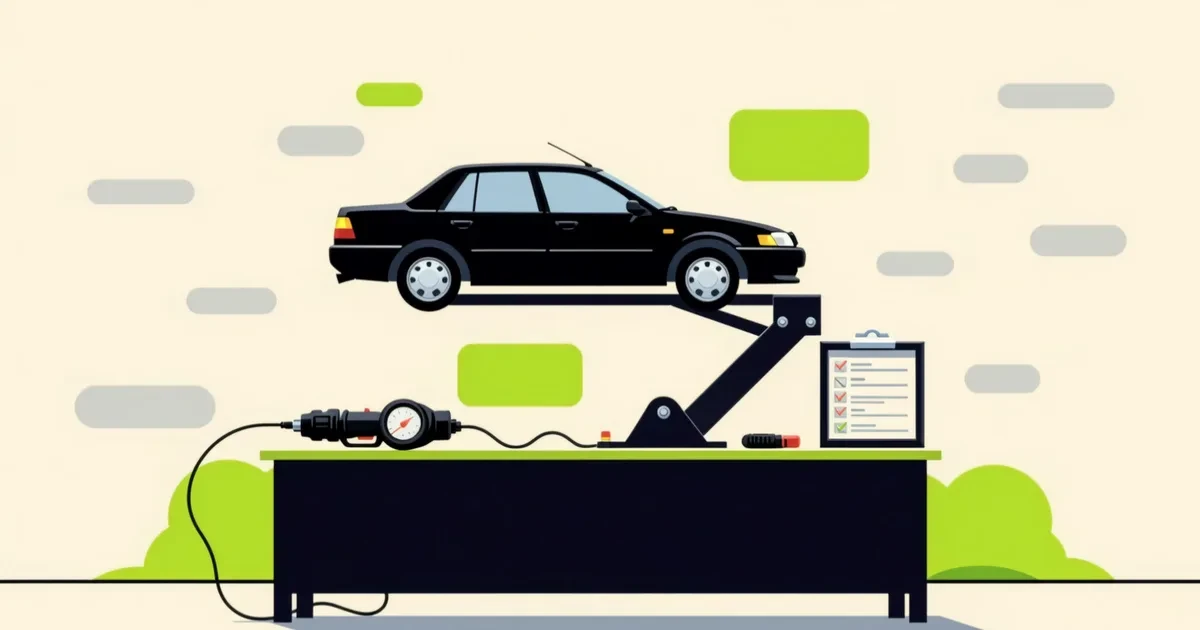
Do the viewing in an order you can repeat with every car. Keep your phone in your hand and tick off each point. If there's a step you can't do yourself, borrow a mechanic for an hour or book an inspection at a garage in advance.
- Park the car on a flat surface, ideally dry asphalt, and let it cool down before checking the engine.
- Walk around the body from one side to the other and look for differences in paint shade, overspray on door edges and uneven gaps between panels.
- Check the floor, sills and lower door edges, where corrosion builds up.
- Look at the tires: even wear, age according to the DOT code on the sidewall, and the same type on both axles.
- Open the hood and check the fluid levels, oil color, condition of the hoses and any signs of leaks under the engine.
- Sit inside, try all the seats, seat belts, windows, air conditioning, radio and lights.
- Start the cold engine and listen to the sound at startup and after, the exhaust smoke and the dashboard warning lights.
- Take a drive on a route that includes rough surfaces, and test braking, gear shifting and steering at low speed.
- After the drive, open the hood again and see whether anything has gotten hotter than usual or started to leak.
- Verify that the vehicle identification number on the body matches the documents the seller showed you.
If you're not sure about the technical condition, arrange an inspection at an independent garage before you go. An hour paid to a mechanic is cheaper than a repair you discover a month after buying. Choose the garage based on reviews and distance, not on the seller's recommendation.
Which documents should I ask for, and what should I look for in them?
The documents show whether the car belongs to the person selling it. Ask for them at the start of the viewing, not at the end when you've already looked over the car and emotions take over. Compare the details in the documents with the details on the car and in the listing.
The basics are the vehicle document and the seller's ID. Check that the name matches the name in the documents and that the vehicle identification number, registration number and engine details match. For an imported car, also ask for the import paperwork if the seller has it.
A service book isn't proof of condition, but it helps verify the mileage history. Repair records and invoices show what was done to the car and when. If the seller claims the car was regularly serviced but can't show a single record, treat that as a claim without evidence.
For official rules concerning vehicles and documents, always follow the official source. You'll find current information on vehicle registration and related obligations on the Ministry of the Interior of the Slovak Republic website. Read the listing conditions and the rules for publishing offers on the platform in the EX & GO rules.
Which hidden defects can be detected, and how?
Hidden defects are rarely random. The same spots and the same symptoms keep coming up; you just have to look for them deliberately. The table below summarizes what to check, how to do it and what the problem looks like.
| What to check | How to do it | What the problem looks like |
|---|---|---|
| Body and paint | Walk around the car from the side in daylight, compare the paint shade on adjacent panels | Different shade, paint overspray on the seals, uneven gaps between doors and fenders |
| Corrosion | Look at the sills, floor, lower door edges and around the wheels | Bubbles under the paint, soft spots when you touch them, signs of filler covering |
| Engine and leaks | Check fluid levels and oil color, hoses, the area under the engine | Milky oil, fresh fluid traces, a greasy layer on the underside |
| Tires | Read the DOT code on the sidewall, compare tread on both axles | Different tire age or type, uneven wear on one side |
| Interior | Try the seats, seat belts, windows, air conditioning and lights | Seat won't slide, belt won't pull out, air conditioning doesn't cool |
| Dashboard | Start the car and watch the warning lights before and after driving | Check engine, ABS or airbag light is on, some lights don't come on at all |
| Driving behavior | Drive on an uneven road, test braking and gear shifting | Car pulls to one side, vibrates when braking, transmission shifts with a jerk |
| Identification | Compare the number on the body with the documents and the listing | The number is illegible, tampered with or differs from the documents |
The table is an aid, not a substitute for an expert. If several items from the right column show up on the same car at once, the price should reflect the condition, or you should walk away from the purchase. For vehicles that were imported or have an unclear history, also verify the information with the seller and in official sources.
How to close the deal safely, and what should I get in writing?
A safe deal rests on three things: a verified seller, terms agreed in writing, and a payment that leaves a trace. Before you hand over the money, prepare a list of what you've agreed on and have it confirmed.
In the purchase contract or a written record of the agreement, state the vehicle identification, the price, the payment method, the handover date and a list of items included with the car. Have both parties sign two copies, or take a photo of the signed document. If you pay by transfer, keep the payment confirmation and state in the reference what you are paying for.
When communicating through the platform, use the message thread in the listing. On EX & GO this makes it possible to trace how the agreement went, and if anything is unclear, contact EX & GO support. Always check the terms of service and any paid features in the current rules, as they may change depending on your account settings.
If you decide not to buy the car, let the seller know. A polite refusal is part of a fair deal and saves time for both sides. If you do decide to buy, schedule the handover for a time when you have enough light and calm for a final check.
You can go through the nearby listings once more before you travel so you have a price and condition comparison. used cars
If you're looking for a car by city or within a set radius, use the search by location and category. used cars in Bratislava
Frequently asked questions
How do I inspect a used car if I don't know much about cars?
Follow the checklist and have a mechanic look at the car. Book an inspection at an independent garage before you meet the seller and focus on what you can check yourself: differences in paint shade, tire wear, dashboard warning lights and whether the paperwork matches the car. If the seller refuses a garage inspection, treat it as a red flag and keep looking.
What should I ask the seller for before buying?
The vehicle registration document, the seller's ID, the service book or repair records, and invoices. Check that the details in the documents match the car and the listing. If the seller has no service records at all, that tells you about the history, not that the car is in bad condition. For official vehicle registration rules, follow the Ministry of the Interior of the Slovak Republic website.
How do I pay for a used car safely?
Agree the terms in writing and pay only after you receive the documents and agree on handover of the vehicle. If you pay by bank transfer, keep the payment confirmation and state in the reference what you are paying for. When communicating through the platform, use the message thread in the listing so there is a record of the agreement. Check the payment terms and any paid features in the current service rules.