To check a used car in Ukraine, verify the seller and paperwork first, then inspect the car in daylight with a phone checklist, then pay only after matching the VIN and documents. Never send a deposit before you have seen the car and the seller's ID. The whole process takes about an hour if you prepare in advance.
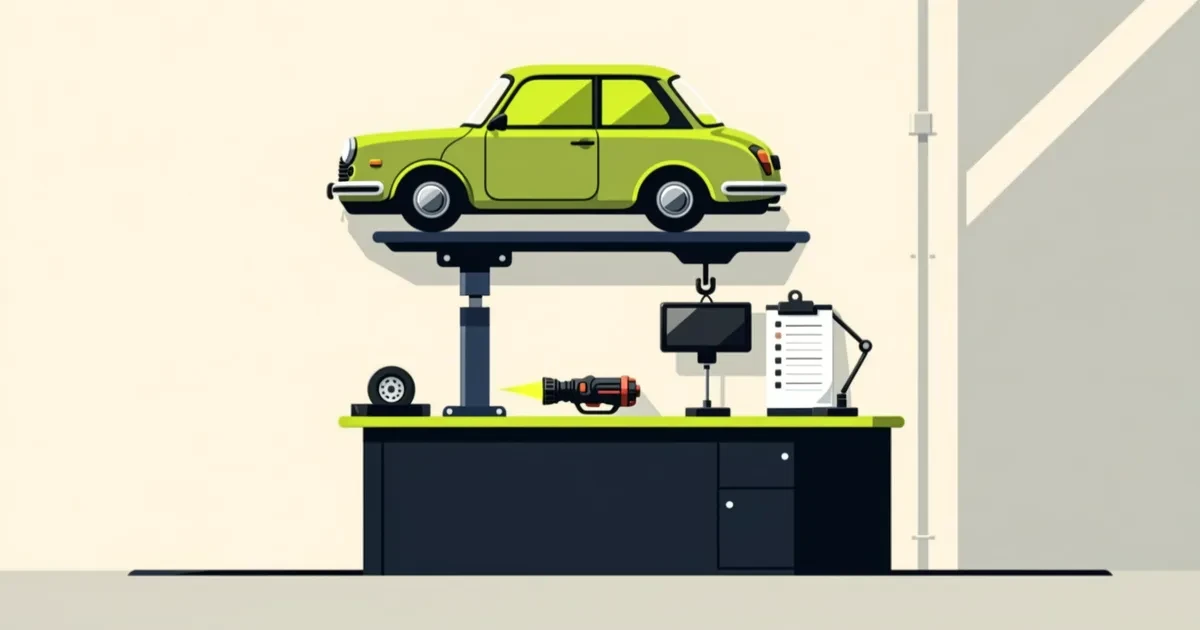
Most buyers in Ukraine read this on a phone, standing next to the car, with the owner watching. That is a bad moment to improvise. The checklist below is built for that situation: short lines, clear pass or fail, no jargon. Two things decide whether a deal goes well. First, whether the seller is who they claim to be. Second, whether the car is what the listing says. Everything else, including price, is a negotiation around those two facts.
You will meet sellers through classifieds, friends, or a dealer lot. EX & GO is one place to compare listings by city and category, and the platform's own rules are worth reading before you post or reply: posting rules. Moderation there checks listings against those rules. It does not confirm who owns the car or whether it runs.
- Ask for the VIN and photos of documents before you travel to a viewing.
- Inspect in daylight, on flat ground, with the engine cold at the start.
- Match the VIN on the car, the documents and the listing.
- Pay only after the paperwork matches, and keep a written record of the deal.
What should you ask the seller before the meeting?
Ask for the VIN, the current photos, and the reason for selling in the first message. A serious seller answers within a day and sends what you request. Vague replies, stock photos, or pressure to send a deposit "to hold the car" are reasons to walk away before you spend money on travel. Use in-site messaging where the platform offers it, so the conversation stays in one place. On EX & GO you can search by city and radius, then message the seller directly. Keep the thread. If something goes wrong later, you have a record of what was promised.
Questions worth sending in writing
- What is the VIN, and can you send a photo of the document that shows it?
- How many owners has the car had, and how long have you owned it?
- Has it been in an accident? Ask directly, and ask for repair photos if the answer is yes.
- What is the current mileage, and are there service records?
- Is the car registered in your name, and are you the person who will sign the deal?
- Why are you selling, and how soon do you need the car gone?
- Can I bring a mechanic, and can we meet in daylight?
- Is the price negotiable, and does it include anything else, such as a second set of wheels?
A seller who refuses a mechanic or a daylight meeting is telling you something. Believe it and move on.
Which documents and proof should you request?
Request the registration document, the seller's ID, and a document that connects the two. Check that the name on the ID matches the name on the car document. If the seller is acting for someone else, ask for a written authorization and check it against the owner's ID. Where official rules apply, confirm them on the official source rather than trusting a forum post. For anything involving registration, plates, or the transfer procedure, check the official service portal at DPS Ukrainy or the Ministry of Internal Affairs service centre site at Holovnyi servisnyi tsentr MVS. Rules and procedures change, and a seller's version of them is not a source.
Photograph every document you are shown. Front and back. Do it openly, in front of the seller. Anyone who objects to that is a problem.
How do you inspect a used car step by step at the viewing?
Inspect in this order: paperwork first, then the cold engine, then the body, then a test drive. Doing it in this order means you stop early if the documents fail, before you have invested an hour in a car you cannot buy. Work through the list on your phone and mark each line pass or fail.
- Match the VIN. Find it on the car, on the document, and in the listing. All three must agree. A mismatch ends the inspection.
- Check the seller's ID against the name on the car document. Photograph both.
- Start with a cold engine. Ask the seller not to warm the car before you arrive. A pre-warmed engine can hide a rough start or smoke.
- Look under the car on flat ground for fresh oil or coolant drips. Old, dry stains are less worrying than wet ones.
- Open the bonnet. Check the oil on the dipstick for colour and level. Look at coolant, brake fluid, and the condition of belts and hoses.
- Check panel gaps along both sides, the bonnet, and the boot. Uneven gaps or mismatched paint suggest bodywork.
- Look for overspray on rubber seals, door handles, and window edges. Run a magnet over steel panels if you have one.
- Check the tyres. Tread depth, even wear across the width, and matching brands across an axle. Uneven wear points to alignment or suspension issues.
- Look at the glass. Chips and cracks, and whether the windscreen has been replaced.
- Sit inside. Check seat wear against the stated mileage. Test every switch: windows, mirrors, lights, air conditioning, radio.
- Look for warning lights on the dashboard. They should come on at ignition and go out after start.
- Test the brakes gently at low speed before you drive normally. Listen for grinding or pulling to one side.
- On the test drive, cover city streets and a faster road. Listen for knocks over bumps and check that the car tracks straight.
- After the drive, look under the car again. New drips are a warning.
What a problem looks like
Fresh oil under the engine after a drive. A VIN that is hard to read or appears altered. A seller who cannot explain a gap in ownership. Paint that does not match under daylight. A dashboard light that stays on. A test drive where the car pulls to one side. Any one of these deserves a second opinion or a walk away.
What hidden defects should you look for?
Most hidden defects fall into four groups: accident repair, engine and gearbox wear, flood or electrical damage, and mileage that does not match wear. Each leaves physical traces if you know where to look. A mechanic with a diagnostic scanner will find more than you can by eye, and the cost of that check is small against the cost of a bad engine. Accident repair shows in panel gaps, paint texture, and overspray on seals. Engine wear shows in cold-start smoke, unusual noises, and fluid condition. Flood damage shows in damp smells, fogged lights, and corroded connectors under the seats. Mileage that does not match shows in pedal rubbers, the driver's seat bolster, and the steering wheel.
Bring a small torch and a magnet. The torch finds overspray and underbody damage; the magnet finds filler on steel panels. Both cost less than a tank of fuel and fit in a jacket pocket.
If the seller cannot show service history, that is not automatically a deal breaker, but it means the physical checks matter more. Ask when the timing belt or chain was last serviced, and whether there are receipts.
How do you close the deal safely?

Close the deal only after the documents match, the inspection passes, and you have agreed the price in writing. Do the handover in daylight, at a bank or a service centre, not in a car park at night. Keep a signed record of what was sold, at what price, and on what date. Count the money in front of the seller and get a receipt. Where the platform offers an optional Safe Deal on eligible listings, read its own payment terms before you use it. EX & GO does not arrange every deal and cannot vouch for a car's condition. Direct deals are between you and the seller. If a problem arises, the platform's support page explains how to raise it: support.
Never pay a deposit before you have seen the car and the seller's ID. If a seller insists, treat it as a refusal. A deposit sent to a card or a phone number is hard to recover.
For price comparison, look at several listings in the same city and category before you agree a number. A price far below the local range is a reason to inspect harder, not a reason to hurry.
Is it safe to buy a used car from a private seller in Ukraine?
It can be safe if you verify identity, documents, and condition in person, and pay only at handover. The risk is highest when you skip one of those steps, usually because the price feels urgent. Distance selling, where you pay before seeing the car, carries the most risk of all. Use the same discipline whether you buy from a private seller or a dealer. A dealer lot is not a guarantee of condition, and a private seller is not automatically a risk. What matters is the paperwork, the inspection, and the payment moment.
When you compare listings, use the filters to narrow by city and radius so you are looking at cars you can inspect. EX & GO lists cars and parts alongside other categories, so you can see what similar cars go for nearby before you commit. used cars
What should you do the day before the meeting?
Prepare a short kit and a written list. Charge your phone, save the seller's number, and print or screenshot the checklist so it works without signal. Arrange a mechanic if you want one, and confirm the meeting time in daylight. Tell someone where you are going and when you expect to be back. Check the official sources for anything involving documents or registration before you travel, so you are not relying on the seller's account at the viewing. used cars in Kyiv
On the day, arrive early, park where you can see the car from a distance, and start with the documents. If the first three checks fail, thank the seller and leave. That is a successful outcome, not a wasted trip.
Frequently asked questions
Can I check a used car without a mechanic?
Yes, for the basics. You can match the VIN, check documents, look for drips, inspect panel gaps, test the electrics, and take a test drive. A mechanic with a diagnostic scanner will find engine and electronic faults you cannot see. If the car is expensive or the seller's history is unclear, the cost of a professional check is worth paying before you commit.
What should I do if the VIN does not match the documents?
Stop the inspection. A VIN mismatch is a serious problem and no price makes it acceptable. Photograph what you found, end the meeting politely, and report the listing to the platform where you found it. Do not pay a deposit or sign anything. Check official sources for how vehicle identity is handled before you consider any car with unclear documents.
Should I pay a deposit before seeing the car?
No. Pay nothing before you have seen the car, the seller's ID, and the documents in person. Sellers sometimes ask for a deposit to hold a car against other buyers. That request is a reason to slow down, not to send money. If you decide to buy, pay at handover and get a written receipt.
How do I spot a car that has been in an accident?
Look at panel gaps along both sides, the bonnet, and the boot. Check for overspray on rubber seals and window edges, and for paint that does not match under daylight. Run a magnet over steel panels to find filler. Ask the seller directly about accidents and request repair photos. A mechanic can confirm what you suspect.
What records should I keep after the deal?
Keep the signed sale record, the receipt, photos of the documents, the VIN, and the message thread with the seller. Store them digitally and in one place. If a dispute arises later, these records show what was agreed and when. Keep them for as long as you own the car.