If you want to buy used audio equipment, the safest path is a combination of three steps: first compare prices between private sellers and shops, then check the seller's history and reviews, and finally test the equipment in person before paying. In Slovenia, most private listings are gathered on online platforms where you can filter by city and category.
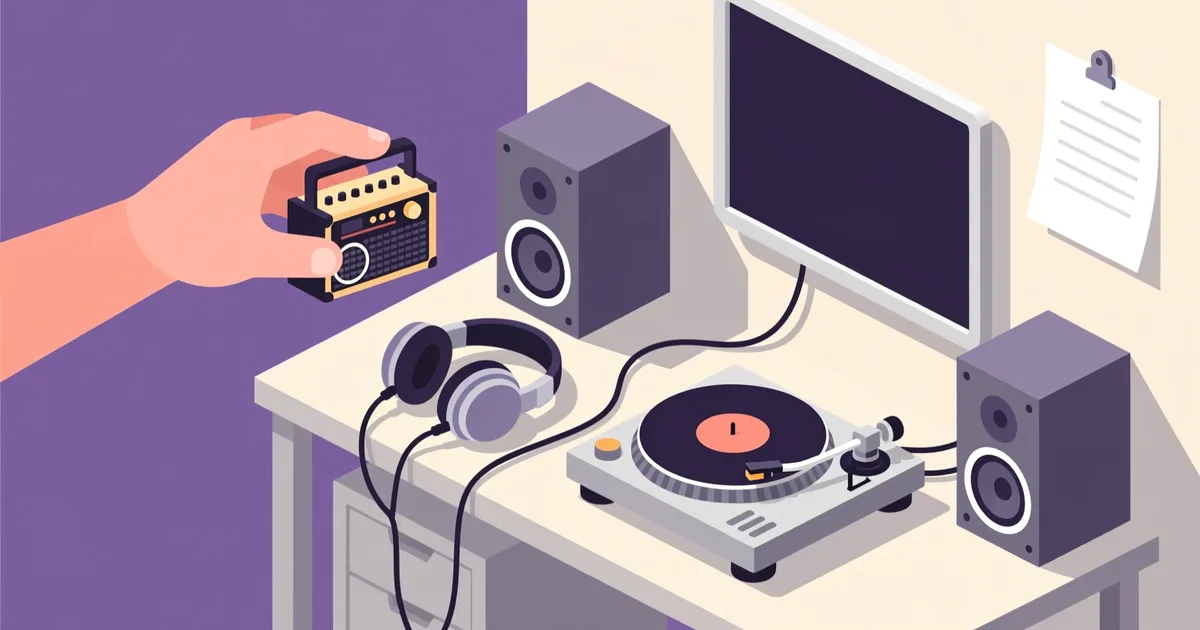
Speakers, amplifiers, turntables and studio monitors are among the items that lose the most value on the secondary market, so the savings are real. But that is exactly why this market is full of traps: mismatched speaker pairs, modified devices and listings with stolen photos. The difference between a good and a bad purchase is almost always preparation, not luck.
In this guide you will find where to look in Slovenia, how to read a listing, what to check at the meeting, how to negotiate, and what applies if the device you bought does not work. It is aimed at buyers who read on their phone and want a checklist they can open during a viewing.
- Private sellers are cheaper, while shops offer a guarantee. Decide based on the value of the device.
- Advance payment to an unknown seller is the most common form of fraud in audio equipment.
- Take your own sound source, cable and a recording you know well to the viewing.
- When buying from a private individual in Slovenia there is no legal guarantee, unless the seller operates as a business.
Where to buy used audio equipment in Slovenia
Private listings in Slovenia are gathered on general platforms, specialized forums and social media groups. Each channel has its advantages: general platforms reach the most people, while forums attract a narrow circle of people who really know equipment.
On EX & GO, listings are sorted by category, including the phones and electronics category, which covers audio devices. Filtering by city and surroundings is crucial here: if you are in Ljubljana, you probably will not drive 200 kilometers for a pair of speakers worth 80 euros. Maribor, Celje, Kranj and Koper have enough supply that a viewing is worth it within a 30-minute drive.
Before you respond to a listing, check how the platform handles posting and what the rules are regarding prohibited content. On EX & GO the rules are published at /sl/rules, which helps you separate serious sellers from those who do not even bother to read the rules.
Private listings
The advantage is the price, the downside is the responsibility. A seller who sells equipment as an individual is not a trader, so the same rules do not apply as for a shop. Once you agree on the price and pickup, the deal is done.
Shops selling used equipment
Some Slovenian shops and repair services buy used devices, inspect them and resell them. The price is higher, but you get a receipt and a certain period of liability for defects. For expensive pieces, such as a preamplifier worth several hundred euros, that difference is often worth the money.
Auctions and specialized forums
On audio forums you find pieces that are almost absent from general listings. The problem is that you do not know the seller and that shipping by mail means you cannot test the device before paying. If you send money abroad, the risk increases.
How to read a listing and recognize fraud
A good listing contains three things: original photos, a concrete description of the defect or condition, and the pickup location. If any of these is missing, the conversation often ends in complications.
The most common fraud in audio equipment is a request for advance payment. The seller offers to send the device by courier, with the money to be transferred in advance. Once the money is gone, the seller no longer responds. Another variant is a fake delivery page where you enter your card details.
Photos are another indicator. If the same picture of a speaker or amplifier circulates across several listings in different cities, it is probably copied from a foreign forum. It is advisable to check the image with a reverse image search and see whether it appears elsewhere.
If the seller refuses a live viewing or insists on payment in advance, do not make the deal. With audio equipment, a viewing is the only way to check whether the speaker really works and whether it has been modified.
Also pay attention to the description. Terms like "like new" without stating the year of manufacture and model tell you nothing. The model, serial number and year of manufacture are three pieces of information you should request before setting off.
What to check at the viewing: a meeting checklist
Take your phone or player, your cable and a recording you know well to the viewing. Without that, the test is not a test.
- Turn on the device and listen to the silence: humming, crackling or pops mean a problem.
- Check each speaker separately with the same recording and compare the left and right channel.
- Turn the volume all the way up and then down to minimum, and listen for whether the potentiometer hisses.
- Look at the housing: dents, traces of glue and non-original screws indicate repairs.
- Check the connectors, surrounds and speaker cones for cracks or stiffness.
- For amplifiers, touch the cooling fins after a few minutes of operation; excessive heat is not a good sign.
- Compare the serial number on the device with the one in the listing.
- Ask where the device was purchased and whether it has a receipt.
All together this takes 15 to 20 minutes. If the seller becomes impatient, that is information in itself.
How much to pay for used audio equipment
The price of used audio equipment in Slovenia depends on three factors: condition, age and whether the model is still on sale. For speakers and amplifiers that were popular a decade ago, prices often range between 40 and 60 percent of the original price, while rare or collectible pieces can stay close to the starting price.
Before you negotiate, check three reference points: the price of the same model in a foreign online store selling used equipment, the price of a new comparable model, and prices of similar pieces in Slovenian listings over the past few months. If the seller asks for more than half the price of a new product for a device that is eight years old, you have an argument.
Use the catalog and category filtering to help, where you can compare several listings at once. /sl/support explains how communication works and what to do if the seller does not respond.
Negotiation should be calm and based on arguments. State a specific price for the same model elsewhere, mention the defect you found, and suggest an amount. If the seller does not budge, part on friendly terms. In Slovenia, new audio equipment appears every month, so you do not have to commit to the first listing.
Where to buy used audio equipment and what applies to your rights?
When you buy from a private individual in Slovenia, statutory consumer protection does not apply in the same way as when buying in a shop. A private seller is not a trader, so there is no guarantee of flawless operation unless they offer one themselves in writing.
It is different if the equipment is sold by a company, even if it is used. Then you have consumer rights, which means you can claim liability for defects in accordance with the law. Before buying, ask whether the seller is acting as a company or as an individual, and ask for a receipt.
General information about rights and procedures is collected on the national portal gov.si, where you can also check who to contact if you believe your rights have been violated.
A practical tip: write down the agreement about the device's condition and price in a message within the platform. If a dispute arises later, you at least have a record of what was promised.
How to choose between a private seller, a shop and a platform
Each path has its costs and its risks. The table below summarizes the differences you will feel when buying.
| Channel | Price | Guarantee | Seller verification | When it pays off |
|---|---|---|---|---|
| Private seller via listing | Lowest | None, unless agreed | History and ratings on the platform | For pieces up to a few hundred euros |
| Shop selling used equipment | 20 to 40 percent higher | Receipt and agreed period | Business entity, verifiable | For expensive devices and studio equipment |
| Platform with seller history | Depends on the seller | None, but you see a trail of previous deals | Ratings, number of listings, responsiveness | When you want to compare several offers at once |
We see that most buyer questions relate to how to check whether a seller is serious, so a seller's history on the platform is often more useful than the device description itself.
On EX & GO, the rules for posting and for handling disputes are written in advance, which makes it easier to decide whether to start a deal at all.
If you want to compare offers by city, it makes sense to first look at what is available in your area and only then expand your search. used audio equipment in Ljubljana
Frequently asked questions about buying used audio equipment
How do I check whether a listing is genuine?
Ask for original photos with the model and serial number clearly visible. Check whether the same image appears in other listings, and ask for the year of manufacture. If the seller does not answer specific questions or insists on payment in advance, it is better to skip the listing.
Can I return used audio equipment?
From a private seller in Slovenia, as a rule, no, since it is not a consumer sale. If the equipment is sold by a company, however, you have consumer rights and can claim liability for defects. Before buying, find out in what capacity the seller is acting and ask for a receipt.
How much should I pay for used speakers or an amplifier?
For devices five to ten years old, prices often range between 40 and 60 percent of the original price, depending on condition and whether the model is still on sale. Before negotiating, compare prices for the same model across several listings and take into account any defects you found during the inspection.
What should I do if the device does not work after purchase?
First contact the seller in writing and describe the problem. If it was a purchase from a company, exercise your consumer rights. With a purchase from an individual, it depends on your agreement; that is why it helps to record the device's condition and the agreement in a message before taking possession.
Where in Slovenia is the largest selection of used audio equipment?
Most listings are in central Slovenia, especially Ljubljana and its surroundings, followed by Maribor, Celje, Kranj and Koper. In smaller towns the selection is thinner, so it is worth monitoring listings within a 30 to 45 minute drive and responding quickly when the model you want appears.
Is it worth buying used audio equipment without testing it?
Generally, no. Without a test you cannot know whether the speaker works, whether the potentiometer crackles, or whether the device has been repaired. If testing is not possible, buy only from a seller with a clear history and reviews, and agree on a return option if the device does not work.
How do I negotiate the price?
Base the negotiation on facts, not feelings. Cite the price of the same model in another listing, mention the defect you found, and suggest a specific amount. If the seller sticks to their price, part on friendly terms; new items appear regularly in Slovenia.
Conclusion
Buying used audio equipment in Slovenia is entirely manageable if you break the purchase into three steps: comparing prices, checking the seller, and testing in person. Private sellers bring the biggest savings, while shops with a receipt offer the greatest security.
Before you head to a viewing, prepare a checklist, your sound source and a recording you know. Filtering by city and category saves time, and the seller's history tells you more than any description. If the deal does not work out, do not force it: the market is big enough to wait for the right piece.