You buy second-hand audio equipment by choosing a source you can verify, reading the listing carefully for red flags, and closing the deal in person with payment on the spot. In the UK, most offers come from private sellers in London, Manchester, Birmingham, Glasgow, Bristol and Leeds, and the difference between a good deal and a loss lies in the checks you do before handing over the money.
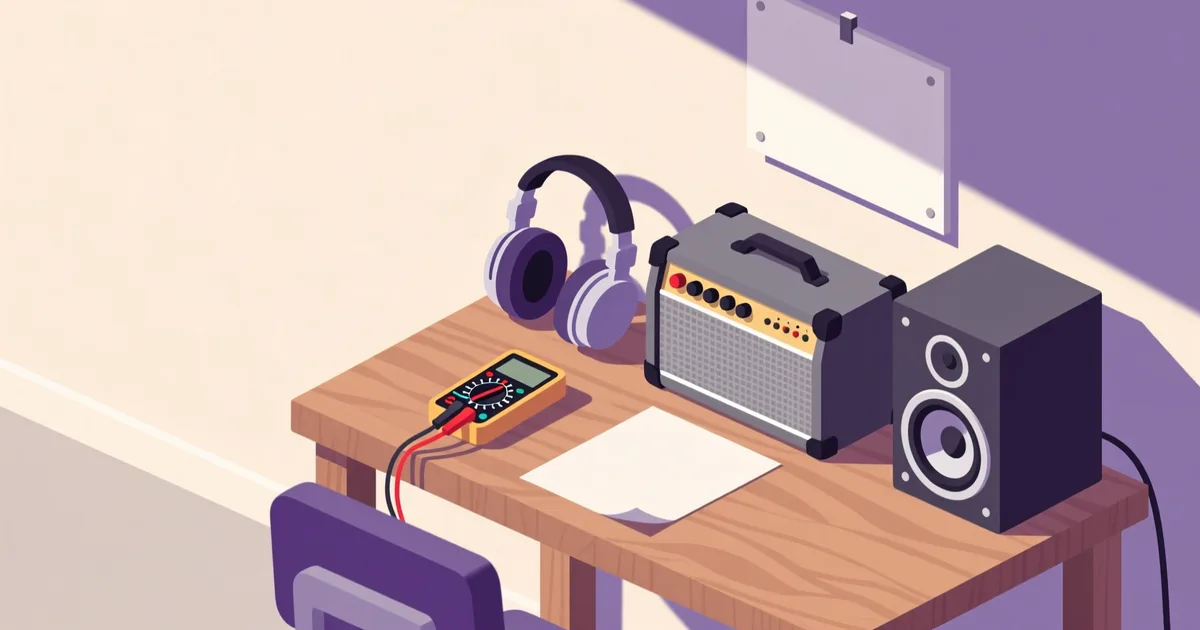
The local market for second-hand audio gear has moved almost entirely online. You can find floorstanding speakers, stereo amplifiers, receivers, turntables, headphones and audio interfaces, from respected older brands to models that have just come out of warranty. Prices vary widely, because many sellers don't know exactly what they have, while others ask retail price for a worn product. What makes the difference is how you read the listing and what you check at the meeting.
This guide is written for the private buyer reading on a phone who wants a short, on-the-spot checklist to use in front of the seller. No promises of bargains, no theory. Just what matters when you buy second-hand audio equipment and want to avoid ending up with a unit that hums or won't power on at all.
- Check the seller's history and ask for real photos taken by them, with the product in front of them, not catalogue shots.
- Refuse a deposit by transfer for a product you haven't seen. Payment is made on collection.
- Test on site: power-on, sound through both channels, buttons, sockets, background noise.
- Compare the price with 2-3 similar offers in the same city before you negotiate.
Where to find second-hand audio equipment in the UK
Most second-hand audio equipment listings appear on classifieds platforms, in specialist groups and, more rarely, at car boot sales or shops that sell second-hand goods. Classifieds platforms cover the whole country and let you filter by city and category, which cuts down a lot of wasted travel time.
On a classifieds platform such as EX & GO, you filter by city and search radius, then go into the electronics and phones category, where audio equipment also sits. You see the photos, price, city and seller history before you write. Listings go through moderation, and phone numbers are verified, which cuts out some of the profile cloning.
What you find in each major city
In London, supply is densest: vintage receivers, bookshelf speakers, integrated amplifiers and turntables appear constantly, especially in the north and east. Manchester has an active audio community, with plenty of headphones and studio monitors. Glasgow and Bristol are good for amplifiers and floorstanding speakers at lower prices than the capital. Leeds has a smaller volume, but batches of gear brought in from abroad do turn up.
If you're not sure what you're looking for, start with a search by model and check whether the seller has other listings too. An account with dozens of different audio products looks more like a reseller than a person clearing out their home. That's not necessarily bad, but it changes how you negotiate.
What to check in a second-hand audio equipment listing
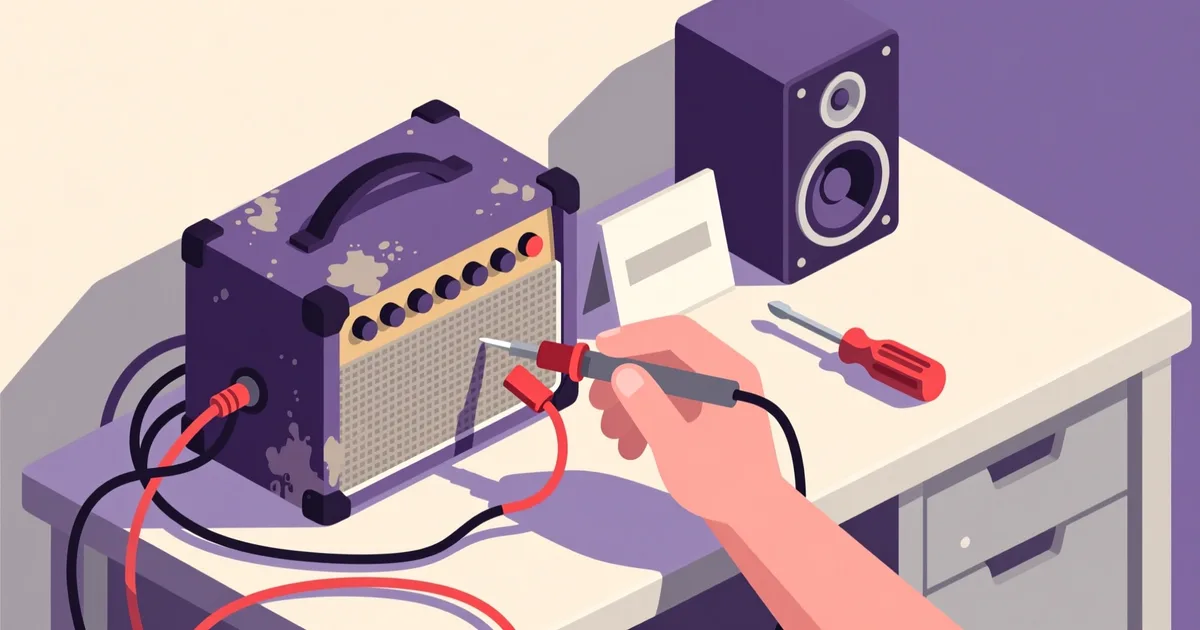
A serious listing has photos taken by the seller, with the product in their own environment, not renders from the manufacturer's website. Ask for details about age, whether it has the box and accessories, whether it has been repaired and why they're selling it. A seller who answers these questions clearly is less likely to be hiding a fault.
A description that's too short, a price far below the market average and pressure to hurry are alarm signals. So are professional-quality photos that also appear on other sites. If the product is presented as new but the seller refuses a meeting, walk away.
How to spot a scam
Three schemes come up often. First: asking for a deposit by bank transfer, with the promise that the product will be sent by courier. Second: payment links sent via messaging, leading to fake pages that imitate the platform. Third: the seller says they're out of town and a friend will hand over the product, but asks for the money first.
None of them can be resolved on the spot, because there is no face-to-face. The simple rule: if you don't see the product and don't test it, you don't pay. Before you post or reply to a listing, read the platform's rules on the rules page, /ro/rules, so you know what obligations the seller has.
The best protection isn't a contract, it's a meeting in a public place, with the product powered on in front of you. If the seller refuses the test, there's nothing to negotiate.
Checklist for meeting the seller
Go to the meeting with a written list and a phone that can play music. Ask to see the product powered on, not just taken out of the box. The test takes 10-15 minutes and shows you almost everything that matters.
- Power-on: switch the unit on, leave it for 2-3 minutes and listen for humming or crackling.
- Both channels: play a track you know and check left and right separately.
- Buttons and potentiometers: turn the volume, balance and source selector. A crackly potentiometer can be cleaned, but it's a negotiating point.
- Sockets and connections: check RCA, jack, XLR or speaker terminals. Look at the contacts, roughness and pulled wires.
- Transformer and heat: after the test, put your hand on the casing. Warm is normal, hot is not.
- Serial number and authenticity: compare the serial number with the one in the photos and with the real model.
- Accessories: remote, cables, turntable lid, box. Missing items lower the price.
If the seller has nowhere to connect the speakers, suggest another meeting or bring your own cable and a simple source. Don't accept "it definitely works, I used it yesterday" without a demonstration.
How much you pay for second-hand audio equipment
The right price is set by comparison, not by luck. Search for the same model or a close one in the same city and see the range. A second-hand product in good condition usually sells for 40-60% of the new price, less if it's old, without accessories or with visible wear.
On top of the purchase price, factor in transport costs, any repair and the time until you find the missing part. A cheap amplifier with one dead channel can cost more than a pricier but working one. This is where it helps to compare several listings side by side, with the seller's history visible, as happens on EX & GO.
| Criterion | Private seller | Second-hand shop | Platform with seller history |
|---|---|---|---|
| Price | Lowest, negotiable | Higher, with markup | Variable, quick to compare |
| Warranty | Usually none | Possibly, short term | Depends on the seller |
| Chance to test | Yes, at the meeting | Yes, in the shop | Yes, if the seller agrees |
| History and reviews | Hard to verify | The shop's reputation | Visible in the profile |
| Scam risk | Medium | Low | Low, if you follow the rules |
How to negotiate the price on second-hand audio equipment
Negotiation starts with information, not with a thrown-out offer. Find out what prices are going for that model, then start from a real, verifiable flaw: a crackly potentiometer, a missing remote, a scratch on the casing. Every concrete observation gives you an argument.
A reasonable reduction is 10-20% off the asking price, more if accessories are missing or the product has clear wear. Don't turn the negotiation into an argument. If the seller won't come down, you can walk away; there are more listings. If you accept the price, make clear what it includes: just the unit, cables, box, transport.
To find more options within your budget, you can search second-hand audio equipment and compare offers in your city before deciding. Be patient: the best deals appear when you're not pressed for time.
Your rights when you buy second-hand audio equipment
When you buy from a private seller, you don't automatically get a commercial warranty, and the relationship is based on trust and the checks you make on the spot. When you buy from a professional, you have consumer rights, and the product must match the description. You can find information about consumer rights on the ANPC website.
For new products or those sold by traders, the legal guarantee of conformity applies, and the duration and conditions can be checked with DRPCIV for matters relating to registration, but for electronic equipment the main reference point remains ANPC. Keep proof of payment and your conversation with the seller.
If something goes wrong on a classifieds platform, report the listing and write to the support team at /ro/support. We often see listings with photos taken from the internet and remove them during moderation, but the best filter remains your own checks at the meeting.
One last practical detail: arrange the meeting in a public place, with light, and don't rush. You need 15 quiet minutes to test properly. If the seller insists you finish quickly, treat that as a signal.
Frequently asked questions about second-hand audio equipment
Where can I find the most second-hand audio equipment in the UK?
Most listings appear on classifieds platforms, where you can filter by city and category. Supply is biggest in London, Manchester, Birmingham, Glasgow, Bristol and Leeds. Beyond the platforms, there are specialist groups and car boot sales, but vetting the seller is harder there. Choose a source that shows the seller's history and lets you test the item at the meeting.
How do I check whether a second-hand audio equipment listing is a scam?
Look at the photos: if they match the ones on the manufacturer's website, that's a bad sign. Ask for a photo taken now, with the product next to an everyday object. Refuse any request for a deposit by transfer before you see the item. If the seller says they're away and will ship it with payment upfront, walk away. Payment happens on collection, after testing.
How much does second-hand audio equipment cost in the UK?
The price depends on the model, condition and accessories. As a guide, a used item in good condition usually sells for 40-60% of the new price. Floorstanding speakers and older amplifiers can be cheaper, while recent studio gear stays pricier. Compare 2-3 similar offers in the same city before you negotiate, so you have a realistic range.
What should I test at the meeting before I buy?
Turn the unit on and leave it for a few minutes. Play music through both channels separately. Turn every knob and potentiometer. Check the RCA, jack, XLR sockets or speaker terminals. After testing, put your hand on the casing: warm is normal, hot is not. Compare the serial number with the one in the listing and ask for the included accessories. If the seller refuses the test, don't buy.
Do I get a warranty when I buy from a private seller?
From a private seller, there's usually no commercial warranty, and the deal rests on what you checked at the meeting. When you buy from a trader, you have consumer rights and the product must match the description. For clarity on your rights, check the information on the Citizens Advice website. Keep the proof of payment and your conversation with the seller.
How do I negotiate the price without losing the deal?
Start from a real, verifiable flaw, not an invented figure. A 10-20% reduction from the asking price is reasonable, more if accessories are missing. Stay calm and specific. If the seller won't budge, you can walk away; there are more listings. Make clear what the final price includes: just the unit, cables, box or transport.
What to do before you hand over the money
You buy second-hand audio equipment with your head, not your enthusiasm. Choose a source that shows the seller's history, read the listing carefully for details and ask for real photos. Go to the meeting with the checklist above and test the product powered on, through both channels. Negotiate based on concrete observations and pay on collection, never in advance for something you haven't seen.
The difference between a good purchase and a regrettable one isn't luck, it's the 15 minutes of testing at the meeting. If the seller is serious, they'll accept without issue. If not, you've saved money and time. For more options in your city, you can search second-hand audio equipment in Bucharest and compare prices before you decide.