Buying a used car requires verifying its mechanical condition, ensuring a clean legal history, and negotiating a fair price. In Slovakia, you can search for vehicles through classified portals, dealerships, or directly from private owners in cities like Bratislava, Košice, or Žilina. Inspecting the bodywork, engine, and paperwork will save you money and prevent headaches with the authorities.
The used vehicle market varies by region. Bratislava offers the largest selection, but prices tend to be higher. In Prešov or Nitra, the choice is smaller, yet sellers are often more willing to negotiate. You have to read every listing between the lines. Sellers state the mileage, number of previous owners, and service history, but not all of this information is accurate. Verification takes time and a systematic approach. Prepare a list of questions before you even call the seller. Find out if the car has a valid roadworthiness and emissions test. Check whether there are any liens against it. These steps will protect you from buying a problematic vehicle.
- Choose a platform where you can view the seller's history and verified phone numbers.
- During the inspection, check the bodywork, engine, and electronics, and always take a test drive.
- Verify the vehicle's legal status and prepare the documents needed for the ownership transfer at the traffic inspectorate.
- Negotiate the price based on the actual flaws you discovered during the inspection.
Where to buy a used car and how to read listings?
Where you make your purchase determines the level of risk you take on and how much time you spend searching. Private sellers usually offer lower prices, dealerships provide warranties, and classified portals bring both groups together in one place.
A private seller typically doesn't offer any warranty. Dealerships are legally required to disclose the vehicle's condition and handle complaints according to regulations overseen by the Slovak Trade Inspection. Classified platforms act as intermediaries.
We've noticed that buyers on our platform most frequently filter cars by district and distance from their home. The EX & GO platform allows you to communicate directly with the seller, view their ratings, and verify whether they have passed moderation. The entire ad posting process and terms of use are governed by the platform rules.
Read every listing carefully. Mileage over 200,000 kilometers indicates significant chassis wear. A single previous owner suggests better care. A service logbook confirms regular maintenance-if it's missing, ask for repair invoices instead.
| Criteria | Private Seller | Dealership | Classified Portal with Reviews |
|---|---|---|---|
| Warranty for defects | No | Yes, by law | Depends on the seller type |
| Room for negotiation | High | Medium | High |
| Seller history | Unknown | Known company | Visible ratings |
| Identity verification | Up to the buyer | Company registration data | Verified phone number |
What to check when you go to buy a used car?
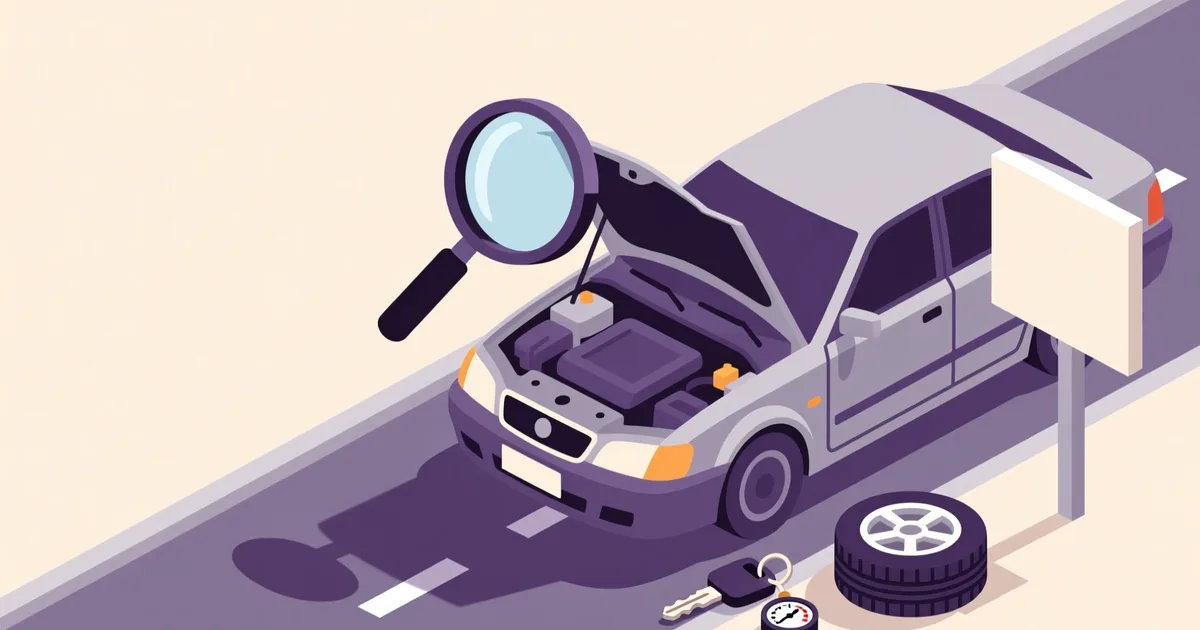
A pre-purchase technical inspection reveals hidden crash damage, rolled-back odometers, and mechanical faults. Start from the exterior, move to the engine, and finally test the driving dynamics.
Bodywork and chassis
Walk around the entire car. Look for color shade differences between panels. Uneven gaps between doors and fenders point to post-accident repairs. A magnetic paint thickness gauge will reveal filler beneath the paint.
Inspect the underside of the vehicle. Rust on the sills or structural beams compromises safety. Look at the welds on the trunk floor-if they are uneven, the car was likely welded after a rear-end collision.
Engine and transmission
A cold start reveals the most. Ask the seller not to start the engine before you arrive. Blue smoke from the exhaust indicates oil burning. White smoke after the engine warms up points to a blown head gasket.
The transmission must shift smoothly. With a manual gearbox, check that the clutch doesn't engage too high. An automatic shouldn't jerk or hesitate when shifting. Listen for bearing noise while cornering during the drive.
Electronics and test drive
Test every button. The air conditioning should blow cold within two minutes. Windows must roll up and down without sticking. Verify that all lights and turn signals work properly.
Before the test drive, turn the radio on and then off. While driving, listen for muffled noises coming from the chassis. A humming sound above 60 km/h usually reveals a worn wheel bearing-a sound you'd easily miss with the radio playing.
While driving on a straight road, briefly let go of the steering wheel. The car should track straight. Brake firmly in a safe location; the steering wheel shouldn't pull to either side. If it does, the wheel alignment is off or the brake calipers are dragging.
How to verify the vehicle's history and legal status?
A legally clean vehicle has no liens, isn't stolen, and has no blocks preventing ownership transfer. Verifying these details is a mandatory step before signing the purchase agreement.
You can check for liens in the Central Register of Liens. If there's an outstanding loan on the car, the bank could seize it even after you've paid for it. This search can be done online for just a few euros.
Vehicle records are maintained by the police. The Ministry of Interior of the Slovak Republic manages the databases used to verify whether a car is reported as stolen Ministry of Interior of the Slovak Republic. Skipping this step risks losing both your money and the car.
Compare the VIN on the windshield, the sticker in the door frame, and the vehicle registration document. If they don't match, it's a scam. Similarly, check the engine serial number. The traffic inspectorate will refuse to transfer ownership of a vehicle with mismatched numbers.
How does the ownership transfer work and what does it cost?
Transferring a vehicle to a new owner is handled at the vehicle registration department of the District Directorate of the Police Force. The process takes a few days and requires a complete set of documents.
You'll need your ID card, the original vehicle registration certificate, proof of valid roadworthiness and emissions tests, the green insurance card, and the signed purchase agreement. If you're importing the car from abroad, customs clearance and a recognition protocol will also be required.
The administrative fee for the transfer depends on engine power and vehicle age. Newer cars with more powerful engines incur higher fees. Add the cost of new license plates if you choose to have them issued.
In cities like Košice or Žilina, it's advisable to book a specific appointment through the electronic system. Without a reservation, you could spend your entire morning at the inspectorate. In Bratislava, wait times tend to be longer due to a higher volume of transfers.
How to negotiate the price when buying a used car?
The price listed in the ad is a starting point, not the final amount. Negotiation only begins after a thorough inspection, once you have concrete arguments to justify a lower price.
Never offer the full asking price right away. Use the flaws you found. Worn tires, scratches on the bumper, or an upcoming roadworthiness test expiration are all valid reasons for a discount. Calculate the repair costs and propose deducting them from the price.
Compare similar models in the same city. If the same model year is being sold for five hundred euros less in Nitra, show the seller that listing. Market prices are formed locally, and the seller knows it.
If you're looking for cheaper vehicles for everyday commuting, focus on older models with simple mechanics. Repairs are easier to come by, and parts are cheaper. However, remember that a low price tag often hides high immediate repair costs.
When communicating through used cars, you can gauge the seller's reactions and adjust your offer accordingly. If you need to compare different vehicle categories, use the filters for used cars in Bratislava to find exactly what fits your budget. The platform's features also let you see how long a listing has been active-another useful tool for negotiation.
What to watch out for when buying a used car?
Buying a vehicle from a stranger carries risks that you can minimize by following basic rules. Hand over the money only after signing the contract, and never send deposits in advance to an unverified account.
Meet in a public place. A parking lot in front of a shopping mall in Prešov or near a police station is much safer than a secluded street. Bring someone along who knows their way around cars.
Insist on a written contract. A verbal agreement won't hold up if you need to file a complaint. State the odometer reading as of the date of sale in the contract. This protects you if the seller claimed a lower mileage than the car actually had.
If the seller refuses a test drive or a visit to a mechanic, walk away from the deal. An honest owner has no reason to hide the vehicle's condition. Your caution is the only guarantee you have in a private sale.
What questions do buyers ask before deciding to buy a used car?
Can I return a car to a private seller if it breaks down?
When buying from a private individual, you don’t have the same statutory warranty as you would from a dealership. The seller is liable for hidden defects they knew about but failed to disclose. However, you must prove that the fault existed at the time of sale. That’s why a pre-purchase inspection at a garage is essential before signing the contract.
How do I find out if a car has been in an accident?
Besides visually inspecting the paintwork and panel gaps, use a paint thickness gauge. Check the bolts on the door hinges and hood-if they are scratched or look different from the rest, the part was removed. Repair history can sometimes be traced through an authorized service center using the VIN.
How much does it cost to transfer car ownership at the police department?
The administrative fee depends on the engine power in kilowatts and the age of the vehicle. You’ll pay less for older cars with smaller engines. Add any costs for new license plates if you choose not to keep the original ones.
Is it safe to buy a car through an online listing?
Yes, provided you follow verification rules. Communicate through platform messages where you can see the seller's history. Never send money in advance. Meet in person, check the documents, and verify the seller's identity using their ID card.
What should I do if the car has a rolled-back odometer?
Odometer fraud is a criminal offense. If you discover this after purchase, contact the police and demand to withdraw from the contract. Before buying, compare records from previous technical inspections, where the mileage is logged at every visit.
Do I need the original purchase agreement to transfer ownership?
The traffic inspectorate requires the original or a notarized copy of the purchase agreement. An unverified copy is not enough. The contract must include the details of both parties, the vehicle identification number (VIN), the price, and the date of transfer.
Summary of the steps to buy a used car
Buying a used car in Slovakia means combining mechanical knowledge with administrative diligence. Start by choosing the right platform where you can see seller reviews and verified contacts. During the inspection, don't rely solely on first impressions. Check the paint thickness, listen to the engine, and observe how the transmission behaves on the road.
Verifying the legal status through official registers protects you from buying a stolen or encumbered vehicle. Transferring ownership at the traffic inspectorate in Bratislava, Košice, or any other city requires complete documentation and fee payments. Negotiate the price based on facts, not emotions. Every flaw you find is an argument for lowering the price. A systematic approach will help you find a reliable vehicle without unnecessary risks or hidden repair costs.