To buy a used musical instrument in Czechia, start with Czech-language classifieds and filter by city, then meet the seller in person, test the instrument yourself, and pay only after you have it in your hands. Private listings carry no legal warranty unless the seller is a business, so the inspection you do at the meeting is your real protection.
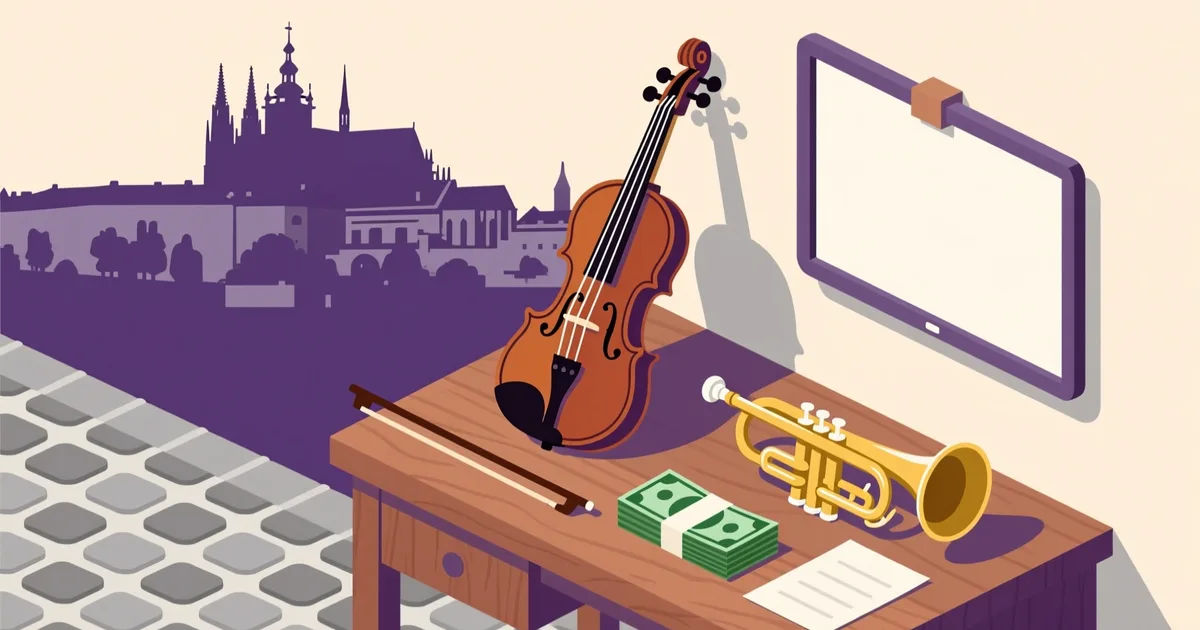
Prices in Czechia sit well below new retail for most instruments, and the gap is widest on student models. A beginner violin, a used clarinet, a digital piano or a bass guitar that someone bought for a school or a hobby and then abandoned often sells for a fraction of the shop price. That is good news for you, but it also means the market is full of instruments that were stored badly, dropped once, or never serviced.
This guide walks through where the listings actually are, how to read one before you message anyone, what to check with your own hands, and how to close the deal without losing money. Most people read this on a phone while standing in a tram, so the checklist sections are built to be scanned at the meeting itself.
- Filter by city and category first, then read the seller's history and reviews before you write a message.
- Never send a deposit or pay by courier before you have seen and played the instrument.
- At the meeting, test every note, every key, every fret and every mechanical part, not just the ones that look fine.
- Private sales in Czechia have limited warranty rights, so the price you agree reflects the risk you accept.
Where do people list used musical instruments in Czechia?
The largest supply sits in general classifieds, not in specialist shops. Sellers photograph an instrument on a kitchen table, write three lines, and set a price. Guitars, keyboards, wind instruments and drums appear in the music category, and the same catalogue also carries the amplifiers, stands, cases and cables that usually cost extra.
Filtering is what makes this workable. On EX & GO you narrow by city and by district radius, so a search from Brno does not drown you in Prague listings 200 km away. Categories split instruments from audio gear, which matters when you are hunting a specific pedal or a replacement bow rather than a whole instrument.
Regional supply differs. Prague and Brno have the deepest catalogues and the fastest turnover, so good listings disappear within days. Ostrava and Pilsen carry fewer instruments but also fewer competing buyers, which often means a better price on the same model. Liberec sits close enough to the German border that some sellers price in euros and compare against Saxon listings.
Shops that sell second-hand instruments are the second channel. They cost more, they usually include a short warranty and a setup, and they are the safer route if you cannot judge an instrument yourself. School music departments and conservatories sometimes pass instruments on through notice boards, and those listings rarely reach the internet at all.
How the catalogue filters help you
Set the city first, then the category, then your price ceiling. A radius filter is useful around Prague and Brno, where districts blur into each other, and less useful in smaller towns where the whole region is one search. Save the search and check it twice a week rather than once a month.
What cheap listings usually mean
A price far below the rest of the market is the first signal to slow down. Sometimes a seller is moving abroad and wants the instrument gone this week, which is genuine. Often the low price hides a cracked body, a dead pickup, missing keys or a repair that costs more than the instrument is worth.
How to read a listing and spot a scam
Read the photos before the text. Stock images pulled from a manufacturer's site, a white background, or a picture that appears in several listings at once are the classic warning signs. Real sellers photograph their own instrument, including the scratches, the worn frets and the serial number.
Then read the description for specifics. A serious listing names the model, the year if known, the condition, what has been replaced, and what is included in the case. Vague text with a low price and pressure to move fast is a pattern worth skipping.
Payment is where most fraud happens. A request for a deposit before viewing, a courier who will "hold" the instrument for a fee, a link to an external payment page, or a seller who refuses a meeting and offers only shipping are all reasons to walk away. The deal on a classifieds platform is arranged directly between the two parties, and the platform holds no money, so anyone asking you to route payment through a third party is not following the normal process.
If a seller cannot meet you in person but insists on shipping, ask for a short video call where they play the instrument and show the serial number on camera. A genuine seller agrees in seconds. A scammer changes the subject or invents a reason the camera does not work.
Check the seller's history where the platform shows it. Reviews, account age and the number of past listings tell you more than any single conversation. A profile with a long history and real feedback behaves differently from one created last week.
What should you check at the meeting?
Meet in daylight, in a public place or at the seller's home if you are comfortable, and bring your own small amplifier or headphones if the instrument needs one. Test it before you discuss the price, not after. Once money changes hands, the conversation is over.
For guitars, check the neck relief, the fret wear, the action height and every pickup position. Tune it, play every string on every fret, and listen for buzz that appears only in certain spots. Look at the headstock joint and the bridge for cracks or a previous repair.
For keyboards and digital pianos, press every key and listen for a note that sticks, rattles or fails to sound. Test the pedals, the headphone output and the power supply. Ask whether the original adapter comes with it, because replacements are not always cheap.
For wind instruments, check the pads, the corks, the key action and the inside of the bore. Play a chromatic scale if you can. A clarinet or saxophone that has sat unplayed for years usually needs servicing, and that cost belongs in your price calculation.
For strings, check the bridge, the soundpost, the bow hair and the peg fit. A violin with a loose soundpost is a repair job, not a bargain. Ask when the instrument was last played and by whom.
A short checklist for the meeting
- Serial number matches the listing and is not filed off.
- Every note, key or fret sounds cleanly.
- No cracks, no repaired breaks, no rust on the hardware.
- Case, bow, adapter, cables and stand are included as described.
- You have tested it yourself, not watched the seller test it.
How do you close the deal and what rights do you have?
Pay in person, in cash or by instant bank transfer, once you are holding the instrument. Get a simple written receipt with the date, the price, the model and both names. It is not required, but it settles most later arguments.
Your rights depend on who sold it. A private seller in Czechia is not bound by the same warranty rules as a business. If the seller is a shop or a trader, the sale falls under consumer law and the Czech Trade Inspection Authority handles disputes about defective goods and unfair practices. You can read what the authority covers at Czech Trade Inspection Authority.
Distance sales add another layer. If you buy without seeing the instrument and the seller is a business, you generally have a right to withdraw within 14 days. That right does not apply to private-to-private sales, which is exactly why the meeting matters so much.
Keep the messages. If something goes wrong, the conversation, the listing and the receipt are your evidence. Where a platform offers a way to report a listing or a seller, use it, and check the posting rules at /en/rules so you know what the platform expects from both sides.
Private seller, shop or marketplace: which is cheaper?
Each channel trades price against risk. Private sales are cheapest and carry the most uncertainty. Shops cost more and give you a warranty and a setup. A marketplace with seller history sits in between: private prices, but with reviews and a moderation layer that a bare advert does not have.
| Channel | Typical price | Warranty | Risk | Best for |
|---|---|---|---|---|
| Private seller, direct | Lowest | None by default | Highest | Buyers who can inspect an instrument |
| Second-hand shop | Highest | Short warranty, setup included | Lowest | Beginners and expensive models |
| Marketplace with seller history | Low to mid | None, but reviews and moderation | Medium | Most buyers comparing several offers |
We see the same pattern in buyer questions: the price is rarely the hard part, the inspection is. used musical instruments
For a first instrument, a shop or a seller with a long review history is worth the extra money. For a second instrument or a specific model you already know, a private seller usually wins on price. used musical instruments in Prague
How to negotiate a used instrument price in Czechia
Negotiate on facts, not on feelings. Point to the fret wear, the missing case, the servicing the instrument needs, or the current price of the same model elsewhere. A seller who has done their homework respects a buyer who has done theirs.
Ask what is included before you name a number. A case, a stand, a bow or an adapter can be worth several hundred crowns, and sellers often throw them in rather than lose the sale. Bundle requests work better than a blunt discount demand.
If the price is firm, decide on the spot whether the instrument is worth it to you. Walking away is normal and costs nothing. Leaving your number with a polite "if it does not sell, call me" occasionally works a week later.
Frequently asked questions
Is it safe to buy a used instrument from a private seller in Czechia?
It is safe when you follow the basics: meet in person, test the instrument yourself, pay only after you have it, and keep the written messages. The main risk is prepayment to someone you have never met. If a seller refuses a meeting or pushes for a deposit, treat that as a stop sign and look for another listing.
What should I check before paying for a used instrument?
Serial number, condition of every playing surface, and whether the case and accessories are included as described. Play or test the instrument in front of the seller. Ask about previous repairs and when it was last serviced. If anything does not match the listing, renegotiate or walk away before money changes hands.
Do I have warranty rights when I buy from a private seller?
Private-to-private sales in Czechia do not carry the same warranty protection as a purchase from a business. If the seller is a shop or a trader, consumer law applies and you can raise a complaint about a defective product. The Czech Trade Inspection Authority handles disputes in that area. For private sales, the receipt and the messages are your main protection.
How much should I pay for a used musical instrument in Czechia?
There is no single number, because it depends on the model, the condition and the city. Compare at least five listings for the same instrument before you commit. Prices in Prague and Brno run higher than in Ostrava or Pilsen for the same model. Budget for a service visit on wind instruments and older keyboards.
Can I return an instrument bought online in Czechia?
If the seller is a business and you bought without seeing the instrument, you generally have 14 days to withdraw. That protection does not apply to private sellers. Check the seller's status before you order, and read the terms on the platform where the listing sits. For private sales, assume the sale is final.
Where is the best place to find cheap used instruments in Czechia?
General classifieds with city and category filters carry the widest supply and the lowest prices. Shops that resell instruments cost more but include a warranty and often a setup. School notice boards and local music groups occasionally list instruments that never reach the internet, so it is worth asking around your area as well.
What to do next
Pick your city, set a price ceiling, and save the search so you see new listings early. Read the seller's history before you message, ask for the serial number and a photo of the case, and agree on a meeting in daylight. Take the checklist above with you, test the instrument yourself, and pay only when it is in your hands.
If you are unsure about a model, compare several listings side by side on EX & GO, where the seller's history and reviews are visible next to the price, and where the posting rules at /en/rules apply to both sides of the deal. Support questions go through /en/support if a listing looks wrong.
Buying a used musical instrument in Czechia rewards patience more than speed. The right instrument at the right price usually appears within a few weeks of watching the same search. When it does, you will already know exactly what to check and what to pay.